The stone desert looks empty at first glance, but Agafay is a semi-arid, rocky landscape that supports a quiet kind of life if you know where to look, from hardy desert plants to birds that pass overhead and small creatures that shelter from the heat.
Agafay's stony, semi-arid desert looks stark, but it quietly supports hardy plants, passing or nesting birds, and small creatures adapted to heat and scarce water.
Agafay sits roughly forty-five minutes from Marrakech and is often described as a rocky or stony desert rather than a sand dune landscape like the Sahara. This difference in terrain shapes everything about the plants and animals that can survive there, since the ground is dry, mineral and exposed rather than soft and shifting. Visitors on a camel ride, quad tour or sunset dinner rarely come to Agafay expecting a wildlife safari, and that is the right expectation to have, but a closer look at the landscape reveals a surprising amount of quiet resilience.
A landscape shaped by heat and scarcity
Semi-arid, stony desert environments like Agafay generally receive very little rainfall and experience large swings in temperature between day and night. Life that survives here, whether plant or animal, tends to be adapted to conserve water, tolerate heat and often stay hidden or inactive during the hottest hours of the day. This general pattern holds true across most of Morocco's rocky, semi-arid terrain, and it is the reason Agafay can look almost lunar in places while still quietly supporting living things.
Hardy plants built for dry ground
The vegetation across Agafay is generally sparse and low growing, typical of semi-arid stony terrain, with small shrubs and tough, drought-resistant plants scattered across the rocky ground rather than dense greenery. These kinds of plants are commonly adapted to minimise water loss, often with small leaves, deep roots or waxy surfaces that help them survive long dry spells between the occasional rains. After rare rainfall, semi-arid landscapes like this can briefly show more visible green growth or small flowering plants, though this is seasonal and not something every visitor will see. Rather than naming specific species with certainty, it is fair to say that what grows in Agafay reflects the same broad strategies used by hardy desert and steppe vegetation found across similar dry regions of Morocco.
Birds that pass through or nest nearby
Birdlife in semi-arid rocky landscapes like Agafay is generally more varied than visitors expect, even if sightings are not guaranteed on a short visit. Birds adapted to arid and semi-arid terrain are commonly seen in similar landscapes across Morocco, including species that nest among rocks or scrub and others that pass through on migration. Early morning or the cooler hours around sunset tend to be the best times to notice any birdlife, since many species are less active during the heat of midday. Because exact sightings vary by season and location within Agafay, it is best to treat any birdwatching here as a pleasant possibility rather than a guaranteed highlight of the trip.
Small creatures adapted to the heat
Like many semi-arid, rocky desert environments, Agafay is likely home to small reptiles and insects that are well suited to dry, exposed ground, though most of these creatures are shy, small and most active in the cooler parts of the day or at night. Visitors on a daytime or sunset tour are unlikely to see much of this smaller wildlife directly, since many desert-adapted species avoid the heat and human activity by staying hidden under rocks or in burrows. This is a normal and expected pattern across similar stony desert terrain, and it does not mean the landscape is lifeless, only that much of its wildlife keeps a low profile. Local operators and guides who spend regular time in the desert often notice these patterns more than a first-time visitor would, simply from familiarity with the landscape across different seasons and times of day.
Why the desert looks emptier than it is
Part of what makes Agafay feel so stark is that its plants and animals are adapted to be unobtrusive, conserving energy and water rather than displaying themselves the way lush environments do. A visitor moving through quickly on a camel ride or quad tour is unlikely to notice much beyond the dramatic rock formations and distant Atlas Mountains, which is completely normal. Travellers with a genuine interest in the smaller details of the landscape may want to walk slowly near camp at dawn or dusk, watch the ground near scrubby patches, and keep an eye on the sky, since this is when any plant and animal activity is most likely to be visible.
Respecting the fragile ecosystem
Because semi-arid stony landscapes recover slowly from disturbance, sticking to established tracks and paths helps protect the low-growing plants and the ground-dwelling creatures that shelter beneath rocks and scrub. Our article on responsible travel in Agafay goes into more detail on how small choices, from staying on marked routes to avoiding unnecessary litter, help keep this landscape intact for the plants and wildlife that depend on it, as well as for future visitors.
A quiet landscape worth a second look
Agafay will never be mistaken for a lush nature reserve, and that is part of its appeal: a vast, rocky expanse where life persists quietly rather than announcing itself. For visitors who enjoy noticing these small details alongside the main attractions, the desert rewards a slower pace and a bit of patience. Our Agafay desert guide covers the typical camel ride, dinner and timing of a visit, and our Agafay desert FAQ answers common questions travellers ask before booking, including the best time of day to go if you want the cooler, quieter hours when wildlife is more likely to stir.
Ready to see the stone desert for yourself? Compare our camel ride, dinner and quad tour options below and plan a visit that leaves time to notice the quieter side of Agafay.
Sightings are not guaranteed, since much of the wildlife in this stony, semi-arid landscape is shy and most active during cooler hours, but the desert does support plant and animal life adapted to dry, rocky ground.
What kind of plants grow in Agafay?
Vegetation is generally sparse and low growing, with hardy, drought-resistant shrubs typical of semi-arid stony terrain rather than dense greenery, reflecting the same survival strategies seen across similar dry regions of Morocco.
Can I see birds during an Agafay trip?
Birdlife is possible in this kind of rocky, semi-arid landscape, with some species nesting among rocks or scrub and others passing through on migration, though exact sightings vary and are not guaranteed.
When is the best time of day to notice wildlife in Agafay?
Early morning and the cooler hours around sunset tend to be best, since many desert-adapted species are less active during the heat of midday.
Are there dangerous animals in Agafay?
As with similar semi-arid rocky terrain, small reptiles and insects adapted to dry conditions may be present, but most are shy and avoid human activity, so direct encounters on a tour are unlikely.
Why does Agafay look so empty if it supports life?
Plants and animals adapted to this environment tend to be low growing or hidden to conserve water and avoid heat, which makes the landscape look starker than it actually is.
Does it ever rain enough for Agafay to turn green?
After rare rainfall, semi-arid landscapes like Agafay can briefly show more visible plant growth, though this is seasonal and not something every visitor will witness.
Is Agafay the same kind of desert as the Sahara in terms of plants and animals?
No, Agafay is a rocky, stony desert rather than sand dunes, and its plant and animal life reflects that different, drier, rockier terrain compared to the Sahara's dune landscapes.
Can I help protect the plants and small wildlife during my visit?
Yes, staying on established tracks and avoiding litter helps protect the low-growing plants and ground-dwelling creatures that shelter in this slow-recovering landscape.
Where can I learn more about visiting Agafay responsibly?
Our article on responsible travel in Agafay covers practical ways to protect the landscape and support local communities during your trip.
Escape the hustle and bustle of Marrakech for a magical evening in the Agafay Desert. Upon arrival at the camp, enjoy a traditional Moroccan welcome tea, then relax at the bar with Moroccan beers and local wines before the start of the dinner show. Savor a Moroccan dinner consisting of Harira soup, chicken tagine with preserved lemon and olives, Moroccan couscous with vegetables, and a dessert of orange, cinnamon and mint.
5 - 9 hoursper person
5.0· 18 external ratings
Book & pay online
From €34per person
Final price depends on the selected option and availability.
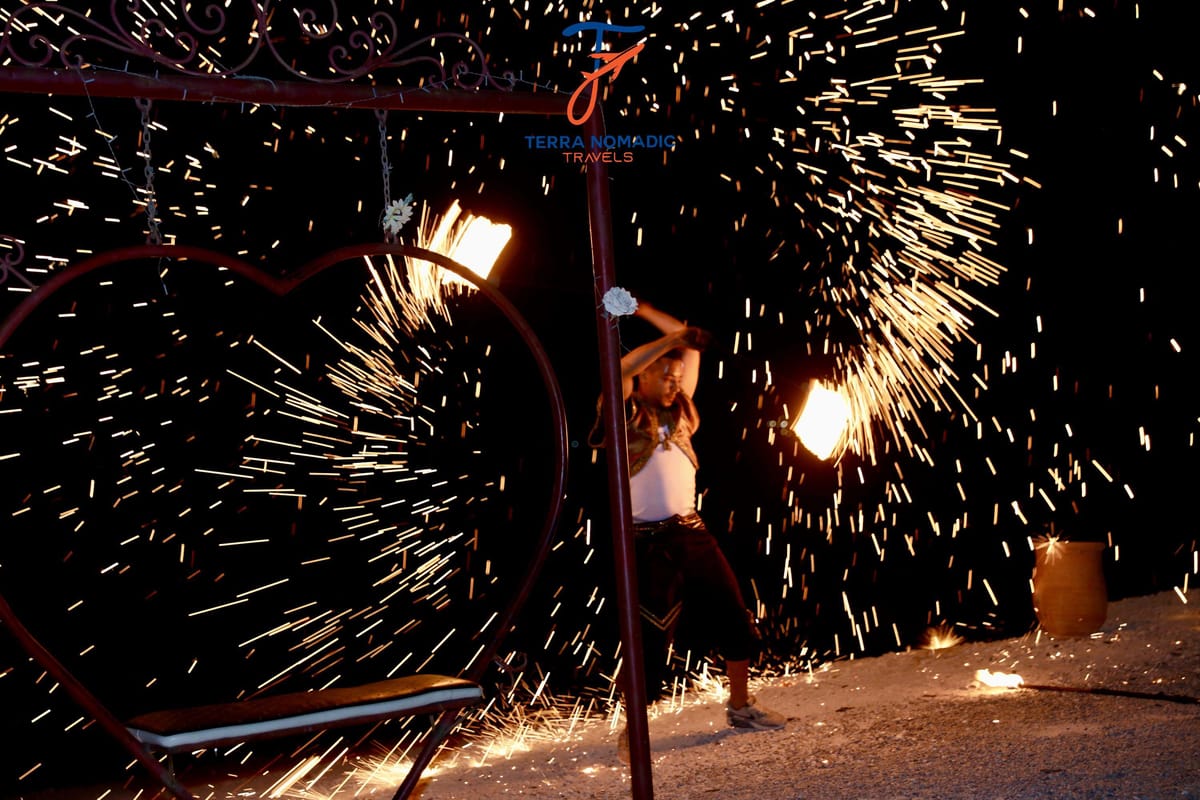
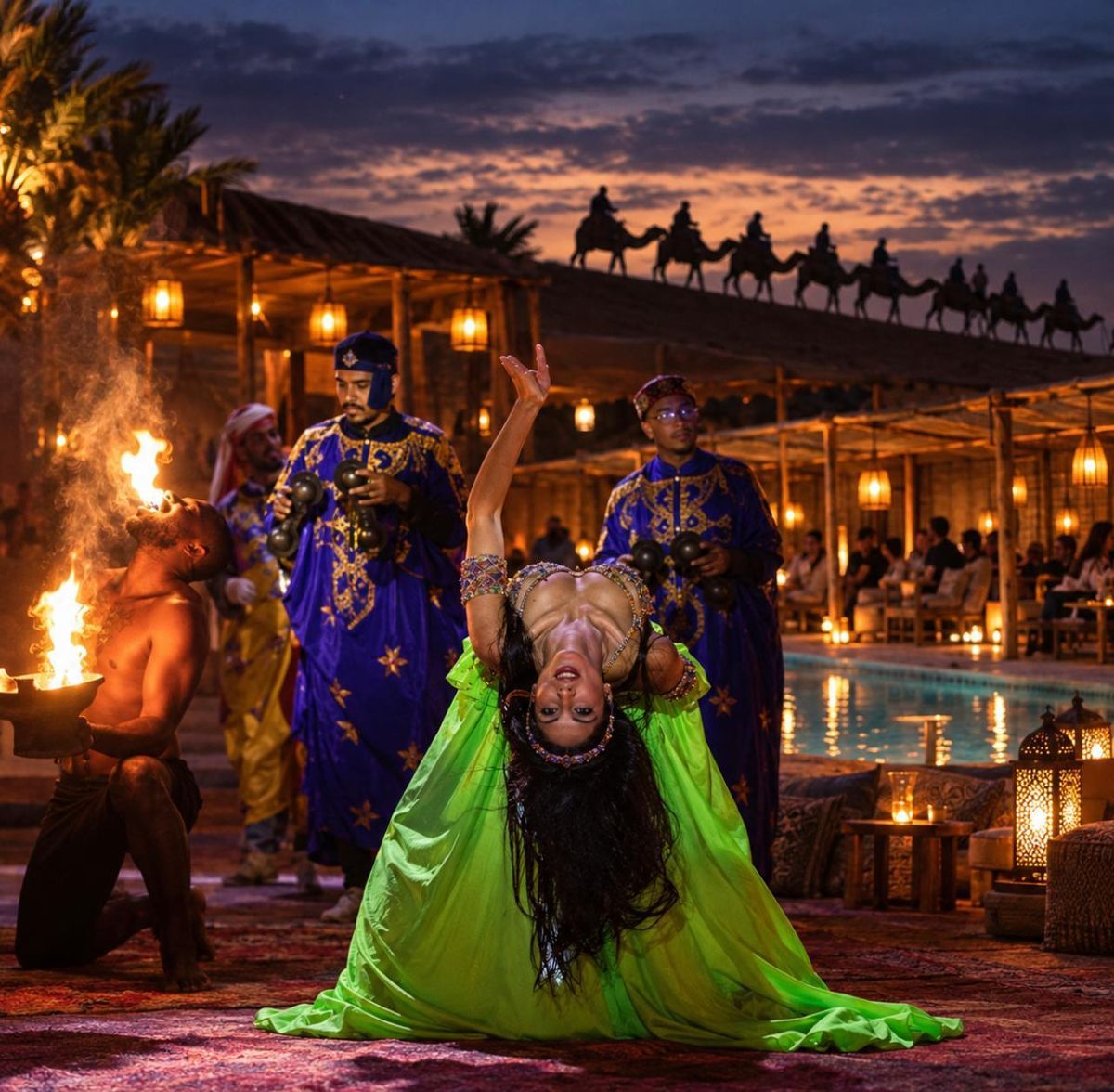
Enjoy the spectacular sunset and relax in a serene desert, followed by a delicious dinner with a live fire show and traditional music. After pickup from Marrakech, travel by bus to the vast Agafay Desert where you will be welcomed with a cup of tea. Enjoy a serene camel ride of 20 min.
5 hoursper person
5.0· 5 external ratings
Book & pay online
From €42per person
Final price depends on the selected option and availability.