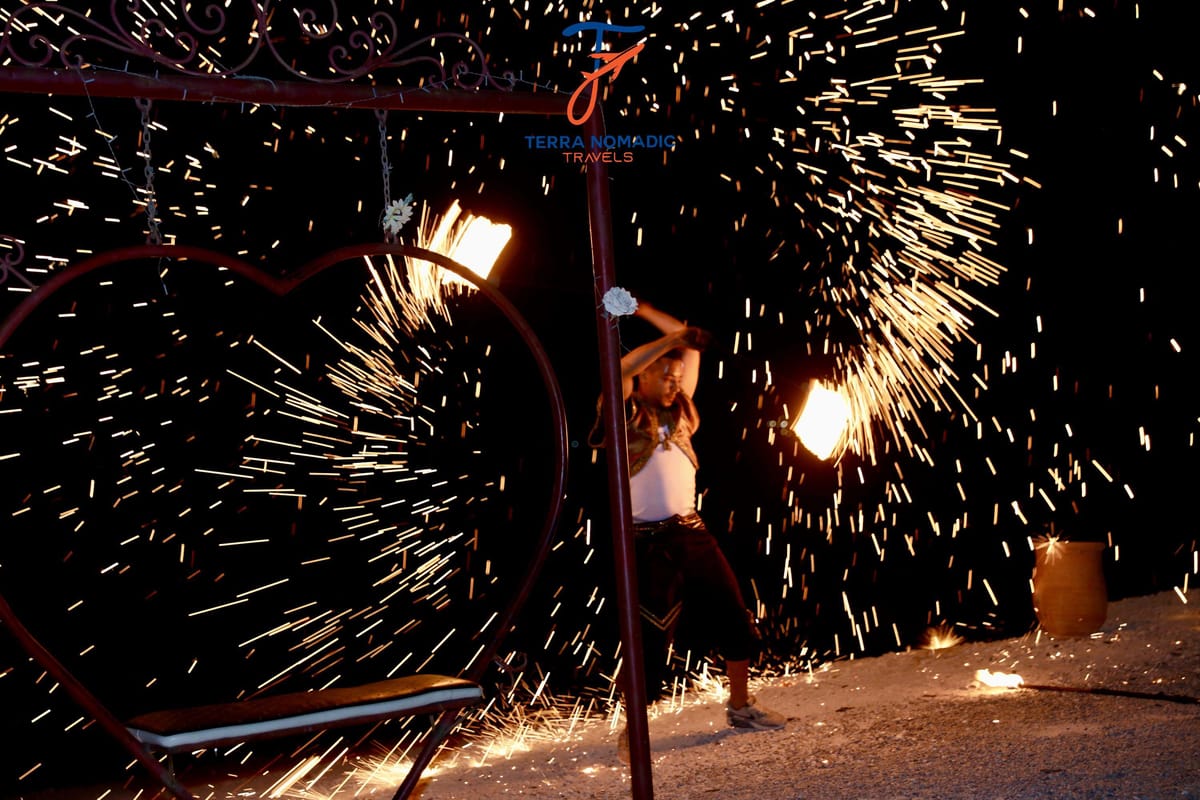
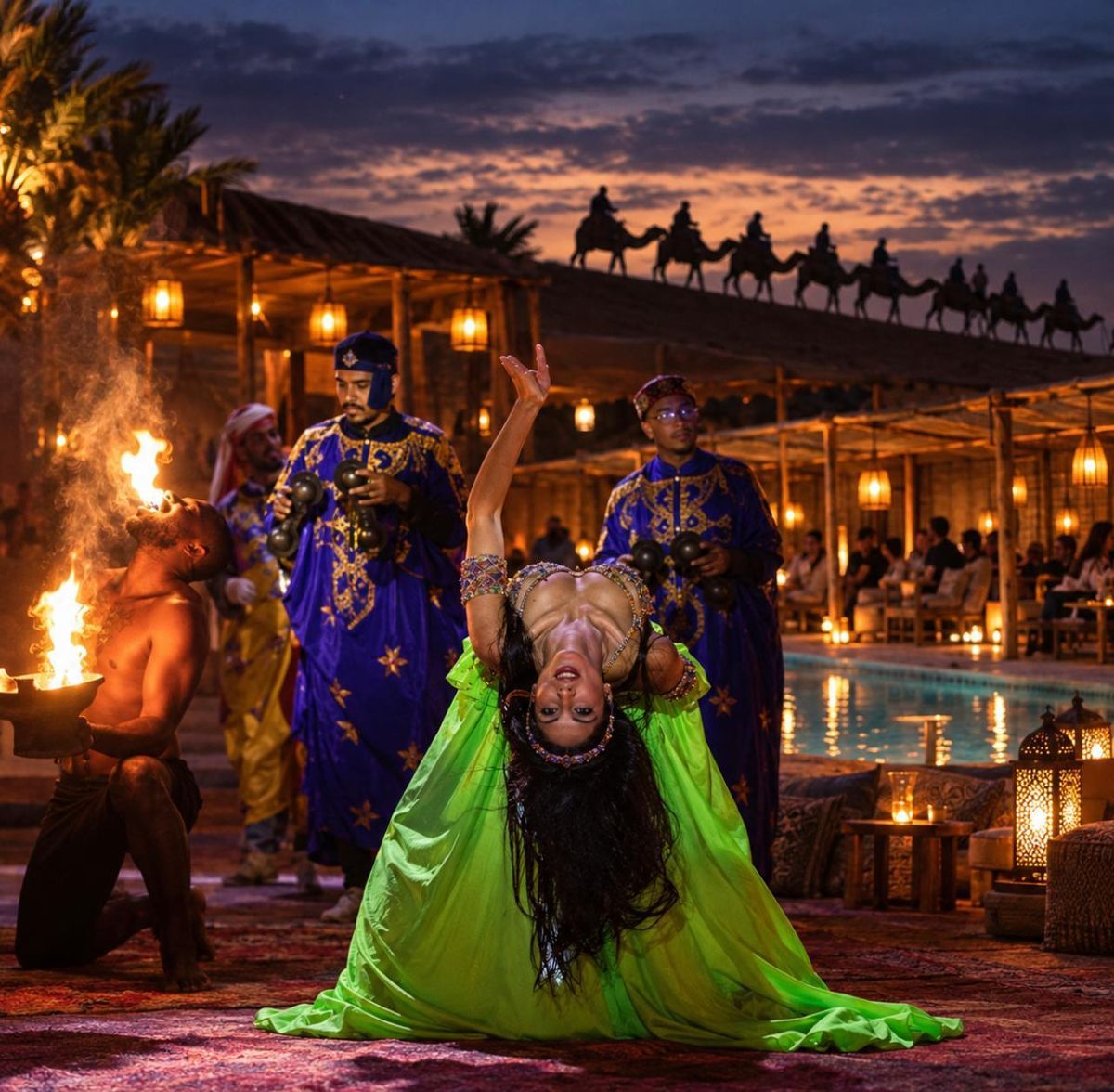
Agafay is the rocky, semi-arid desert roughly forty-five minutes from Marrakech, and its popularity has grown quickly over the past decade as a sunset camel ride, quad tour or desert dinner destination for visitors staying in the city. That popularity is good news for local camps, drivers, guides and camel handlers who depend on tourism for their livelihoods, but it also means the landscape and the communities nearby benefit most when visitors travel with a bit of awareness. None of this requires special effort or cost, just a willingness to think about the impact of an otherwise simple half-day or evening trip.
Why Agafay deserves a thoughtful approach
Unlike the Sahara's sand dunes, Agafay is a stony, semi-arid plateau with a fragile surface of rock, dust and low scrub. It does not erode or regenerate the way sand dunes do, so vehicle tracks, litter and disturbed ground can remain visible for a long time. The desert also sits close to small rural communities and family-run camps rather than large resort infrastructure, which means tourism revenue has a direct and meaningful effect on local households. Travelling responsibly here is less about dramatic gestures and more about respecting a landscape that looks tough but is actually quite delicate, and a community that benefits when visitors engage with it respectfully.
Choosing operators who support the local community
One of the simplest ways to travel responsibly in Agafay is to book with operators who employ local drivers, guides and camp staff rather than bringing in outside labour, and who pay fair wages for the camel handling, cooking and hospitality that make up the experience. Tours built around camel rides, dinners and shows naturally involve a number of local workers, so choosing an operator that treats those workers fairly has a direct effect on the community. Asking a few questions before booking, such as whether staff are local and how camels are cared for, is a reasonable and welcome thing to do, and any transparent operator should be happy to answer.
Respecting the camels and animals involved
Camel rides are a central part of most Agafay experiences, and a responsible approach means choosing operators who keep their camels well fed, properly rested between rides and not overworked across back-to-back groups. Travellers can also help simply by following the handler's instructions during mounting and dismounting, avoiding sudden movements, and not overloading a camel beyond what is reasonable for a short desert ride. If a camel appears unwell, undernourished or poorly treated, it is fair to raise this with the tour operator afterward, since feedback like this helps maintain standards across the industry.
Leaving no trace on a fragile landscape
Agafay's stony ground and sparse vegetation take a long time to recover from damage, so sticking to established tracks and paths rather than driving or walking off-route helps limit unnecessary disturbance, particularly for quad bike and buggy tours. Carrying out any rubbish, including small items like bottle caps or cigarette butts, keeps the landscape clean for the next group of visitors and for the people who live nearby. Because the desert can feel remote and empty, it is easy to assume that small amounts of litter will not matter, but the dry climate means items can remain on the ground for years rather than breaking down quickly.
Being mindful of water and resources
Water is a limited resource in this semi-arid region, and camps often have to transport it in rather than drawing on an abundant local supply. Being mindful of water use during a desert dinner or overnight stay, such as not asking for excessive top-ups or leaving taps running, is a small courtesy that respects both the environment and the practical effort involved in supplying a desert camp. The same applies to electricity and fuel, much of which is generated locally rather than drawn from a wider grid.
Supporting the villages around Agafay
Many Agafay tours pass through or near small Berber villages, and some itineraries include a stop at a local home, cooperative or market stall. Buying a small souvenir, a tea or a snack at these stops, when offered at a fair and transparent price, channels tourism income directly into the community rather than only to larger tour operators. Showing genuine interest and courtesy toward residents, including asking before taking photographs of people, is a simple form of respect that goes a long way in a place where tourism is still a relatively recent part of daily life.
Dressing and behaving with cultural awareness
Agafay sits within a broader Moroccan cultural context, so modest clothing and respectful behaviour, particularly if a tour includes a village stop or interaction with local families, are appreciated even though the desert itself is a relatively relaxed tourist setting compared to a city medina. None of this requires formal dress, just the same consideration a thoughtful traveller would bring to any cultural destination.
Choosing the right time and group size
Smaller group tours or private options tend to have a lighter footprint on both the landscape and the camel teams than very large group departures, since fewer vehicles and animals are involved per visitor. If this matters to you, it is worth asking an operator about typical group sizes before booking, particularly for quad biking or buggy tours where vehicle numbers affect both noise and ground disturbance. Timing your visit for sunset or early evening, when temperatures are cooler, is also easier on both travellers and the animals involved in camel rides.
A responsible visit still means a great one
None of this changes what makes Agafay worth visiting: the dramatic stony landscape, the Atlas Mountains on the horizon, the camel ride at sunset and the Berber-style dinner under the stars. Travelling responsibly simply means enjoying all of that while leaving as light a footprint as possible and making sure the benefits of tourism reach the people who call this landscape home. Our Agafay desert guide covers what a typical visit involves in more detail, and our nature in Agafay article looks at the plants, birds and wildlife that share this quiet landscape. If you are deciding between a half-day and a full evening trip, our Agafay desert FAQ answers the most common planning questions travellers ask before booking.
Ready to plan a responsible Agafay trip? Compare our camel ride, dinner and quad tour options below, all run with local drivers, guides and camp teams.
Frequently asked questions
- What does responsible travel mean in Agafay specifically?
- It mainly means choosing operators who employ and pay local staff fairly, treating camels well, sticking to tracks, carrying out rubbish, and being mindful of water use in a semi-arid landscape.
- Does Agafay need the same care as the Sahara dunes?
- Agafay is a stony, rocky desert rather than sand dunes, and its surface does not regenerate the same way, so vehicle tracks and litter can remain visible for a long time if visitors are not careful.
- How can I tell if an Agafay operator treats its camels well?
- Look for camels that appear well fed and not overworked across back-to-back groups, and feel free to ask the operator directly how rest and care are managed.
- Is it okay to take photos of local people in Agafay?
- It is best to ask before photographing residents or their homes, the same courtesy you would extend anywhere, since tourism is still a relatively recent part of daily life in these communities.
- Does buying souvenirs at a village stop actually help locals?
- Yes, buying a tea, snack or small item at a fair price during a village stop channels income directly into the local community rather than only to larger tour operators.
- Should I worry about water use during a desert dinner or camp stay?
- Water is limited in this semi-arid region and often has to be transported in, so avoiding unnecessary waste during a dinner or overnight stay is a simple courtesy.
- Are smaller group tours more responsible than large ones?
- Smaller or private tours generally involve fewer vehicles and animals per visitor, which tends to mean a lighter footprint on both the landscape and the camel teams.
- Do I need to dress differently for responsible travel in Agafay?
- Modest, respectful clothing is appreciated, particularly if your tour includes a village stop, though the desert itself is a relatively relaxed tourist setting.
- Can I give feedback if I see an animal or environment treated poorly?
- Yes, raising concerns with the tour operator afterward is a reasonable and useful way to help maintain good standards across the industry.
- Where can I read more about what an Agafay trip actually involves?
- Our Agafay desert guide outlines the typical camel ride, dinner and timing, and our Agafay desert FAQ answers common planning questions before you book.