

Sahara Desert Photography: How to Capture the Dunes
Golden light lasts only minutes in the dunes. Here's how to be ready when it comes.
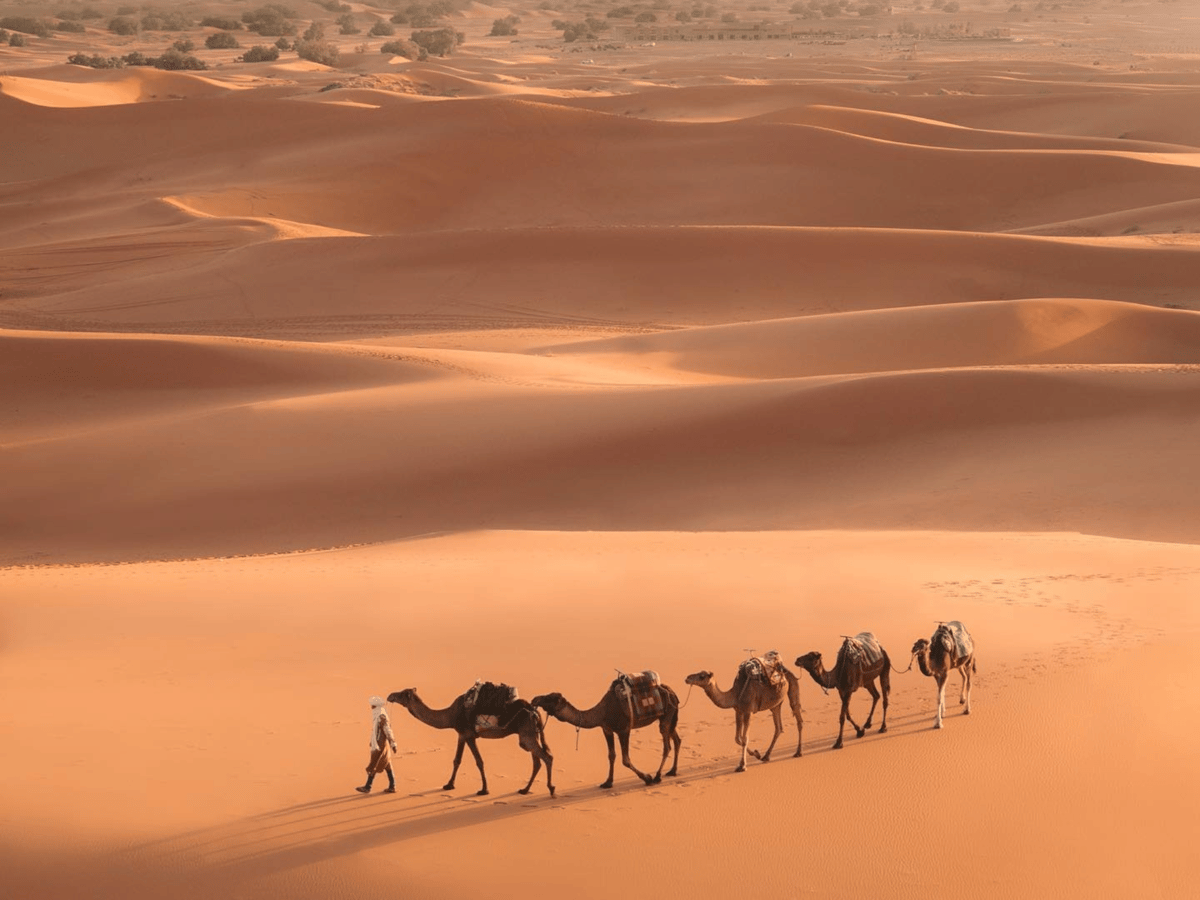
Practical tips for photographing the Sahara near Merzouga, from timing sunrise and sunset light to simple gear and composition advice, with live overnight tours built around that timing.
Quick answer: Sahara desert photography around Merzouga is mostly about timing, since the most striking light on the dunes happens in a narrow window around sunrise and sunset, when low sun angles carve deep shadows into the sand and warm the colour of the whole scene. A camel trek, an overnight desert camp or a 4x4 route timed around those hours gives you the best chance at strong photos, and a few simple habits around gear, composition and protecting your equipment from sand make a real difference. Several overnight Merzouga tours below are built around sunset and sunrise timing in the dunes, which matters as much as any camera setting.
Why timing matters more than equipment
The single biggest factor in desert photography is light, not camera quality. In the hour after sunrise and the hour before sunset, the sun sits low on the horizon, which lengthens shadows across the dune ridges and gives the sand a warm, almost orange tone that flat midday light simply cannot match. During the middle of the day, the sun sits high overhead, flattening shadows and washing out the texture that makes dune photos interesting. A smartphone used well during golden hour will usually outperform an expensive camera used at midday, so building your schedule around sunrise or sunset matters more than which device you bring.
Golden hour and blue hour in the dunes
Golden hour, the period shortly after sunrise or before sunset, is when most striking dune photos are taken, since the low light angle highlights every ripple in the sand. Blue hour, the short window just before sunrise or just after sunset, offers a cooler, softer light that works well for silhouettes of camels or riders against a fading sky. Both windows are brief, often lasting twenty to thirty minutes at their best, so arriving at your chosen spot slightly early and staying ready beats rushing to catch the moment once it has already started.
Composition ideas that work well in the Sahara
Dune ridgelines photograph well when shot from a low angle, since this exaggerates their height and curves against the sky. Including a human figure, a camel or a line of camel tracks in the frame gives a sense of scale that an empty expanse of sand cannot on its own. Footprints or wind ripples in the foreground add texture and lead the eye into the wider scene, which tends to work better than centring everything on the horizon. Shooting toward the sun during golden hour can create strong silhouettes, while shooting with the sun behind you brings out the full colour and texture of the sand.
Camera settings and simple gear tips
A tripod is genuinely useful for both sunrise or sunset long exposures and any attempt at night sky photography, since even a slight hand movement blurs a long exposure shot. If you are shooting on a phone, using the built in night mode or a manual exposure setting, where available, helps capture detail that automatic settings often miss in low light. A polarising filter can deepen the blue of the sky and reduce glare off the sand during the day, though it is optional rather than essential. Keep exposure settings simple to start, and review a few test shots on location rather than waiting until you are back at camp to find out the light was wrong.
Protecting your gear from sand and dust
Fine Sahara sand gets into everything, including camera bodies, lenses and phone ports, so a simple plastic bag or dedicated dry bag for carrying equipment between shots helps more than people expect. Changing lenses in the open dunes is risky, since a gust of wind can carry sand directly into an open camera body, so doing this inside a vehicle or tent when possible is safer. A soft cloth for wiping down equipment, and avoiding setting a camera bag directly on loose sand, both help avoid the gritty damage that sand causes over a longer trip.
Photographing camels, camps and people respectfully
Camel treks and nomad stops are some of the most photographed moments on a Sahara trip, and a little courtesy goes a long way. Always ask your guide before photographing local people directly, particularly at a nomad family stop, since not everyone welcomes a camera pointed at them even during a friendly visit. Camels and camp scenes are generally fine to photograph freely, and golden hour light during a camel trek toward or away from camp tends to produce some of the most memorable images of a Sahara trip.
Capturing the night sky
Night photography in the dunes needs a tripod, a long exposure setting and a dark sky away from camp lighting, since stars are far dimmer than any daytime scene. A basic understanding of your camera or phone's manual or night mode settings helps considerably, and patience matters since results often take a few attempts to get right. For a closer look at what makes desert nights so dark and clear in the first place, our stargazing in the Sahara guide covers the conditions that make night photography worthwhile near Merzouga.
Choosing a tour built around the best light
Because golden hour and the night sky both depend on timing, the tours below include an overnight desert camp stay, giving you both a sunset and a sunrise within the same trip rather than squeezing everything into a single rushed visit. If a reliable, striking backdrop for photos is part of what draws you to the Moroccan desert, our Agafay's best Instagram spots guide covers a similar theme in the desert landscape closer to Marrakech, useful if your trip combines both areas. Check each tour's current description for camp location and timing before booking, since the exact sunrise and sunset schedule shifts with the season.
Frequently asked questions
- What is the best time of day for Sahara desert photography?
- The hour after sunrise and the hour before sunset, known as golden hour, give the most striking light, since low sun angles create long shadows and warm colour across the dunes.
- Do I need a professional camera to photograph the Sahara well?
- No, a smartphone used during golden hour often produces better results than an expensive camera used at midday, since timing and light matter more than equipment.
- How do I protect my camera from sand in the desert?
- Keep equipment in a sealed bag or dry bag between shots, avoid changing lenses in the open dunes, and wipe gear down with a soft cloth rather than setting it directly on loose sand.
- Is it okay to photograph nomad families or local guides during a desert tour?
- Always ask your guide or the person directly before photographing them, since not everyone is comfortable being photographed even during a friendly visit.
- What is blue hour and why does it matter for desert photos?
- Blue hour is the short window just before sunrise or just after sunset with soft, cool light, which works particularly well for silhouettes of camels or riders against the sky.
- Do I need a tripod for Sahara desert photography?
- A tripod is genuinely useful for sunrise or sunset long exposures and for any night sky photography, since even slight movement blurs a long exposure shot.
- How can I photograph the night sky in the Sahara?
- Use a tripod, a long exposure or night mode setting, and shoot away from camp lighting on a clear, moonless night for the best chance at capturing visible stars or the Milky Way.
- What composition tips work well for dune photos?
- Shooting from a low angle exaggerates dune curves, including a camel or person adds a sense of scale, and foreground footprints or ripples help lead the eye into the scene.
- Why do midday desert photos often look flat?
- With the sun high overhead, shadows flatten and the sand loses the texture and warm colour that low sunrise or sunset light brings out, making photos look less dramatic.
- Which tours are best for photographers visiting the Sahara?
- Overnight tours that include both a sunset and a sunrise in the dunes give photographers two chances at golden hour light plus a dark sky at night, rather than a single rushed day visit.
Questions before you book?
Questions? Ask us on WhatsAppMessaging us does not confirm a booking; confirmation follows verified payment.
WhatsApp +212 655 786 616 · Contacting us on WhatsApp does not confirm a booking; confirmation follows verified payment.
Related articles
Desert & Sahara
One Night or Two in the Sahara?
The real difference between a 2-day and a 3-day Sahara desert tour from Marrakech, what changes about the drive and the camp, and four live tours to compare before you book.
5 min readUpdated 16 October 2026
Desert & Sahara
Sahara Desert FAQ: 30 Questions Travellers Ask
Thirty short, direct answers to the most common questions about booking and taking a Sahara desert tour from Marrakech, from route and camp details to payment and cancellation.
5 min readUpdated 16 October 2026
Desert & Sahara
10 Mistakes to Avoid on a Sahara Desert Tour
Ten common mistakes travellers make when booking and taking a Sahara desert tour from Marrakech, and how to avoid each one before you leave.
4 min readUpdated 16 October 2026