

Visiting a Nomad Family in the Sahara
Tea in a nomad tent, far from any road, is one of the quieter moments travellers remember long after the dunes have faded from memory.
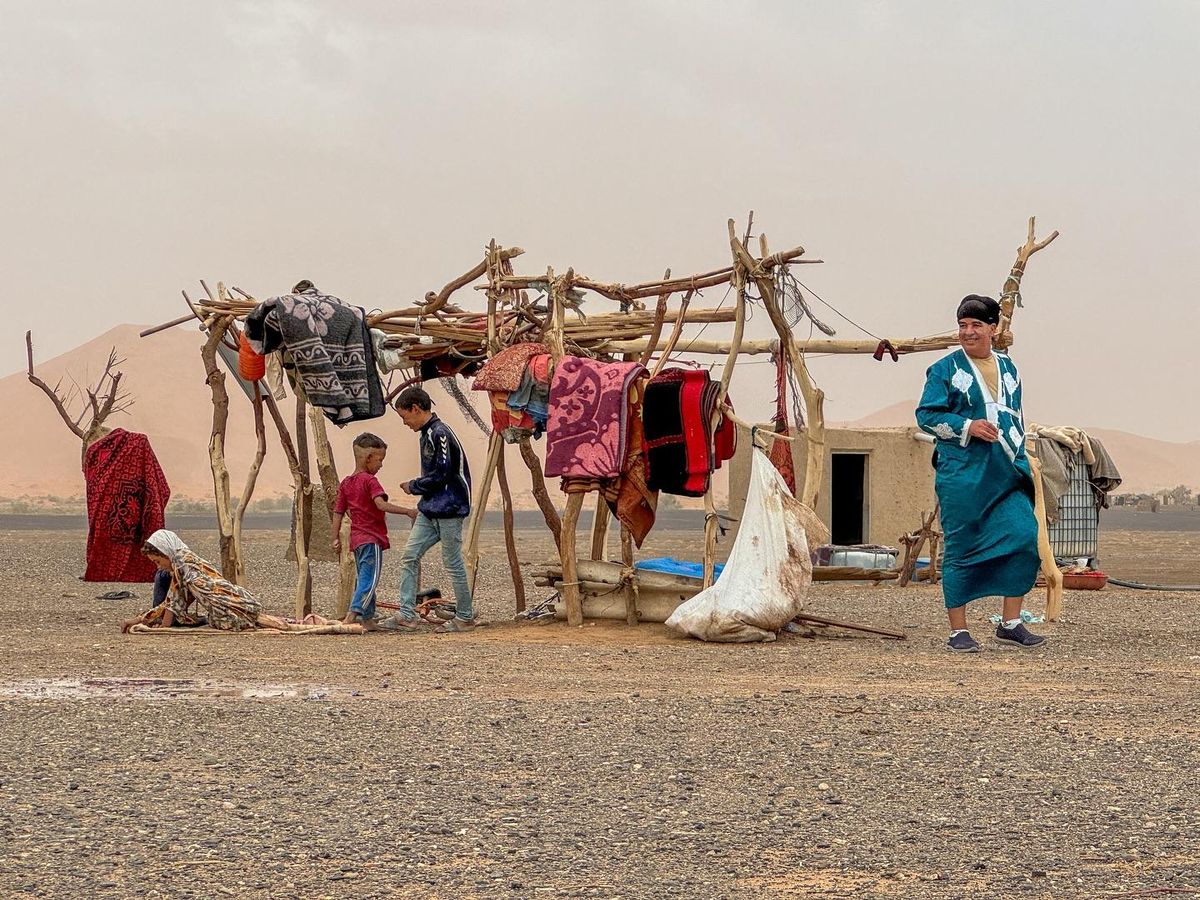
What a nomad family visit near Merzouga actually involves, who Sahara nomads are, and what to expect from tea, tents and a respectful short stop on a desert tour.
Quick answer: a nomad family visit on a Sahara tour near Merzouga is usually a short stop, often by camel or 4x4, at a tent belonging to a family connected to the semi-nomadic or formerly nomadic Amazigh and Arab communities of this part of Morocco. Visitors are typically welcomed with mint tea, shown a traditional tent, and can ask questions about daily life in the desert through a guide who translates. It is a brief, low-key encounter rather than a staged show, and it works best when approached with curiosity and respect rather than treating the visit like a photo opportunity. Several Merzouga area tours below include this kind of stop, alongside camel rides, camps and 4x4 routes through the dunes.
Who are the Sahara's nomads
For centuries, nomadic and semi-nomadic families have lived across the pre-Sahara and desert fringe of southern Morocco, moving with herds of goats, sheep and camels in search of grazing and water. Many belong to Amazigh, often called Berber, communities, while others are Arab families whose ancestors also followed seasonal herding routes through this part of the country. Their traditional homes were tents woven from wool or goat hair, built to be taken down and moved as the seasons and available pasture changed.
Life has changed considerably over the past decades. Drought, modern roads, schooling for children and the pull of nearby towns like Merzouga and Rissani have led many families to settle at least part of the year, while others continue to move with animals for parts of the year or maintain a tent near the dunes alongside a home elsewhere. Some families who welcome visitors today live a genuinely mobile or semi-mobile life, while others have settled but keep a traditional tent and way of welcoming guests that reflects this heritage. A good guide will usually be honest about which situation applies to the family you visit.
What happens during a typical visit
Most nomad family visits included on Sahara tours are short, usually somewhere between twenty minutes and an hour, and happen partway through a camel trek or a 4x4 excursion around the Erg Chebbi dunes. Guests are generally invited to sit inside or near a tent woven from wool or goat hair, and the family or guide prepares mint tea, often poured from height in the traditional style. There may be simple seating on rugs, a look at tools or utensils used for daily life, and sometimes bread baked in the sand or embers nearby.
Conversation is usually mediated through the tour guide, since many nomad families speak Tamazight or a local Arabic dialect rather than English or French. Guides can translate questions about herding, the seasons, family life or how the tent is built and moved, which tends to be more interesting than a silent stop for photos. Some tours combine the nomad visit with a stop at a small desert well or oasis, since water sources are naturally central to how families choose where to camp.
Moroccan hospitality and tea traditions
Tea is central to hospitality across Morocco, and nomad families are no exception. Mint tea, sometimes called Moroccan whisky as a local joke, is poured in a specific way that aerates the drink and is often served three times, with a well known saying that each glass tastes a little different. Accepting tea when offered is generally seen as a simple way to show respect for the welcome being extended, even if you only take a small amount.
How to visit respectfully
A nomad family visit is a glimpse into someone's home and daily life, not a performance, so a few simple habits go a long way. Always ask your guide before taking photos of people, since not everyone is comfortable being photographed, and children in particular should only be photographed with clear permission. Dressing modestly, following your guide's lead on where to sit or walk, and keeping voices calm inside a small tent all help the visit feel comfortable for the family hosting you. If the family sells small handmade items such as jewellery, textiles or simple crafts, buying something is a thoughtful and direct way to support the household, though it is never expected.
It is worth remembering that every family and every visit is different. Some stops are brief and simple, centred mainly on tea and a short look at the tent, while others may involve more conversation, depending on the family, the guide and how much time the tour allows. Keeping expectations modest, rather than imagining the stop as a full cultural performance, tends to make for a more genuine and comfortable encounter for everyone involved.
Where a nomad visit fits in a wider Sahara trip
A nomad family stop usually sits alongside the better known parts of a Sahara itinerary, including a camel trek into the Erg Chebbi dunes, a night in a desert camp and a 4x4 excursion through the surrounding desert. For a wider look at how these pieces fit together across a multi day route, our Merzouga Sahara guide and Marrakech to Merzouga three day tour route guide both cover the general shape of these trips. If you are still deciding which base to choose for your desert nights, our luxury desert camps in Merzouga guide explains what different camp styles actually offer.
Tours below that include a nomad family stop
The tours listed below run from Marrakech or directly from Merzouga and include a stop connected to a nomad family or semi-nomadic community as part of the itinerary, alongside camel rides, camp nights or 4x4 routes through the dunes. Exact details of each stop can vary by departure and guide, so check the current tour description and included stops before booking, and ask your guide on the day for the specific context of the family you visit.
A respectful souvenir of the visit
Many travellers come away from a nomad family visit with a different sense of the desert, one shaped less by the scale of the dunes and more by the quiet resourcefulness of a way of life adapted to a difficult landscape over generations. Treating the stop as a chance to listen and learn, rather than simply to collect a photo, tends to be what people remember most once they are back home.
Frequently asked questions
- What happens during a nomad family visit in the Sahara?
- Most visits are short stops, often during a camel trek or 4x4 excursion, where guests are welcomed with mint tea and a look at a traditional tent, usually with a guide translating conversation with the family.
- Are Sahara nomads near Merzouga still fully nomadic today?
- Some families still move seasonally with animals, while many others have settled at least part of the year due to drought, schooling and modern roads, though they may keep a traditional tent and welcome visitors.
- Is it okay to take photos during a nomad family visit?
- Always ask your guide or the family first, especially before photographing children, since not everyone welcomes photos even during a friendly visit.
- How long does a typical nomad family visit last?
- Most stops included on Sahara tours last somewhere between twenty minutes and an hour, usually as one stop within a longer camel trek or 4x4 route.
- What language do nomad families near Merzouga speak?
- Many speak Tamazight or a local Arabic dialect, so tour guides typically translate conversation between visitors and the family.
- Should I buy something during a nomad family visit?
- If the family offers handmade items such as textiles or jewellery, buying something is a thoughtful way to support the household, though it is never required.
- Is a nomad family visit included on every Merzouga tour?
- No, it depends on the specific tour and itinerary, so check the included stops on a tour description before booking if this is a priority for you.
- What is traditionally served during a nomad tent visit?
- Mint tea is the most common offering, often poured in the traditional Moroccan style, and sometimes accompanied by simple bread baked nearby.
- How should I dress for a nomad family visit?
- Modest, comfortable clothing that covers shoulders and knees is a respectful choice, similar to what works well for a desert camp or small village stop.
- Where does a nomad family visit usually fit in a Sahara itinerary?
- It is typically combined with a camel trek, a 4x4 excursion around the Erg Chebbi dunes, or a night in a desert camp, rather than booked as a standalone activity.
Questions before you book?
Questions? Ask us on WhatsAppMessaging us does not confirm a booking; confirmation follows verified payment.
WhatsApp +212 655 786 616 · Contacting us on WhatsApp does not confirm a booking; confirmation follows verified payment.
Related articles
Desert & Sahara
One Night or Two in the Sahara?
The real difference between a 2-day and a 3-day Sahara desert tour from Marrakech, what changes about the drive and the camp, and four live tours to compare before you book.
5 min readUpdated 16 October 2026
Desert & Sahara
Sahara Desert FAQ: 30 Questions Travellers Ask
Thirty short, direct answers to the most common questions about booking and taking a Sahara desert tour from Marrakech, from route and camp details to payment and cancellation.
5 min readUpdated 16 October 2026
Desert & Sahara
10 Mistakes to Avoid on a Sahara Desert Tour
Ten common mistakes travellers make when booking and taking a Sahara desert tour from Marrakech, and how to avoid each one before you leave.
4 min readUpdated 16 October 2026