Hot afternoons, cold nights and sand everywhere: pack these and you will be ready for all three.
A practical packing list for a Sahara desert tour from Marrakech, covering layers for hot days and cold nights, footwear, a scarf for sand and sun, and what to bring for the camel trek and desert camp.
Quick answer: Pack light layers for hot desert afternoons, a warm fleece or jacket for cold desert nights, closed shoes for walking on dunes, a headscarf or scarf against blowing sand, sun protection, a small daypack for the camel trek and a power bank, since charging in a desert camp is limited. Most of the drive from Marrakech to Merzouga also passes through the Atlas Mountains, so pack for cooler mountain stops as well as the desert itself.
Why desert packing is different from the rest of Morocco
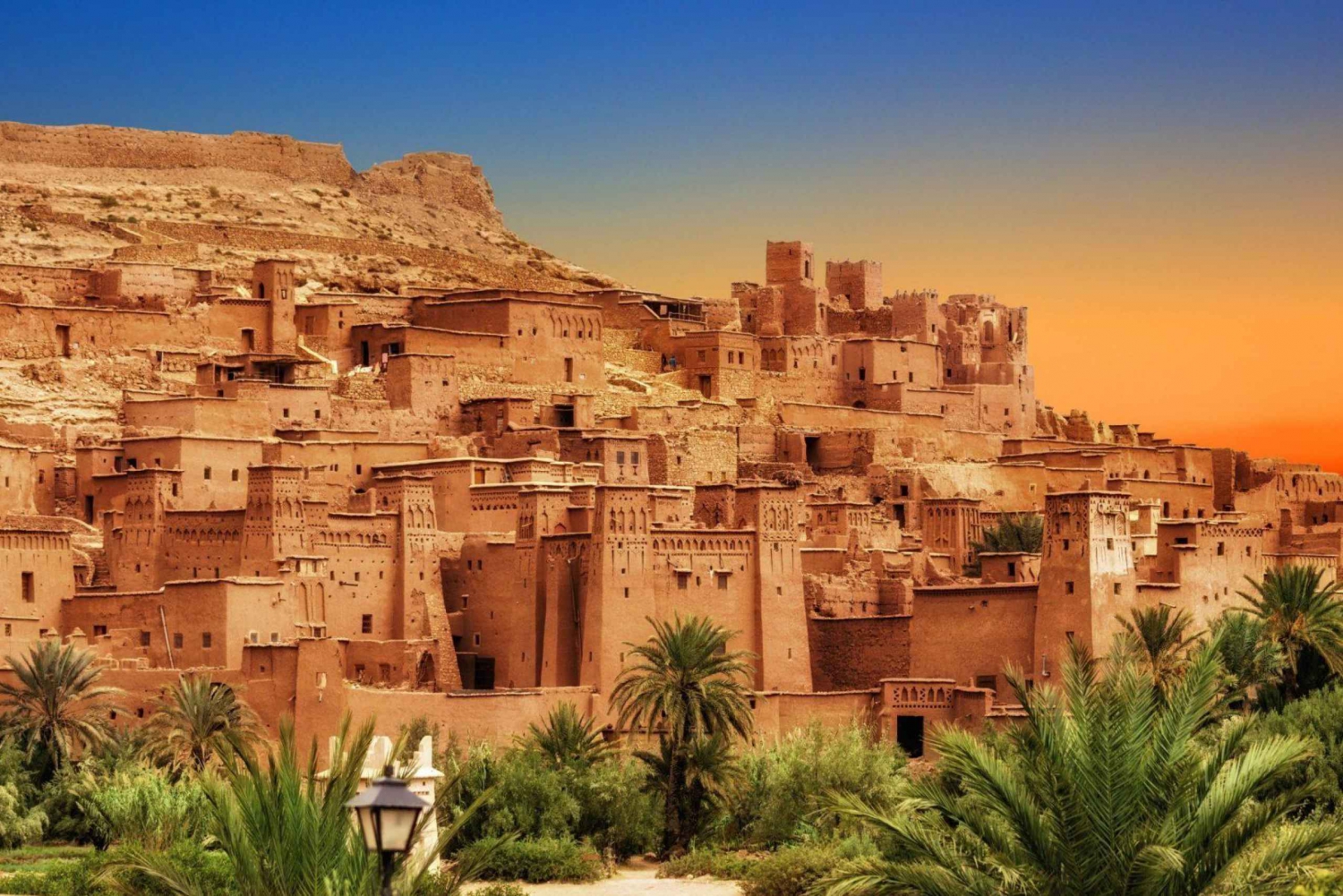
A Sahara tour from Marrakech covers more than just the dunes. The road to Merzouga crosses the Tizi n Tichka pass in the High Atlas, the kasbah of Ait Ben Haddou and the Dades or Todgha gorges before reaching Erg Chebbi, so your bag needs to work for mountain stops, long hours in a vehicle and a night camping on sand, not only for the desert camp itself. Temperatures swing more in the desert than almost anywhere else in Morocco, with hot days and cold nights, which is the main reason a packing list built for Marrakech or the coast falls short here.
Clothing for hot days and cold nights
Daytime temperatures in the Sahara can be very warm, even outside summer, so loose, breathable clothing in natural fabrics works better than anything tight or synthetic. Once the sun goes down, the desert cools quickly and temperatures at night can drop close to freezing in winter, so a warm layer such as a fleece, a jacket or a thick jumper is essential even if the afternoon was hot. Packing in layers that can be added or removed through the day is more useful than one single outfit, since the same clothes have to work at midday on a dune and at 2am outside your tent.
Footwear for dunes and camel treks
Closed shoes or trainers are the most practical choice for the camel trek out to camp and for walking on the dunes themselves, since sand gets everywhere and loose sandals can fill up or slip off. Some travellers prefer to go barefoot for short stretches on the soft sand near camp, but shoes are still needed for the walk to and from the camels and for any stop along the road. A pair you do not mind getting sandy is more useful than anything delicate.
A scarf for sand and sun
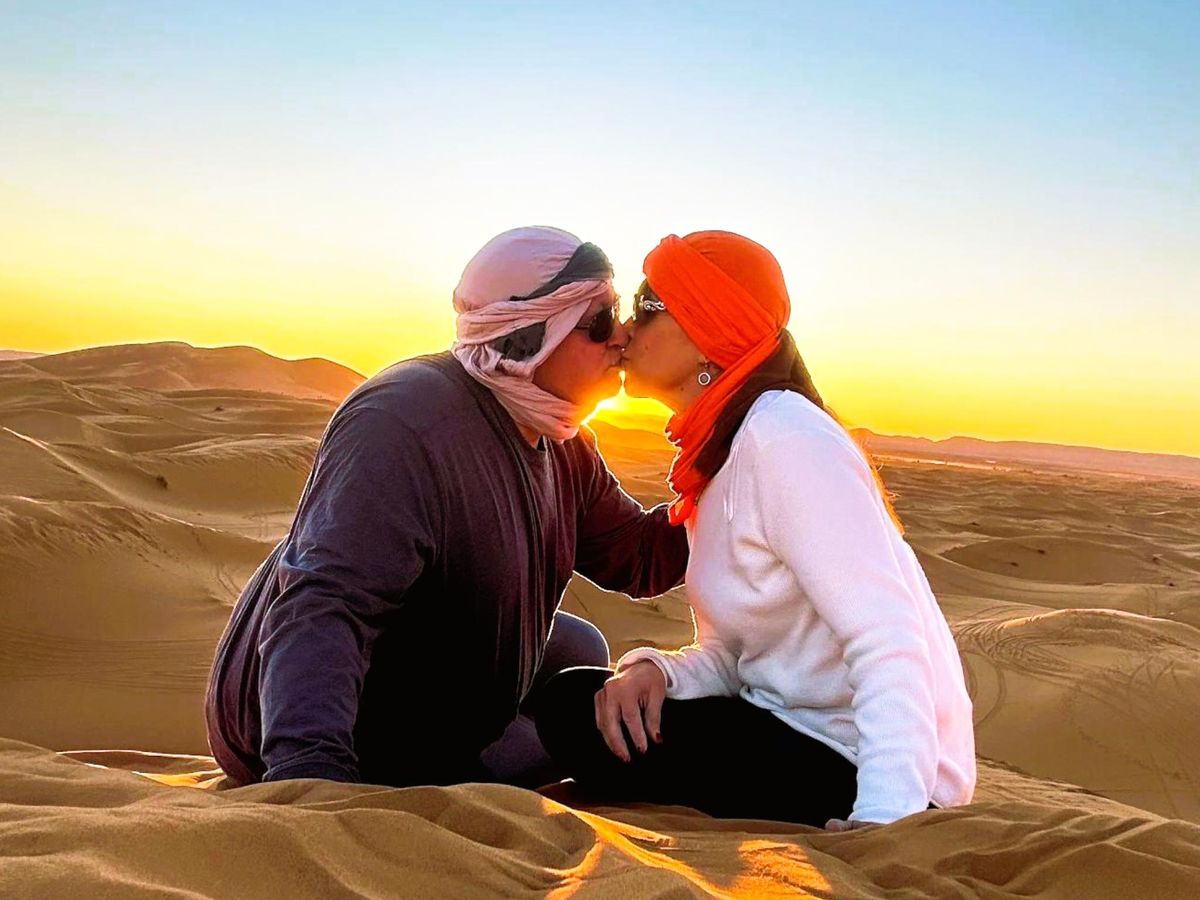
A long scarf, similar to the ones often sold at stops along the route, is one of the most useful single items for a Sahara trip. Wrapped around the head and face, it protects against blowing sand during the camel trek and against strong sun during the day, and doubles as an extra layer of warmth around the neck once the temperature drops at night. Our guide on what to wear in the Sahara desert goes into more detail on how to tie a scarf and what else to wear for the climate.
Sun protection and hydration
The desert sun is strong even when the air temperature does not feel extreme, so sunglasses, a sun hat and a high factor sunscreen matter for every stop along the route, not only in camp. Bottled water is usually provided during the tour, but carrying your own bottle to refill is a practical habit, since the dry desert air increases how much water you need compared with a normal day in Marrakech.
What to bring for the camel trek and the camp
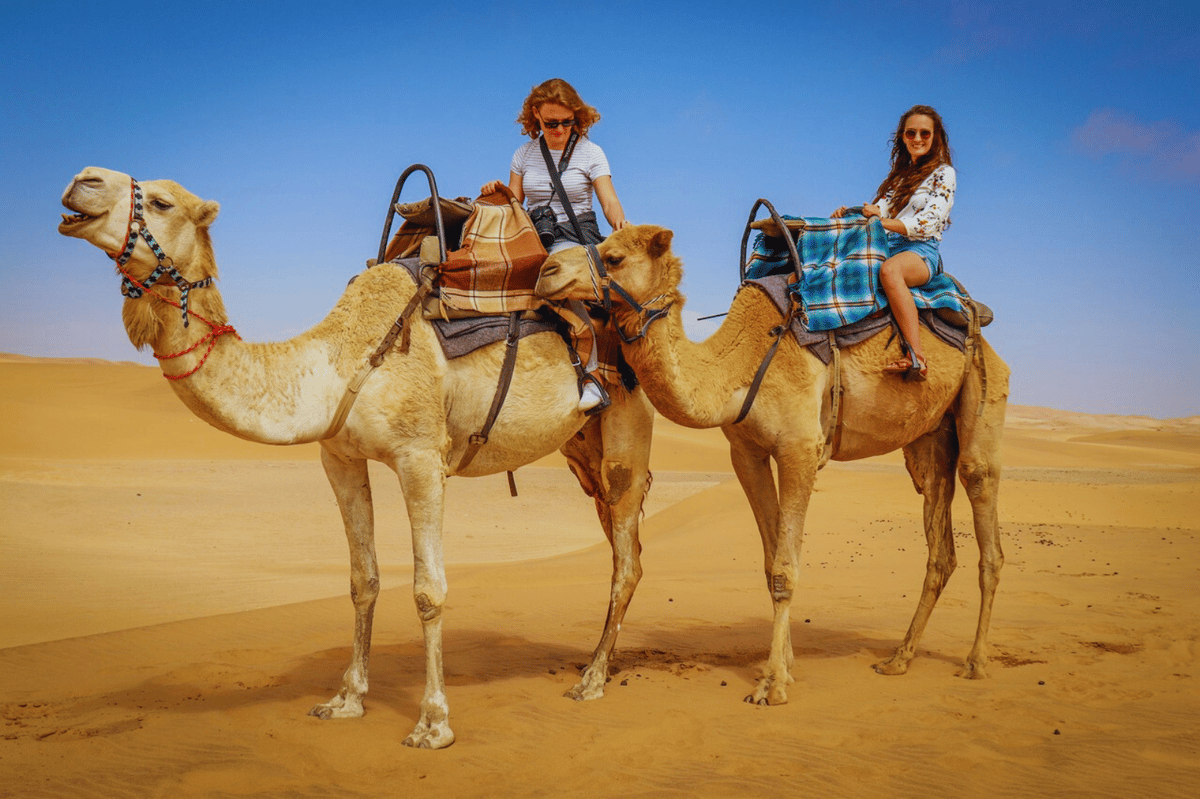
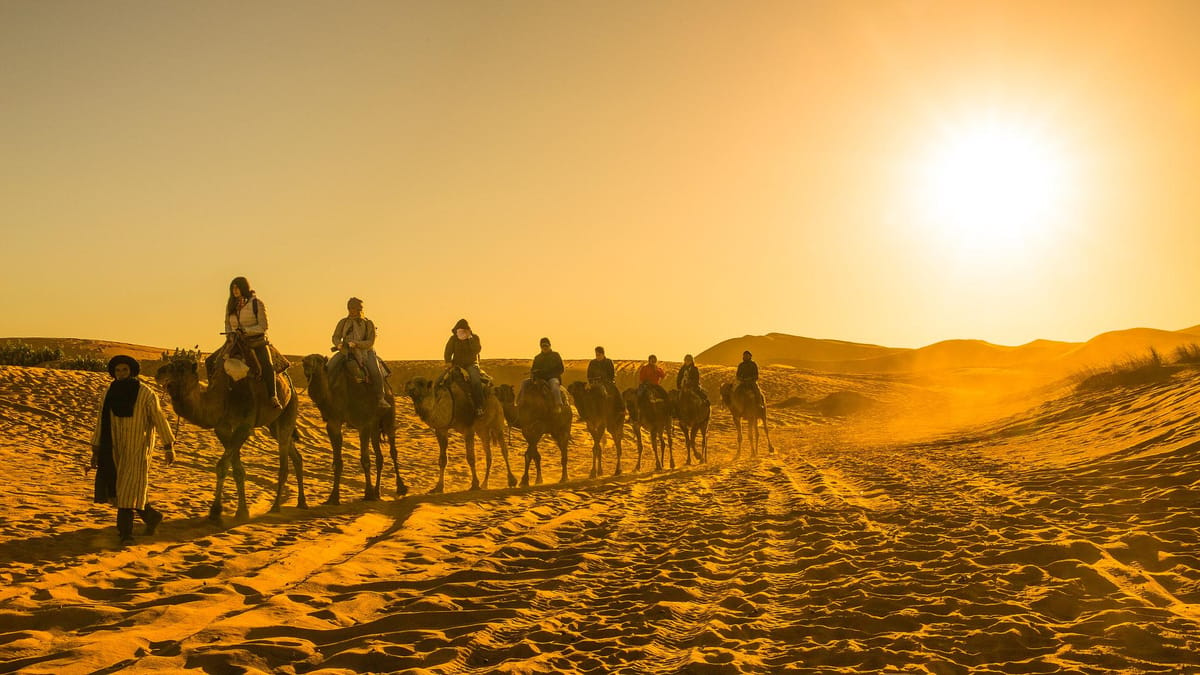
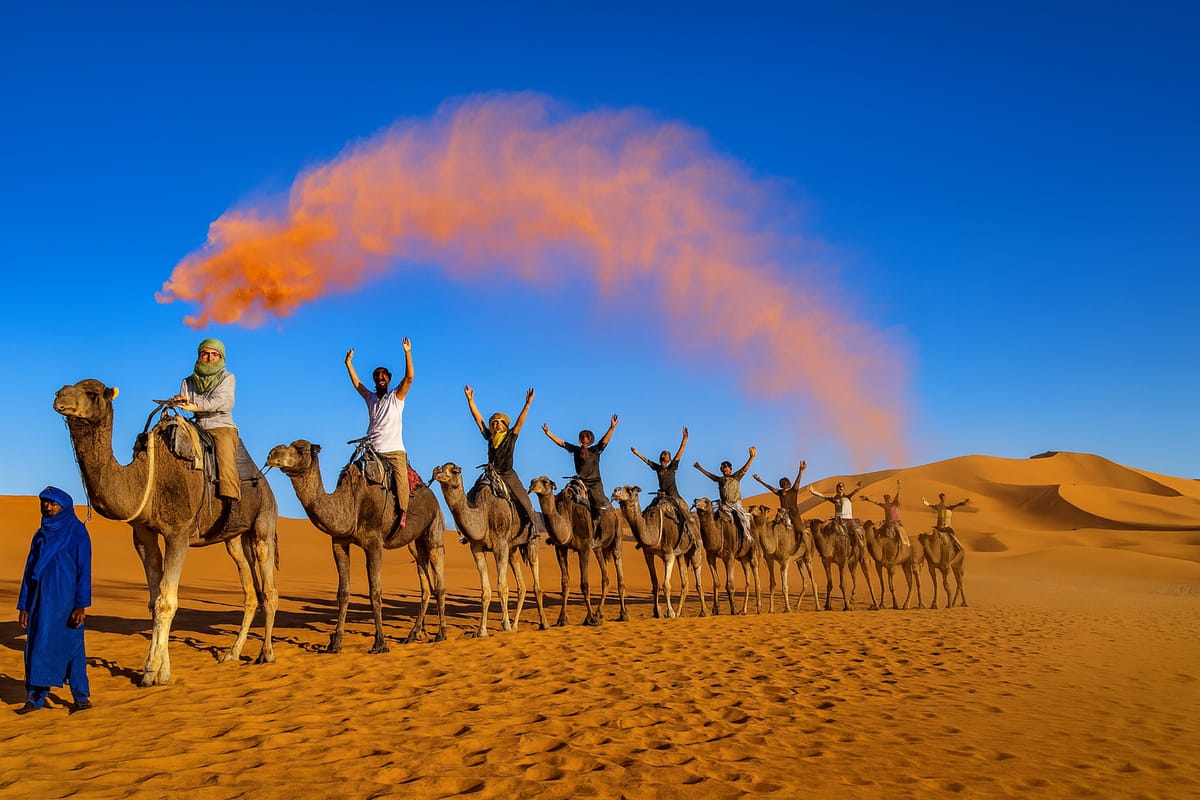
A small daypack is useful for carrying a scarf, sunscreen, a camera and a warm layer during the camel trek itself, since larger luggage usually stays with the vehicle rather than travelling by camel. In camp, bring a torch or headlamp for moving around after dark, since desert camps run on generator or solar power, with lighting usually limited to the dining tent and immediate camp area. A power bank is worth packing too, since charging points are limited or unavailable at most desert camps, and phones are often used heavily for photos of the dunes and stars.
Toiletries and small extras
Basic toiletries, wet wipes and hand sanitiser are useful since washing facilities at a standard desert camp are simpler than a hotel, though our luxury desert camps in Merzouga guide covers camps with a private bathroom if that matters for your trip. A small bag or pouch to keep sand out of your main luggage is a practical extra that experienced desert travellers tend to pack. Earplugs can help if you are a light sleeper, since desert camps are otherwise very quiet once the fire and music wind down.
What you do not need to bring
You do not need specialist desert gear, hiking boots or expedition equipment for a standard one or two night Sahara tour, since the walking involved is limited to the camel trek and short walks around camp rather than trekking across the dunes on foot. Heavy luggage is also best avoided, since bags usually need to be moved between the vehicle, the camel and the tent, and a smaller soft bag is easier to manage over sand than a large hard suitcase.
Packing for the road as well as the desert
Since the journey to Merzouga takes two or three days through mountains and gorges before reaching the dunes, pack a light jacket for cooler stops at altitude, snacks and water for the drive, and comfortable clothing for long hours in the vehicle. Our Merzouga or Zagora comparison is worth reading if you have not yet chosen which desert route to take, since the packing needs for each are broadly similar but the length of the drive differs.
Booking your Sahara tour
The tours below are private departures from Marrakech to Merzouga, with current availability and checkout prices, running three to four days with a luxury camp upgrade available on request. Packing light and in layers works well whichever of these you choose, since the climate and route are the same across all of them.
What should I pack for a Sahara desert tour from Marrakech?
Pack light, breathable clothing for hot days, a warm layer for cold nights, closed shoes, a scarf for sand and sun, sun protection, a daypack and a power bank, along with clothing for cooler stops in the Atlas Mountains along the way.
Do I need warm clothes for the Sahara if the days are hot?
Yes, desert nights cool quickly and can drop close to freezing in winter, so a fleece or jacket is needed even after a hot afternoon.
What shoes are best for walking on the dunes?
Closed shoes or trainers work best for the camel trek and walking around camp, since sand gets into open sandals and loose shoes can slip off.
Is a scarf really necessary in the Sahara desert?
A long scarf is one of the most useful items to pack, since it protects against blowing sand during the camel trek, strong sun during the day and cold air at night.
Will I have access to charging points in a desert camp?
Charging is limited or unavailable at most desert camps, so packing a charged power bank is worth doing before you leave Marrakech.
Do I need hiking boots for a Sahara desert tour?
No, a standard one or two night Sahara tour only involves a camel trek and short walks around camp, so closed trainers are enough without specialist hiking gear.
What size bag should I bring to the desert camp?
A smaller, soft bag is easier to manage than a large hard suitcase, since luggage is moved between the vehicle, the camel and the tent.
Do I need to pack water for the desert camp?
Bottled water is usually provided during the tour, but bringing your own bottle to refill is a practical habit since the dry desert air increases how much water you need.
Should I pack differently for the drive to Merzouga than for the desert itself?
Yes, the two or three day drive crosses the Atlas Mountains and gorges, so a light jacket for cooler stops along the way is worth packing alongside your desert layers.
Is sunscreen important even if I am only in the desert for one night?
Yes, the desert sun is strong during the day regardless of trip length, so sunglasses, a hat and a high factor sunscreen matter for every stop on the route.
Day 1: Marrakech – Ait Ben Haddou – Ouarzazate – Merzouga Begin your premium private desert adventure with a scenic drive through the High Atlas Mountains and traditional Berber villages. Cross the famous Tizi n'Tichka Pass before stopping at the UNESCO-listed Ait Ben Haddou, Morocco's legendary fortified village featured in many Hollywood films.
3 daysper person
4.3· 27 external ratings
Book & pay online
From €435.60per person
Final price depends on the selected option and availability.
Day 1: Atlas Mountains, Ait Ben Haddou and Road to Dades Valley Begin your private journey from Marrakech and cross the High Atlas Mountains via the scenic Tizi n’Tichka Pass, passing authentic Berber villages along the way. Visit the UNESCO-listed Ait Ben Haddou Kasbah before continuing through Ouarzazate and the Valley of Roses.
3 daysper person
4.4· 22 external ratings
Book & pay online
From €377.52per person
Final price depends on the selected option and availability.
Explore a 4-day Marrakech to Merzouga desert adventure. Day 1: Marrakech - Ait Ben Haddou - Valley of Roses - Dades Gorges Departure in the morning from your hotel/Riad in Marrakech towards the High Atlas and the Tichka pass (2260 m).
4 daysper person
5.0· 5 external ratings
From €522per person
Final price depends on the selected option and availability.
✅Day 1: Marrakech → High Atlas Mountains → Aït Benhaddou → Ouarzazate → Dades Valley. Your adventure begins early in the morning as you depart Marrakech, crossing the spectacular High Atlas Mountains via the winding Tizi n’Tichka Pass. Enjoy panoramic views, scenic photo stops, and glimpses of traditional Berber villages built into the mountainside.
3 daysper person
5.0· 2 external ratings
From €514per person
Final price depends on the selected option and availability.