The right scarf and the right layers make the difference between a hard night and a magical one.
What to wear in the Sahara desert for women and men, covering daytime layers, warm clothing for cold nights, footwear for the camel trek, and why a scarf is one of the most useful items to carry.
Quick answer: In the Sahara, wear loose, breathable clothing that covers the shoulders and legs during the day, add a warm layer such as a fleece or jacket for the cold evening and night, wear closed shoes for the camel trek and dunes, and carry a long scarf to wrap around your head and face against sand and sun. The same basics work for both women and men, with modest coverage recommended for everyone given the conservative communities the route passes through.
Dress for a wide temperature range
The Sahara swings between hot afternoons and cold nights more than almost anywhere else on a Morocco itinerary, so the clothing that works at 2pm on a dune is not what you want at 2am outside your tent. Dressing in layers, rather than one outfit for the whole day, is the most reliable approach, since a t shirt and light trousers in the afternoon can be topped with a fleece, jacket and scarf once the sun goes down and the temperature drops, sometimes close to freezing in winter.
What women should wear
Loose, breathable trousers or a long skirt with a t shirt or long sleeved top work well for the daytime, with coverage of the shoulders and legs more comfortable both for the sun and for the small rural communities along the route to Merzouga. A long scarf is worth carrying at all times, since it protects against sun and blowing sand during the day and adds warmth around the neck and head once the evening turns cold. For the camel trek and the night in camp, add a warm layer such as a fleece or jacket, since even a hot day in the dunes is followed by a genuinely cold night.
What men should wear
Light trousers and a breathable shirt or t shirt work well during the day, ideally with the shoulders covered rather than a vest or tank top, since this is more comfortable in strong sun and more in keeping with the communities passed on the road to Merzouga. A scarf is just as useful for men as for women here, mainly for keeping sand out of the face during the camel trek, and a warm layer such as a fleece or light jacket is needed once the sun sets, regardless of how hot the afternoon felt.
Footwear in the dunes
Closed shoes or trainers are the most practical choice for both women and men for the camel trek and for walking around the dunes, since open sandals let sand in and can slip off on soft ground. Some travellers go barefoot for short stretches near camp once their shoes are off, but shoes are still needed for the walk to and from the camels and for any stops along the route before reaching Merzouga.
The scarf, explained
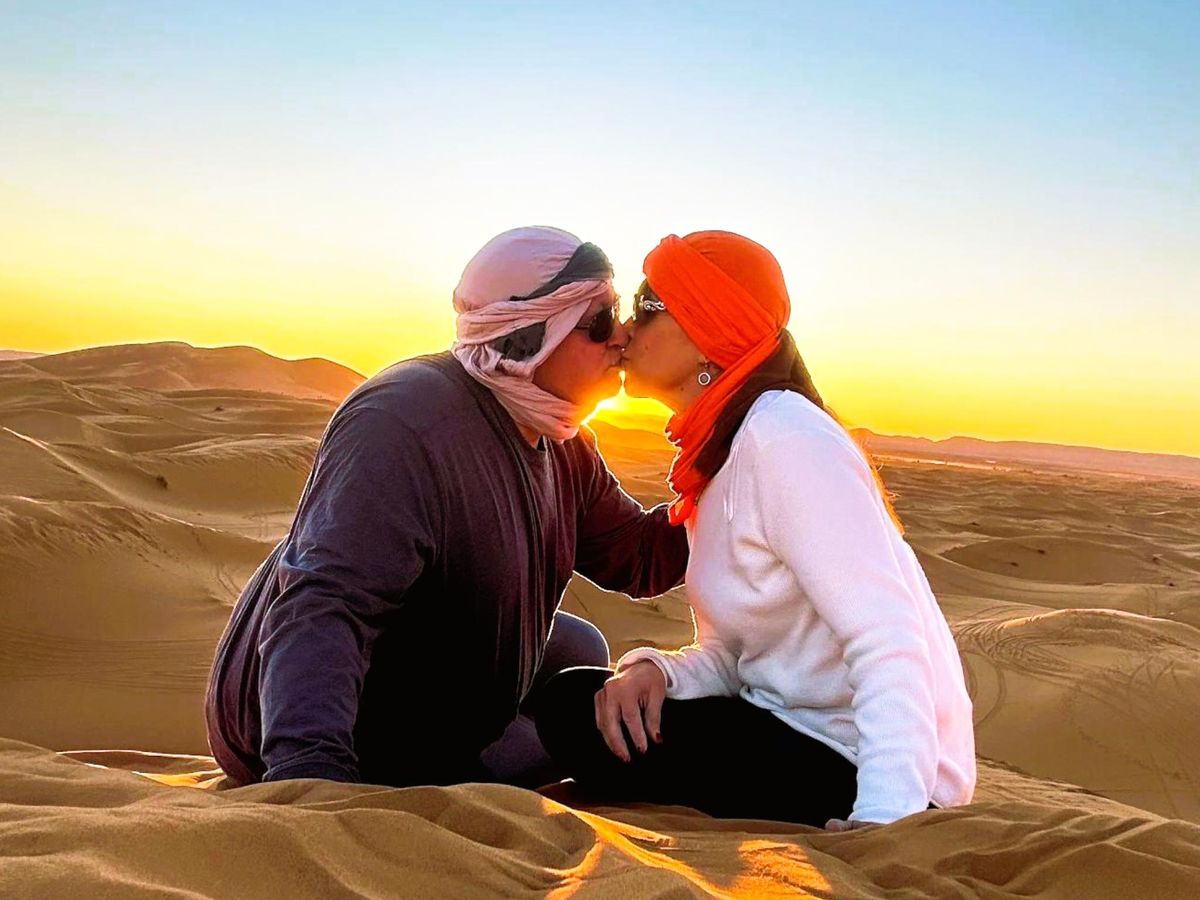
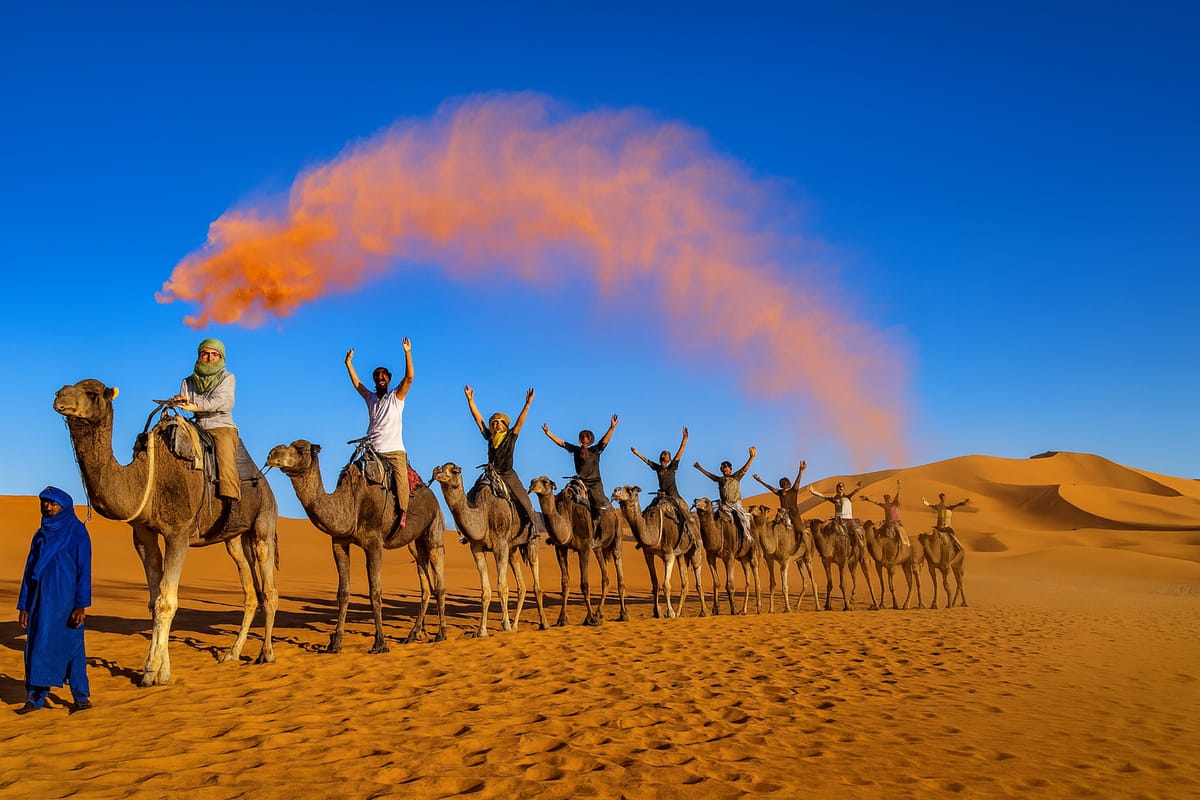
The long cotton scarves sold at stops along the route to Merzouga are not just a souvenir, they are genuinely useful for wrapping around the head and face when wind picks up sand during the camel trek, and for extra warmth once temperatures drop at night. There is no single correct way to tie one, but wrapping it loosely around the neck and head, with one end free to pull over the nose and mouth if the wind picks up, covers the main use case on a desert tour.
Modesty and the communities along the route
The drive from Marrakech to Merzouga passes through small towns and rural areas that are more conservative than Marrakech itself, so covering shoulders and legs during the day is a respectful choice at stops along the way, separate from what you might choose to wear once you are deep in the dunes away from any village. This applies to both women and men, and is less about desert practicality and more about the places the tour passes through before reaching camp.
What to wear for the camel trek specifically
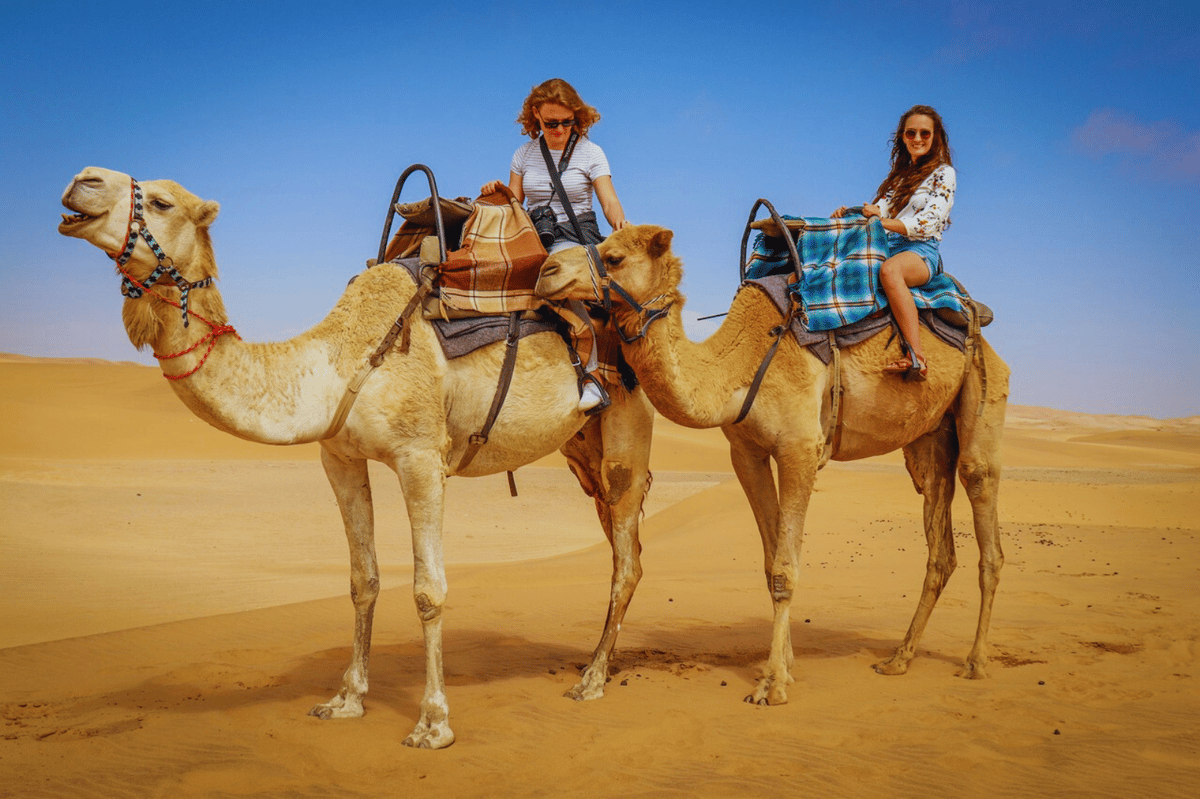
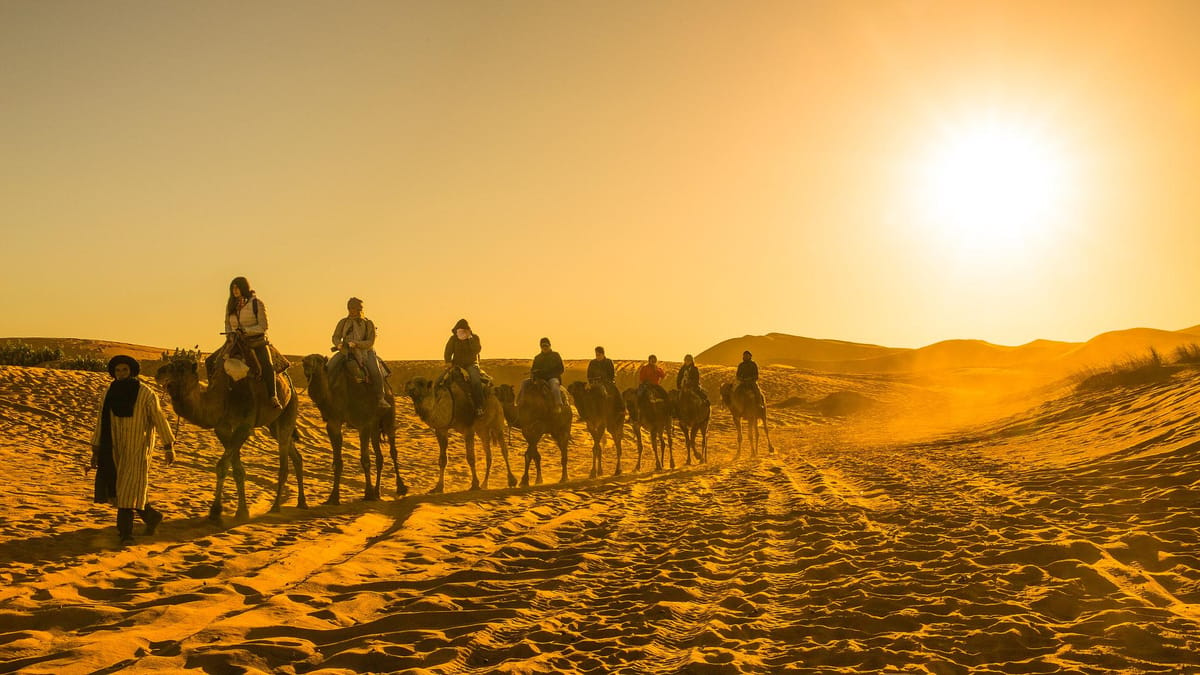
For the camel ride itself, comfortable, non restrictive trousers work better than anything tight, since you will be sitting on a camel saddle for around an hour each way. A scarf, sunglasses and a hat or head covering help with sun and sand during the trek, and the layer you add for the evening is usually best carried in a small daypack rather than worn during the ride out, since the walk to camp itself is usually still warm.
What to wear once the sun goes down
Evenings in camp mean dinner around a fire, often with music, followed by a night in a tent on the sand, so the clothing priority shifts entirely to warmth. A fleece or jacket, closed shoes or warm socks, and the same scarf used earlier in the day all help for sitting outside after dark, and for sleeping, since desert camps do not have the kind of heating a hotel room would. Our what to pack for a Sahara desert tour guide covers the fuller list of items worth bringing alongside clothing itself. A spare scarf is worth packing too, since it can double as a light blanket or an extra layer if the evening turns out colder than expected, and it is easy to wash and dry overnight in camp if the first one picks up dust from the ride.
Choosing your Sahara tour
The tours below are private departures from Marrakech to Merzouga, with current availability and checkout prices, running three to four days with a luxury camp upgrade available on request. Dressing in layers with a scarf on hand works for all of them, since the climate in the dunes is the same regardless of which private departure you choose. If you are still deciding between destinations, our Merzouga or Zagora comparison looks at how the two desert routes differ beyond what to wear.
Loose, breathable trousers or a long skirt with a top that covers the shoulders works well by day, with a warm fleece or jacket added for the cold evening and a long scarf carried throughout for sun and sand.
What should men wear in the Sahara desert?
Light trousers and a breathable shirt with covered shoulders work well by day, with a warm layer such as a fleece or light jacket needed once the sun sets and a scarf useful for the camel trek.
Why do people wear a scarf in the Sahara desert?
A long scarf protects against blowing sand and strong sun during the camel trek and adds extra warmth around the neck and head once temperatures drop at night.
Is it cold in the Sahara desert at night?
Yes, desert nights cool quickly and can drop close to freezing in winter, so a warm layer is needed even after a hot afternoon in the dunes.
Do I need to cover my shoulders and legs in the Sahara?
Covering shoulders and legs during the day is a respectful choice given the small, more conservative communities the route to Merzouga passes through, and it also helps with sun protection.
What shoes should I wear on the camel trek?
Closed shoes or trainers work best for the camel trek and walking around the dunes, since open sandals let in sand and can slip off on soft ground.
Can I wear shorts and a tank top in the Sahara desert?
It is more comfortable and more respectful toward local communities to wear clothing that covers the shoulders and legs, rather than shorts and a tank top, during the drive and camel trek.
What should I wear for dinner and sleeping at the desert camp?
A fleece or jacket, closed shoes or warm socks and the same scarf used during the day help with the cold evening and night, since desert camps do not have hotel style heating.
Is clothing different for a luxury desert camp compared with a standard one?
No, clothing needs are the same regardless of camp type, since the climate in the dunes does not change, though a luxury camp adds a private bathroom rather than different weather.
How should I tie a desert scarf?
Wrap it loosely around the neck and head with one end free to pull over the nose and mouth if the wind picks up sand during the camel trek.
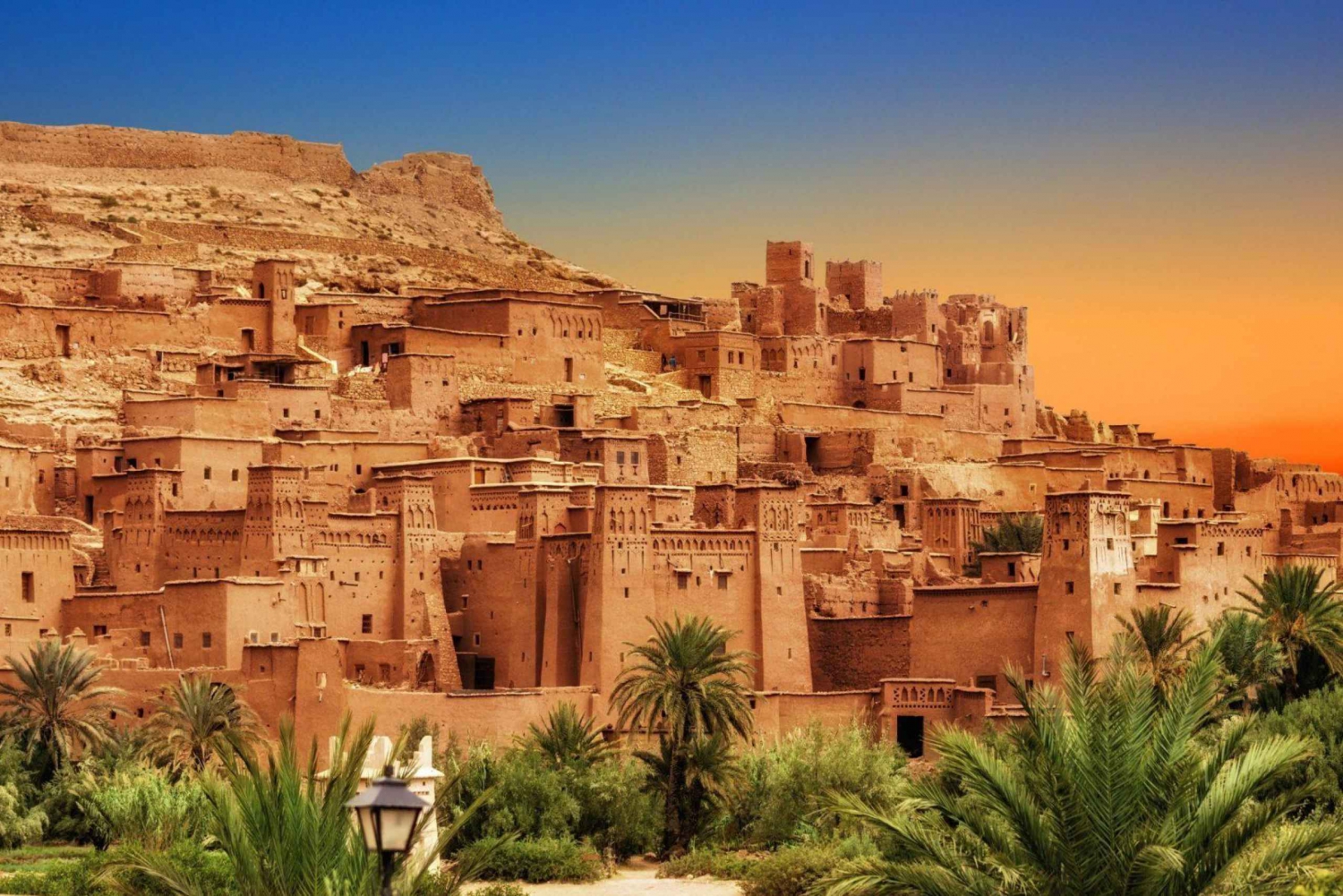
Day 1: Marrakech – Ait Ben Haddou – Ouarzazate – Merzouga Begin your premium private desert adventure with a scenic drive through the High Atlas Mountains and traditional Berber villages. Cross the famous Tizi n'Tichka Pass before stopping at the UNESCO-listed Ait Ben Haddou, Morocco's legendary fortified village featured in many Hollywood films.
3 daysper person
4.3· 27 external ratings
Book & pay online
From €435.60per person
Final price depends on the selected option and availability.
Day 1: Atlas Mountains, Ait Ben Haddou and Road to Dades Valley Begin your private journey from Marrakech and cross the High Atlas Mountains via the scenic Tizi n’Tichka Pass, passing authentic Berber villages along the way. Visit the UNESCO-listed Ait Ben Haddou Kasbah before continuing through Ouarzazate and the Valley of Roses.
3 daysper person
4.4· 22 external ratings
Book & pay online
From €377.52per person
Final price depends on the selected option and availability.
Explore a 4-day Marrakech to Merzouga desert adventure. Day 1: Marrakech - Ait Ben Haddou - Valley of Roses - Dades Gorges Departure in the morning from your hotel/Riad in Marrakech towards the High Atlas and the Tichka pass (2260 m).
4 daysper person
5.0· 5 external ratings
From €522per person
Final price depends on the selected option and availability.
✅Day 1: Marrakech → High Atlas Mountains → Aït Benhaddou → Ouarzazate → Dades Valley. Your adventure begins early in the morning as you depart Marrakech, crossing the spectacular High Atlas Mountains via the winding Tizi n’Tichka Pass. Enjoy panoramic views, scenic photo stops, and glimpses of traditional Berber villages built into the mountainside.
3 daysper person
5.0· 2 external ratings
From €514per person
Final price depends on the selected option and availability.