What a night in an Agafay desert camp is really like: tents, beds, bathrooms, food, cold nights and honest advice from local guides.
The fire crackles, the music fades, and suddenly the only sound left is the wind across the stones. This is a night in Agafay.
By Amazouz Morocco Tours team, local guides based in Marrakech and the High Atlas
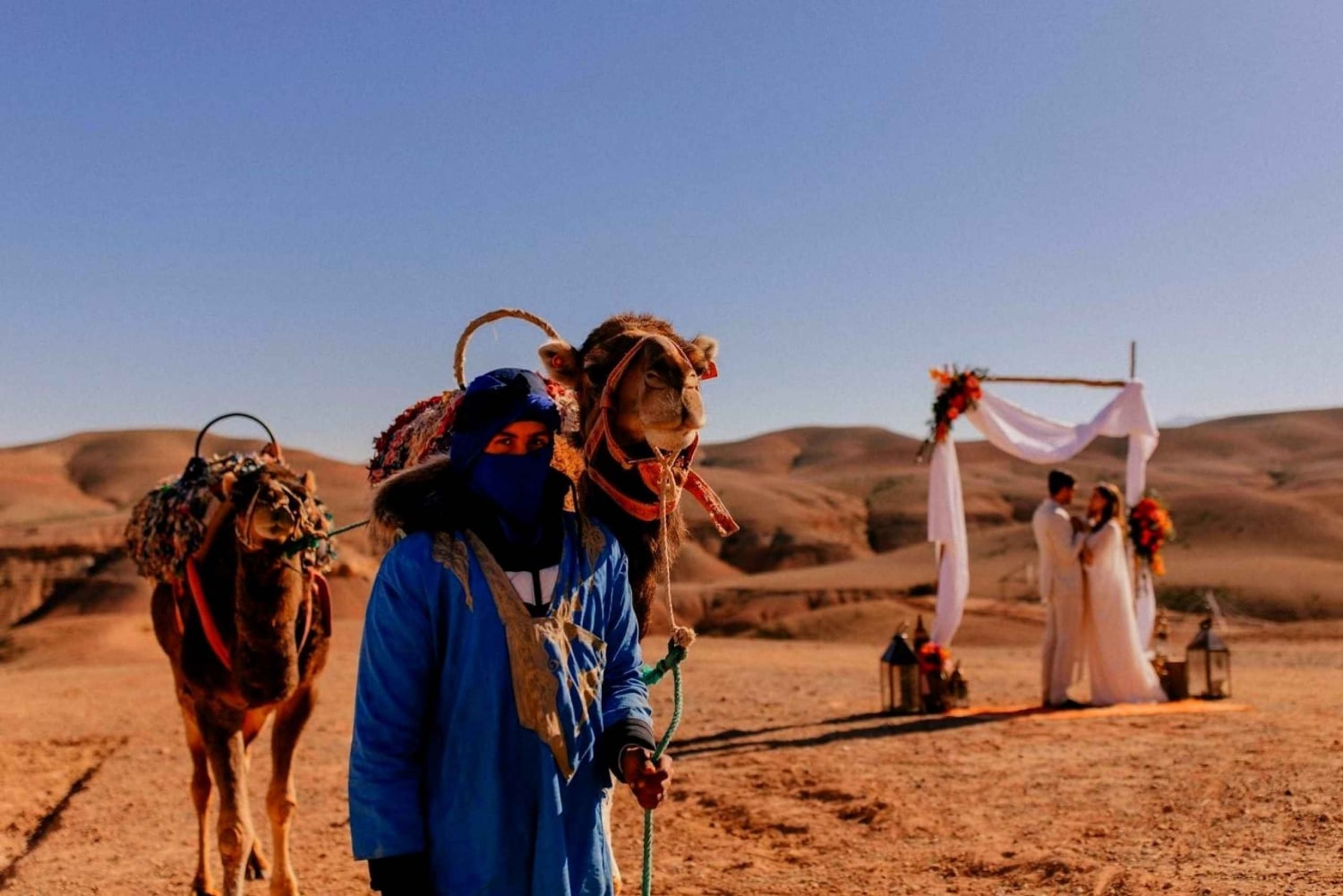
A day trip to Agafay is lovely. A night in Agafay is something else entirely. When the last day-trippers drive back to Marrakech and the desert goes quiet, the camp becomes one of the most peaceful places we know. Here is an honest account of what a night in an Agafay desert camp is really like — the comfort, the cold, the food and the silence.
The tents: glamping, not camping
Forget everything you know about camping. Agafay's camps are "glamping" — large, solid tents with proper beds, real mattresses, carpets, bedside tables and electricity for charging your phone. The better camps have en-suite bathrooms with hot showers; simpler ones have shared bathroom blocks a short walk away. This is the single biggest difference between camps, so always ask about the bathroom arrangement before you book [TO CHECK: which partner camps have en-suite bathrooms].
Tents are private — you will not share with strangers. Double, twin and family tents are common. Scarves, blankets and small touches vary from camp to camp, which is why we match camps to what our guests care about.
The evening: dinner, music and fire
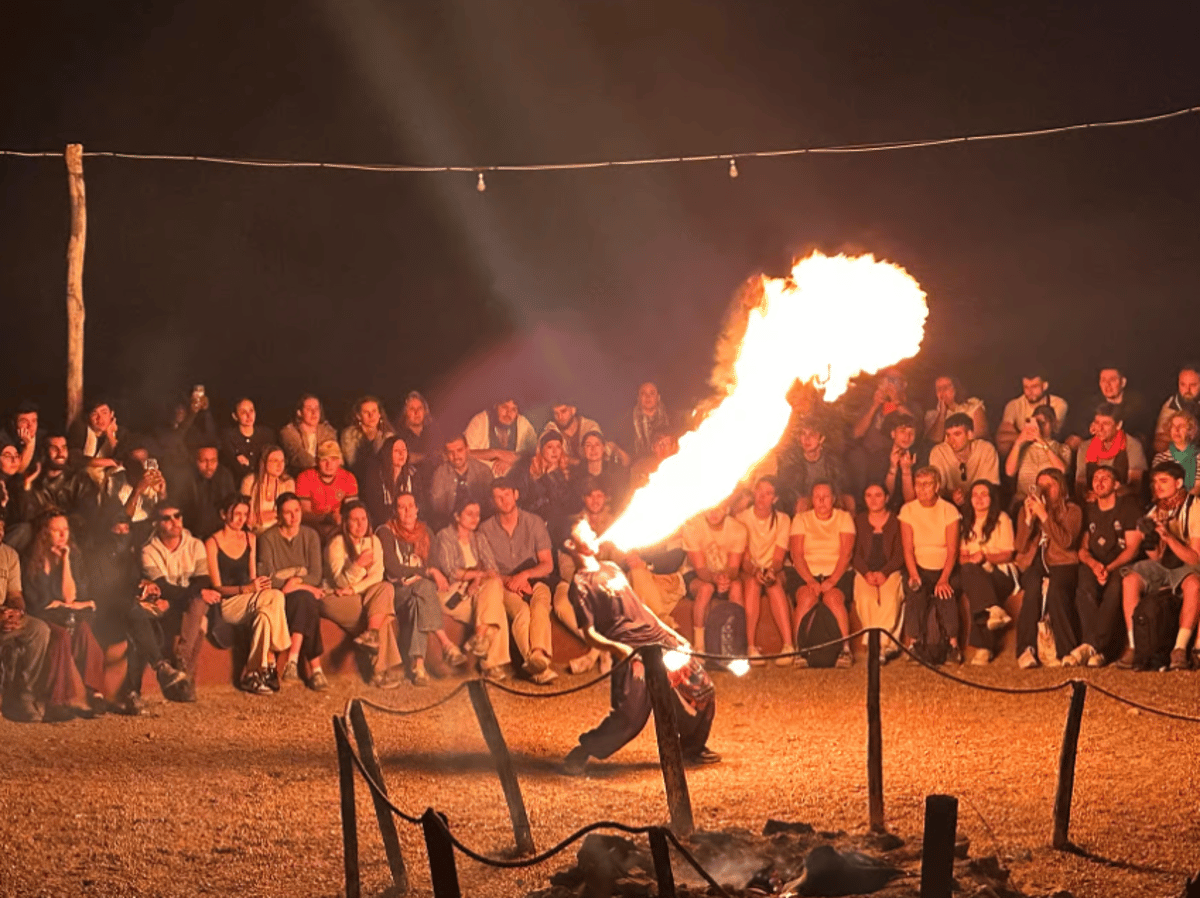
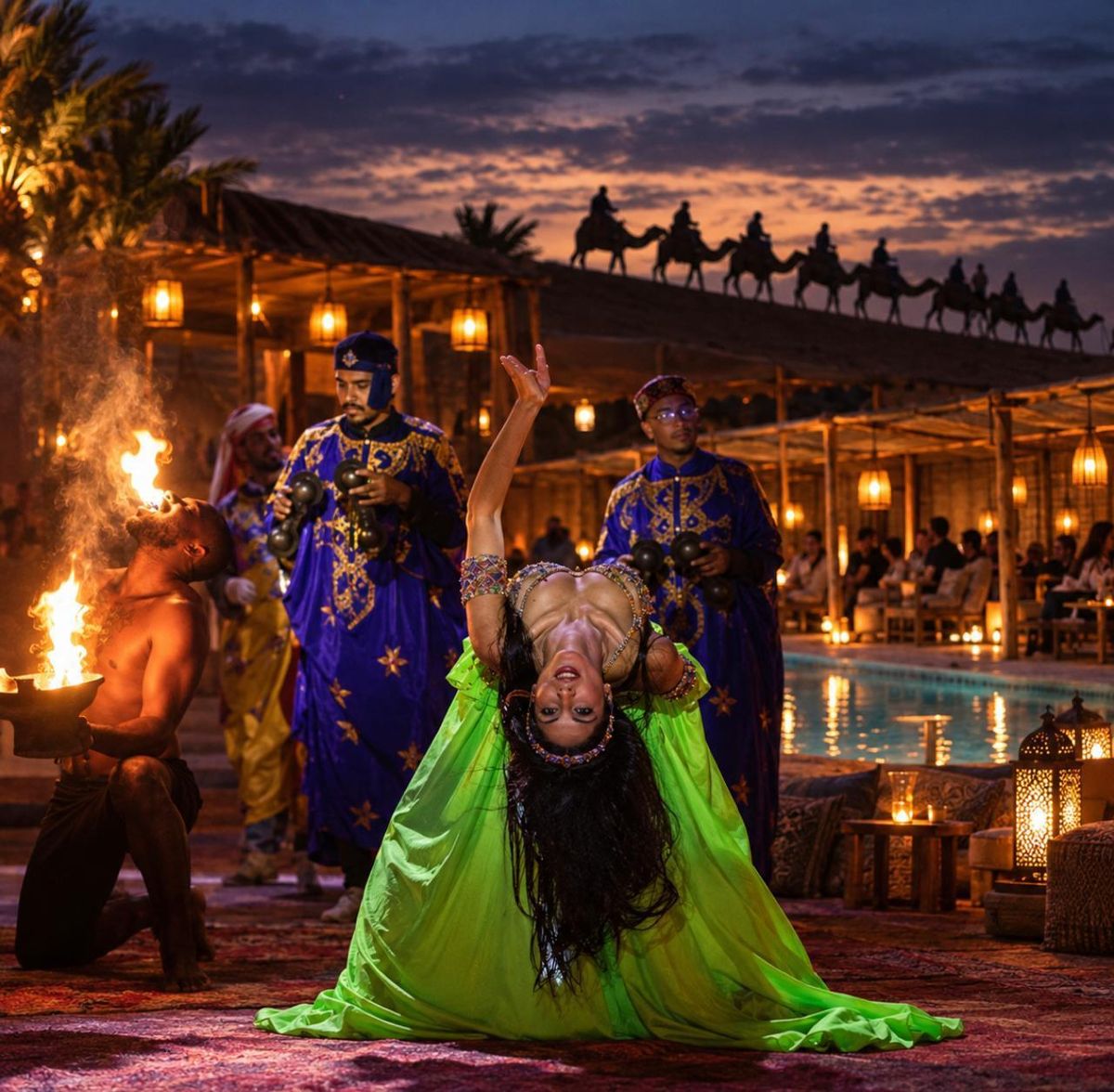
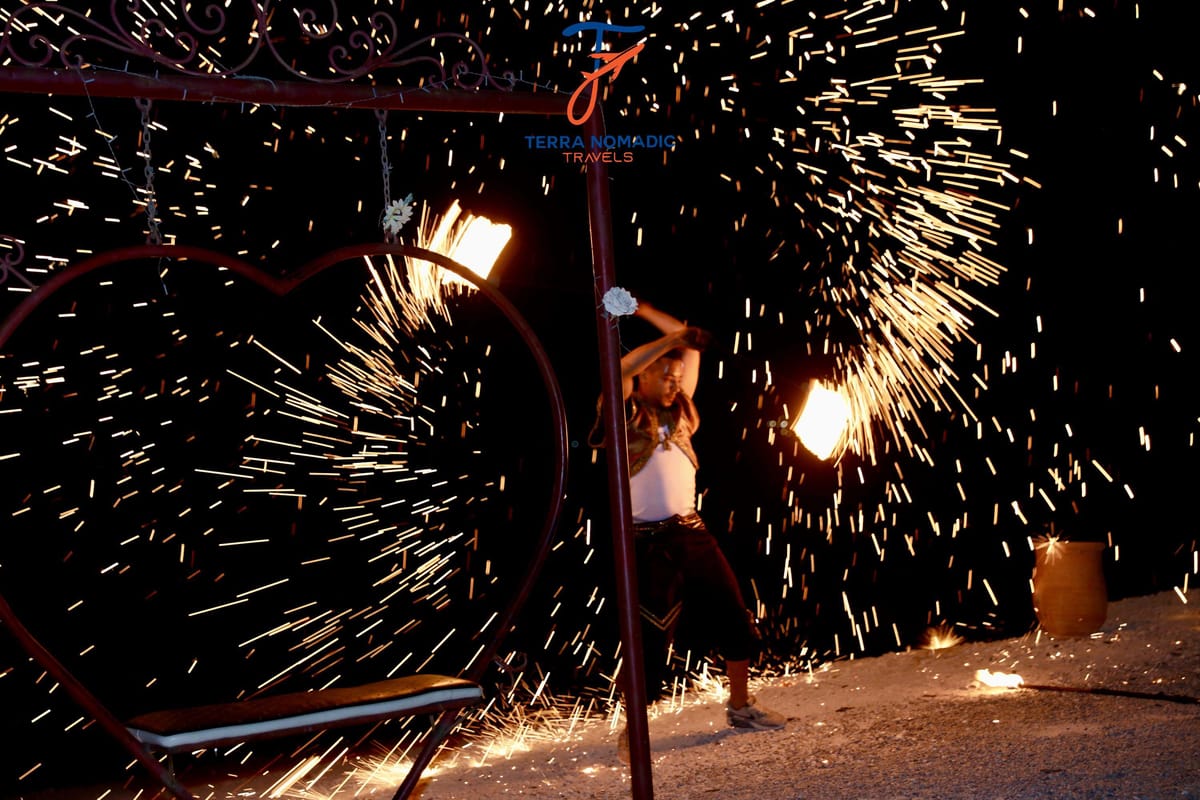
The rhythm of the evening is the same at most camps. You arrive for the golden hour, watch the sunset with mint tea, and sit down to dinner as the stars come out. Dinner is usually a set Moroccan menu — salads, tagine or grilled meats, fruit and pastries — served at candlelit tables [TO CHECK: typical menus at partner camps]. After dinner, local musicians play around the fire: drums, gnawa rhythms, songs you will not understand but will somehow sing along to. Many camps end with a fire show.
Then, one by one, the lanterns dim and people drift to their tents. This is the moment the article title describes: the music fades, the fire crackles down, and the silence arrives.
The night: stars, silence and cold
Two things define the night. The first is the sky — dark enough to see the Milky Way with your bare eyes, as we describe in our stargazing article. The second is the silence. There is no traffic, no hum, nothing. Guests from big cities sometimes lie awake the first half hour simply because silence is so unfamiliar.
And yes — the cold. Even after a warm day, desert nights drop fast. From roughly November to March, nights fall to 0–3°C. Camps provide heavy blankets, and better camps have heaters in the tents, but bring warm sleepwear in winter and you will sleep beautifully. In summer, nights are mild and you may sleep with the tent flaps open to the breeze.
The morning: sunrise and breakfast
Set an alarm. Sunrise over the stone hills, with the Atlas Mountains catching the first light, is the equal of the famous sunset — and you will have it almost to yourself. Breakfast follows: Moroccan pancakes, bread, jams, eggs, olives, coffee and mint tea [TO CHECK: typical breakfast at partner camps]. Most camps have you on the road back to Marrakech by mid-morning, arriving around 11:00 — with the whole day still ahead of you.
An honest list of things to know
- **Bathrooms vary.** En-suite hot shower or shared block — ask before booking. This matters more than any other detail.
- **It is dark at night.** Paths between tents are lantern-lit, but bring a phone torch for night walks to the bathroom.
- **Wi-Fi and signal.** Mobile signal is patchy in the desert and camp Wi-Fi, where it exists, is slow [TO CHECK: Wi-Fi at partner camps]. Consider it a feature.
- **Alcohol.** Some camps serve wine and beer, others do not [TO CHECK: partner camp policies]. Ask when booking if it matters to you.
- **Children love it.** Family tents, space to run, camels at the door — see our family guide for more.
- **One night is enough for most people.** The experience is intense and complete in a single night; two nights suit those who want a full desert day in between.
Camp or hotel: who should stay over?
Stay overnight if you want the full sunset-stars-sunrise arc, if you are celebrating something, or if you simply want one night of real silence on your trip. Stick to a dinner trip if you are short on time, travelling on a tight budget, or if guaranteed en-suite facilities are non-negotiable and only simpler camps are available for your dates.
Booking the right camp
Camps differ widely in comfort, food and price, and the photos online do not always show it. We know the camps personally and will tell you honestly which fits you — tell us your dates, your group and what you care about (bathroom, food, quiet, budget) and we will match you. See the overnight options at the bottom of this page and in our [Agafay Desert guide](/blog/agafay-desert-guide).
What to pack for one night
Keep it small — you are away for less than 24 hours. Our recommended bag:
- Warm layer and sleepwear (essential November–March, useful all year)
- A torch or phone with a torch for night walks to the bathroom
- Toothbrush and basics; camps provide towels and toiletries vary [TO CHECK: toiletries at partner camps]
- Closed shoes for rocky ground, plus sandals for the tent
- Sunscreen and hat for the morning
- A power bank — tent electricity exists but sockets are few [TO CHECK: charging at partner camps]
Leave valuables at your riad. You will not need them, and the desert is no place to worry about them.
One last honest note: the desert is not a hotel corridor. You may hear a dog bark in a distant village, a donkey at dawn, or the wind moving the tent fabric at night. Most guests find these sounds part of the charm — the desert reminding you, gently, where you are.
Frequently asked questions
### Are there proper beds in Agafay camps?
Yes. Camps are glamping: large private tents with real beds, mattresses, carpets and electricity. The main difference between camps is the bathroom — en-suite or shared — so ask before booking.
### How cold is it at night in Agafay?
Winter nights drop to 0–3°C; camps provide heavy blankets and better camps have tent heaters. Summer nights are mild. Bring warm sleepwear from November to March.
### Is there a bathroom and shower?
At better camps, yes — en-suite bathrooms with hot showers. Simpler camps use shared bathroom blocks. Always confirm the arrangement for your specific camp before booking.
### What is included in an overnight stay?
Typically sunset tea, dinner, music around the fire, the night's accommodation, breakfast and transport from and back to Marrakech. Exact inclusions vary by camp and package.
### Is one night enough?
For most people, yes — sunset, stars, silence and sunrise fit complete in a single night. Two nights suit travellers who want a full quiet desert day in between.