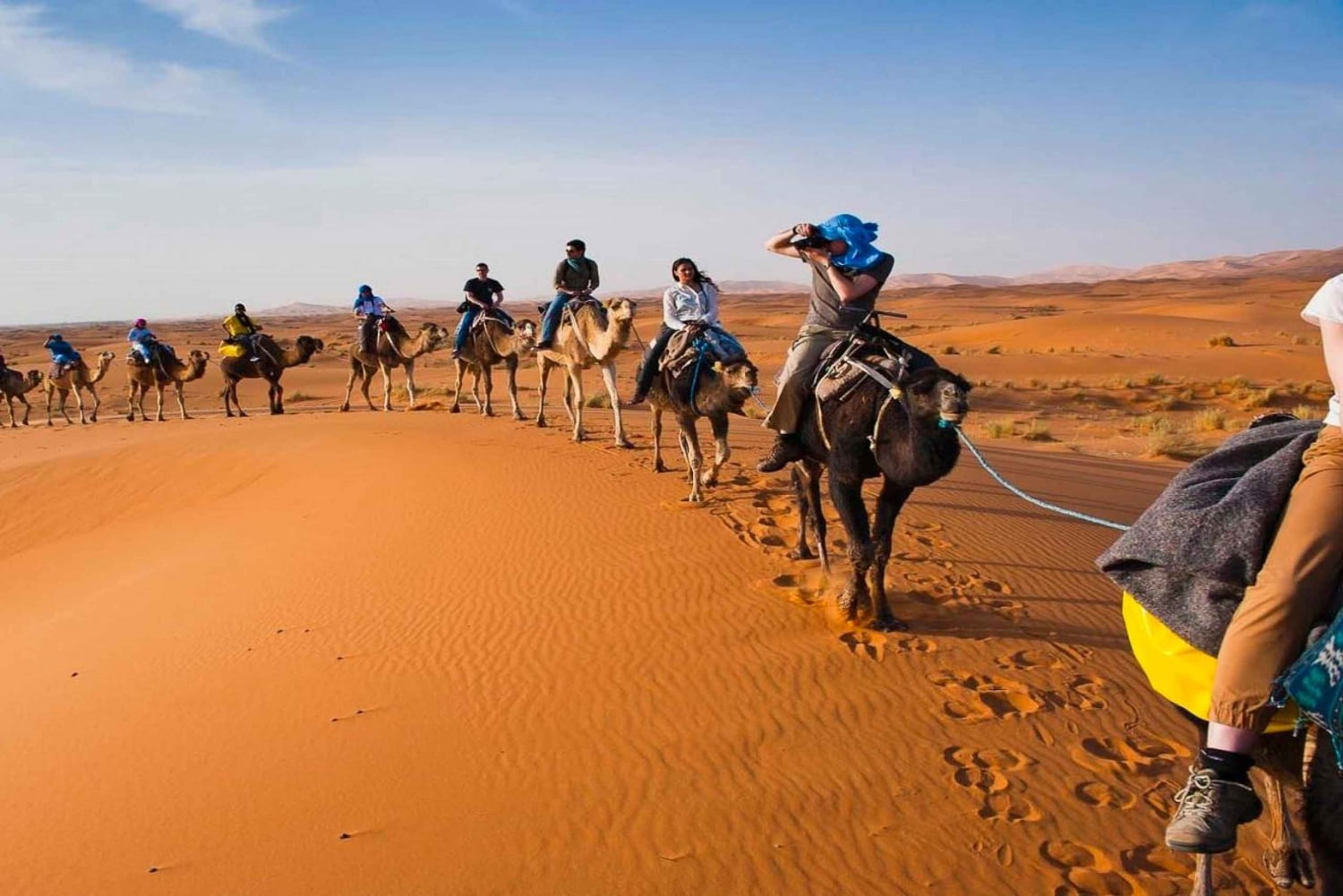
Quick answer: Responsible camel trekking in the Sahara comes down to a few checkable things: camels that look well fed and not visibly injured, rides that are reasonably short and not overloaded, regular rest and water, and handlers who treat the animals calmly rather than roughly. No traveller can inspect a camel's full daily life in one visit, but these signs, asked about and watched for, give a fair read on how an operation runs.
Why camel welfare matters to travellers
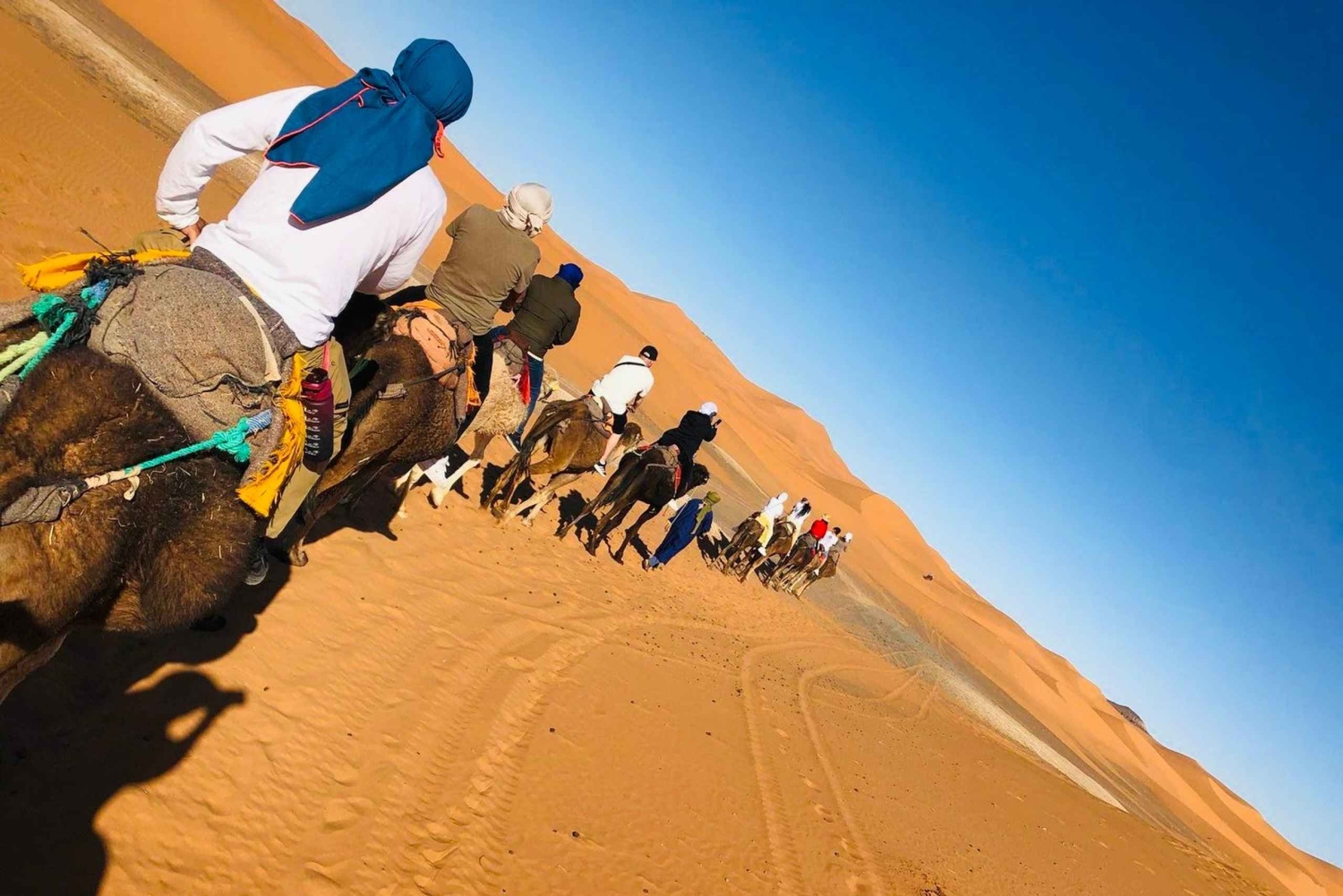
A camel trek is often the single image people remember from a Sahara trip, and for many travellers it is also the point where animal welfare becomes personal rather than abstract. Camels in Merzouga and Zagora work daily routes carrying tourists between camps and dunes, and like any working animal, their wellbeing depends on how they are fed, rested and handled day to day. You do not need expert knowledge to pay attention. A short, honest checklist is enough to travel more thoughtfully, and asking questions before booking is one of the simplest things any traveller can do.
What to look for before and during a ride
A few visible signs are worth watching for when you arrive at a camp or meet your camel for a trek. Does the animal look reasonably well fed, with no obvious sores or untreated wounds, especially around the saddle area where poor-fitting equipment causes the most damage over time. Is the saddle itself in decent condition, padded, and not visibly worn through to bare wood or metal. Are the camels given water and shade when not working, rather than left standing in full sun for long stretches. Does the handler move around the animals calmly, without shouting or hitting, and does the group size and ride length seem reasonable rather than rushed through back-to-back groups with no break.
None of these checks require special expertise, just attention. If something looks off, it is fair to ask the handler or your guide about it directly, or to mention it to the tour operator afterwards.
Questions worth asking before you book
If camel welfare matters to you, and it should, there is nothing wrong with asking a tour operator direct questions before you book. How often do the camels rest between treks. Who looks after the animals' health, and is a vet involved if one is sick or injured. Are the camels rotated so the same animals are not worked every single day without a break. A responsible operator should be able to answer these questions, or at least explain who to ask, rather than brushing the question aside. If an operator cannot or will not answer basic questions about how their camels are cared for, that itself is useful information.
Organisations such as SPANA, which works with working animals across Morocco including mules and camels, publish general guidance on recognising good and poor animal welfare in tourism settings, and their advice is a useful independent reference point if you want to read more before you travel.
The realities of a working desert economy
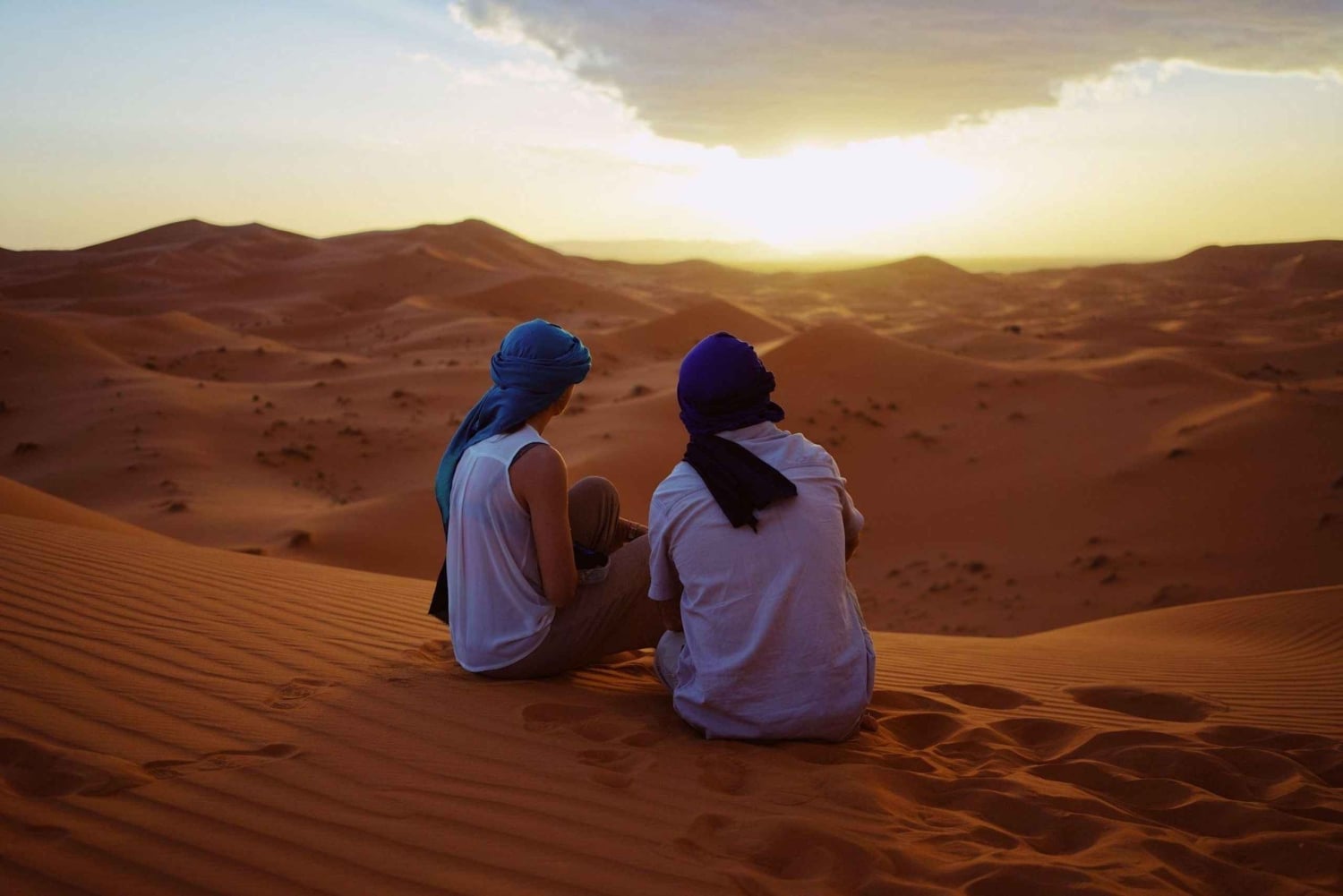
Camels in the Sahara tourism trade are working animals owned by local families and small operators, not a petting-zoo attraction, and their welfare sits inside a wider economic picture. Many handlers depend on this work for their household income, and the better outcomes for camels tend to come from sustainable, well-run operations rather than from avoiding camel rides altogether. If you are uneasy about riding, you are not obliged to, and you can still visit a desert camp by vehicle and watch a sunset without taking a camel trek yourself. Most camps in Merzouga do not require a camel ride as a condition of staying overnight, so this is a genuine choice rather than an all-or-nothing decision.
Short rides versus long treks
The length of a camel ride matters for the animal as much as for your own comfort. A sunset or sunrise trek into the dunes near a camp, typically 30 to 60 minutes each way, is a very different load on a camel than a multi-hour trek across open desert in the heat of the day. If you are choosing between tour options, a shorter ride at a cooler time of day, usually early morning or late afternoon, is generally easier on the animals as well as more pleasant for you, since the midday Sahara sun is intense for people and animals alike.
What you can do as a traveller
Beyond watching and asking questions, there are small practical choices that help. Avoid encouraging a handler to push a tired-looking animal to go faster for a better photo. If you see mistreatment, raise it calmly with your guide or tour operator rather than staying silent, since feedback from travellers is one of the few pressures that pushes operators to do better. And if a particular operator consistently gets positive mentions for how they treat their animals, that is worth factoring into your choice of tour the same way you would weigh comfort, price or route.
Weighing it against your wider Sahara trip
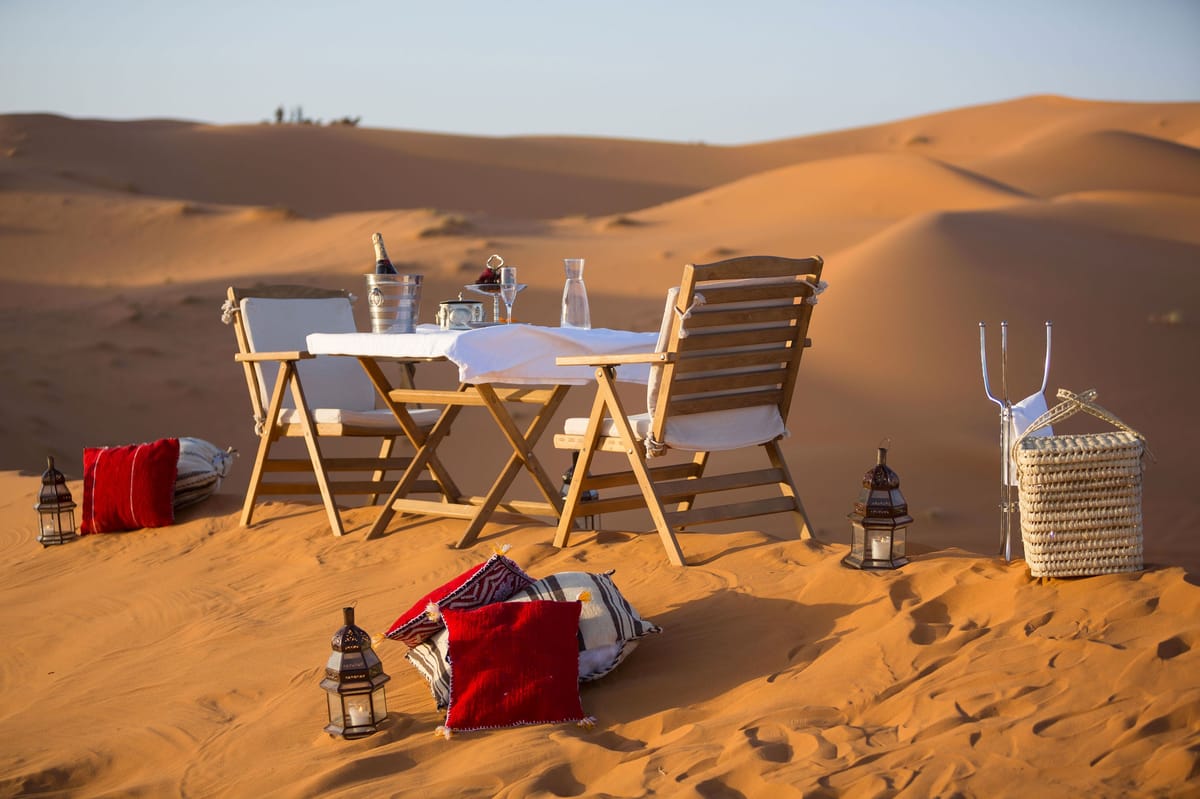
Camel welfare is one part of planning a responsible Sahara visit, alongside things like respecting local communities, not wasting water in a water-scarce region, and choosing operators who treat their staff fairly. None of this needs to make a desert trip feel heavy with guilt. Asking a few honest questions, watching how animals are treated when you arrive, and making a considered choice about whether and how far to ride, is a reasonable standard for any traveller to hold themselves to. If you want to understand more about what a typical overnight camp stay involves, from meals to facilities, our guides to food in a desert camp and to luxury desert camps in Merzouga cover the practical side of the experience that usually surrounds a camel trek.
Choosing your Sahara tour
Camel treks are included in most Merzouga desert camp stays, typically a sunset ride into the dunes on arrival, and sometimes a second ride at sunrise. The four tours below all include a camel ride to or from the desert camp as part of a Marrakech-based Sahara trip, so you can compare route, length and price directly and ask any welfare questions you have before booking.
Frequently asked questions
- Is it ethical to ride a camel in the Sahara?
- Many travellers choose to ride camels in the Sahara, and it can be done responsibly by checking the animal's condition, keeping rides reasonably short, and choosing operators who answer questions about how their camels are cared for. It is also fine to skip the ride and still visit a desert camp.
- What are the signs of a well cared for camel?
- Look for an animal that appears well fed with no visible sores, a saddle in good condition, access to water and shade when not working, and a handler who treats the animal calmly rather than roughly.
- How long should a camel ride be?
- Sunset or sunrise treks into the dunes near a desert camp are typically 30 to 60 minutes each way, which is generally easier on the animals than longer multi-hour treks, especially in the heat of the day.
- Can I visit a Sahara desert camp without riding a camel?
- Yes, most camps in Merzouga do not require a camel ride as a condition of staying overnight, so you can travel to the camp by vehicle and still enjoy the sunset and the night sky.
- Who looks after camels used in tourism in Morocco?
- Camels in the Sahara tourism trade are typically owned and cared for by local families and small operators who depend on this work for income, so their welfare is tied to how sustainably the wider operation is run.
- What questions should I ask a tour operator about camel welfare?
- It is reasonable to ask how often the camels rest between treks, who manages their health care, and whether the animals are rotated rather than worked every day without a break.
- Are organisations monitoring animal welfare in Morocco's tourism industry?
- Organisations such as SPANA work with working animals across Morocco, including mules and camels, and publish general guidance on recognising good and poor welfare practices that travellers can use as an independent reference.
- What should I do if I see a camel being mistreated?
- Raise it calmly with your guide or tour operator at the time or afterwards. Traveller feedback is one of the clearest pressures that encourages operators to improve how they treat their animals.
- Is the midday heat harder on camels than morning or evening rides?
- Yes, a trek across open desert in the heat of the day is a heavier load on an animal than a shorter ride at a cooler time, which is one reason sunset and sunrise treks near camps are more common.
- Does a shorter camel ride mean a less authentic desert experience?
- No. A shorter sunset or sunrise trek still delivers the core experience, riding into the dunes, watching the light change and arriving at camp, while putting less strain on the animal than a longer trek.