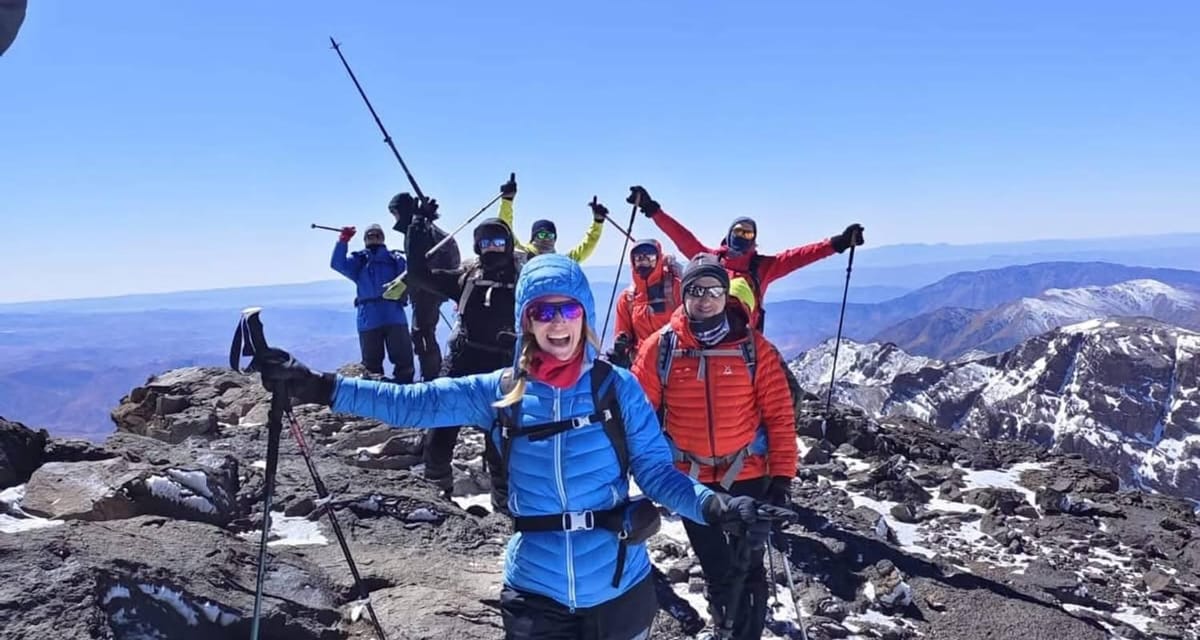
How hard is Toubkal? An honest look at Toubkal difficulty, fitness level, steep sections and who can climb North Africa's highest peak.
By Amazouz Morocco Tours team, local guides based in Marrakech and the High Atlas
Some guests tell us it was the hardest thing they've ever done. Others call it a long walk. The truth about how hard Toubkal is depends on a few things you can control, and a few you cannot.
This article gives you an honest answer about Toubkal difficulty. We guide trekkers on this mountain all year, and we would rather you arrive well prepared than surprised.
The short answer: hard or easy?
Toubkal is hard or easy depending on three things: **the season, your fitness and how your body handles altitude.** In summer and early autumn the normal route is a non-technical trek. In winter it becomes a snow climb. The altitude of 4,167 metres affects everyone differently, regardless of fitness.
If we had to give it a single trek grade, we would call the summer ascent **moderate to strenuous** [TO CHECK: whether we use a formal grading system on tour pages]. It is a real challenge, but not an extreme one.
What makes Toubkal difficult
### 1. Altitude
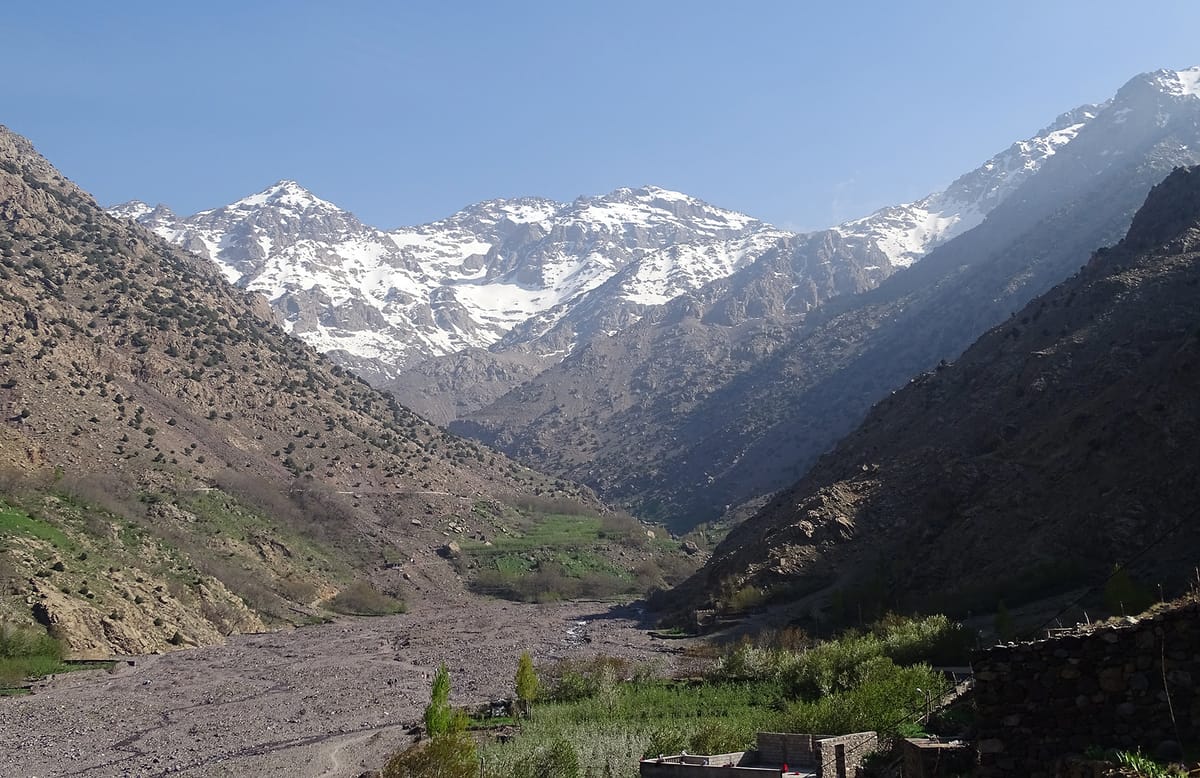
You start in Imlil at about 1,740 metres and finish at 4,167 metres, a gain of roughly 2,400 metres. Above about 3,000 metres the air is thinner and many people feel short of breath, tired or headachy. Fit runners sometimes struggle more than slower walkers because they go too fast. If you have any heart, lung or blood-pressure condition, are pregnant, or take regular medication, ask your doctor before booking a trek to 4,167 metres.
### 2. Steep, loose ground
Toubkal is steep in places, especially above the refuge, where the path zigzags up scree and rocky slopes. Loose stones make every step a little harder. On the way down they test your knees.
### 3. Length of summit day
On a two-day trek, summit day means climbing from the refuge to the top, then descending all the way back to Imlil. That is many hours on your feet [TO CHECK: typical total hours on our 2-day summit day]. Tiredness on the descent is when people twist ankles.
### 4. Cold and early starts
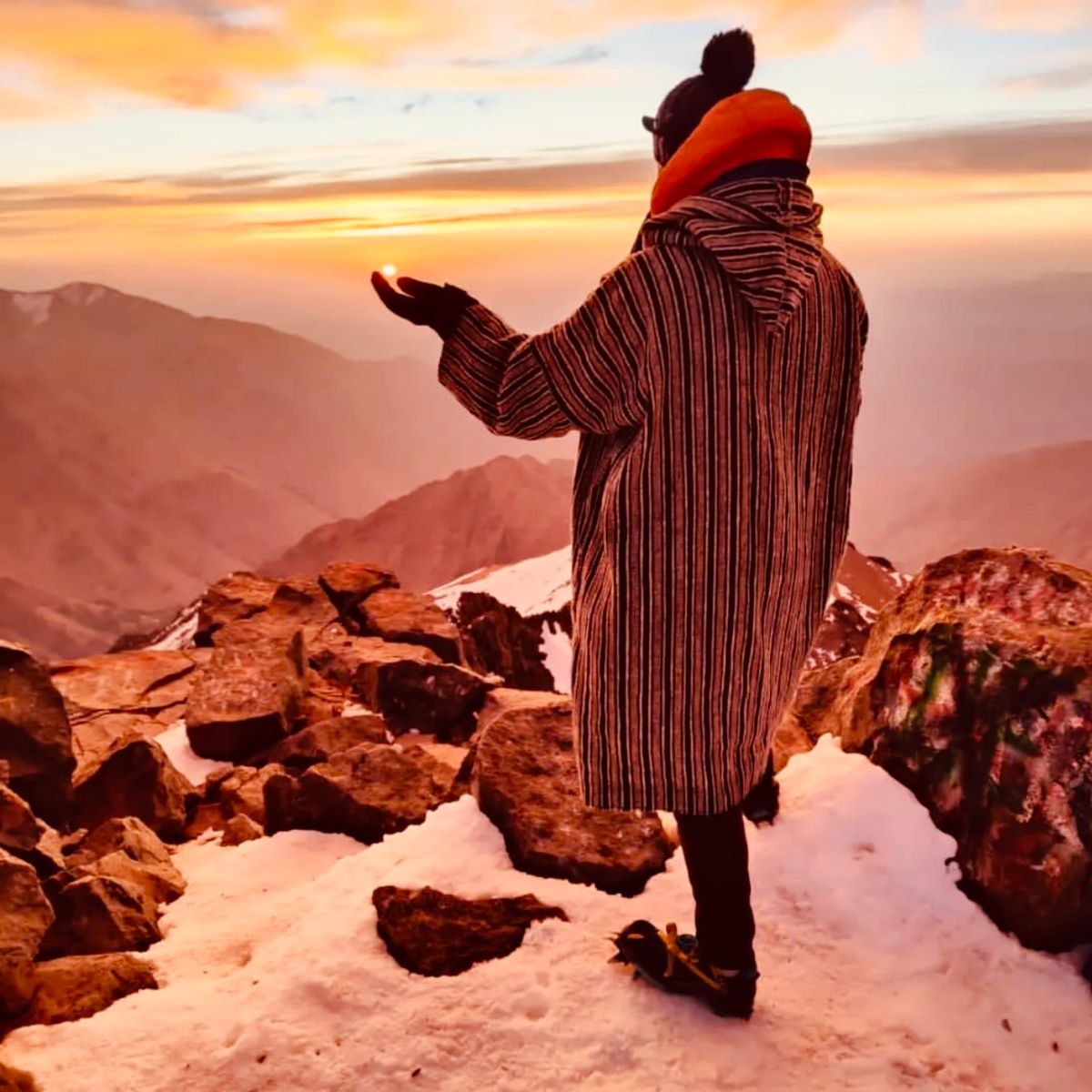
You start before dawn. It is cold at the summit, even in summer, and you may not have slept well in the refuge. None of this is dangerous on its own, but together it makes the challenge feel bigger.
### 5. Winter conditions
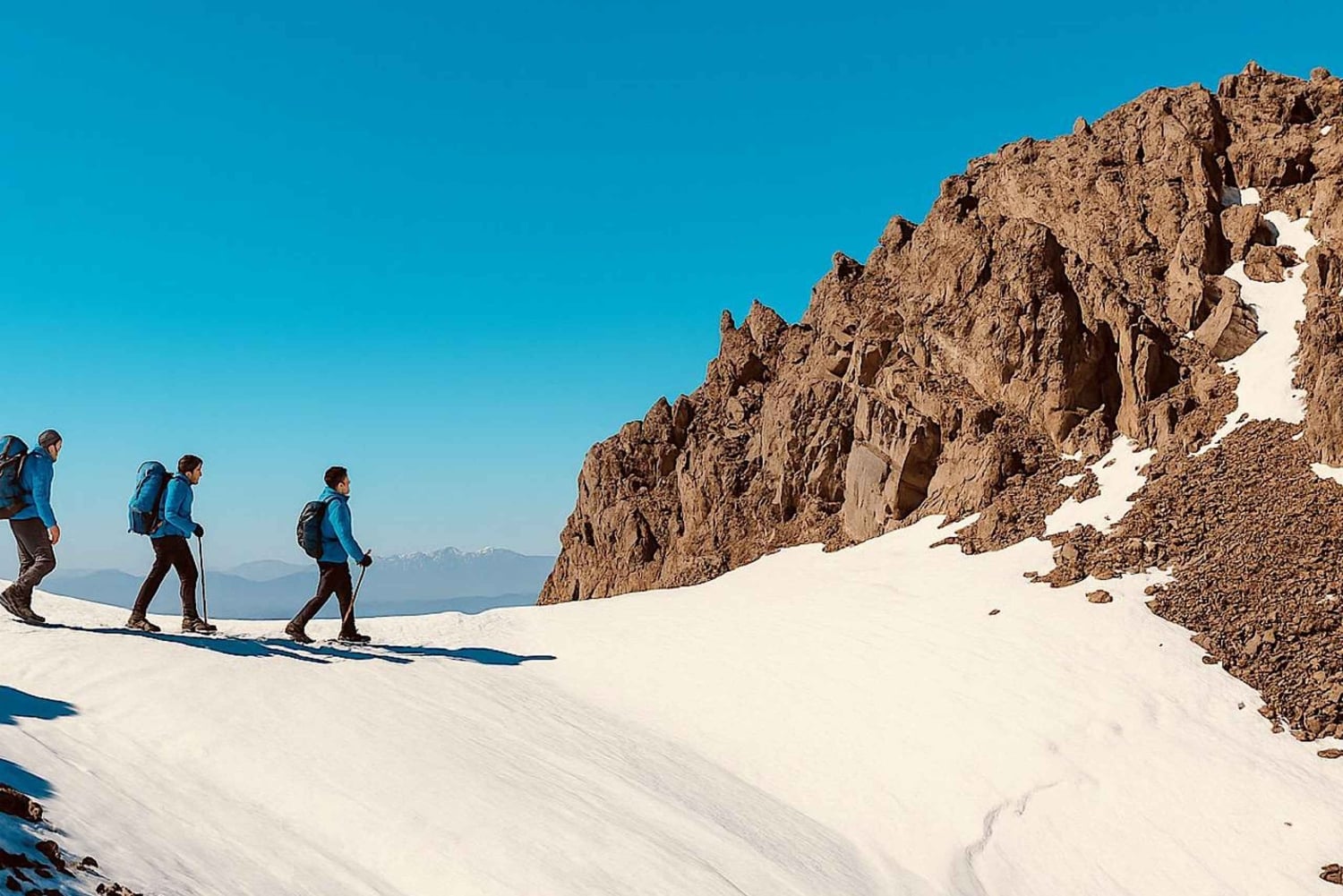
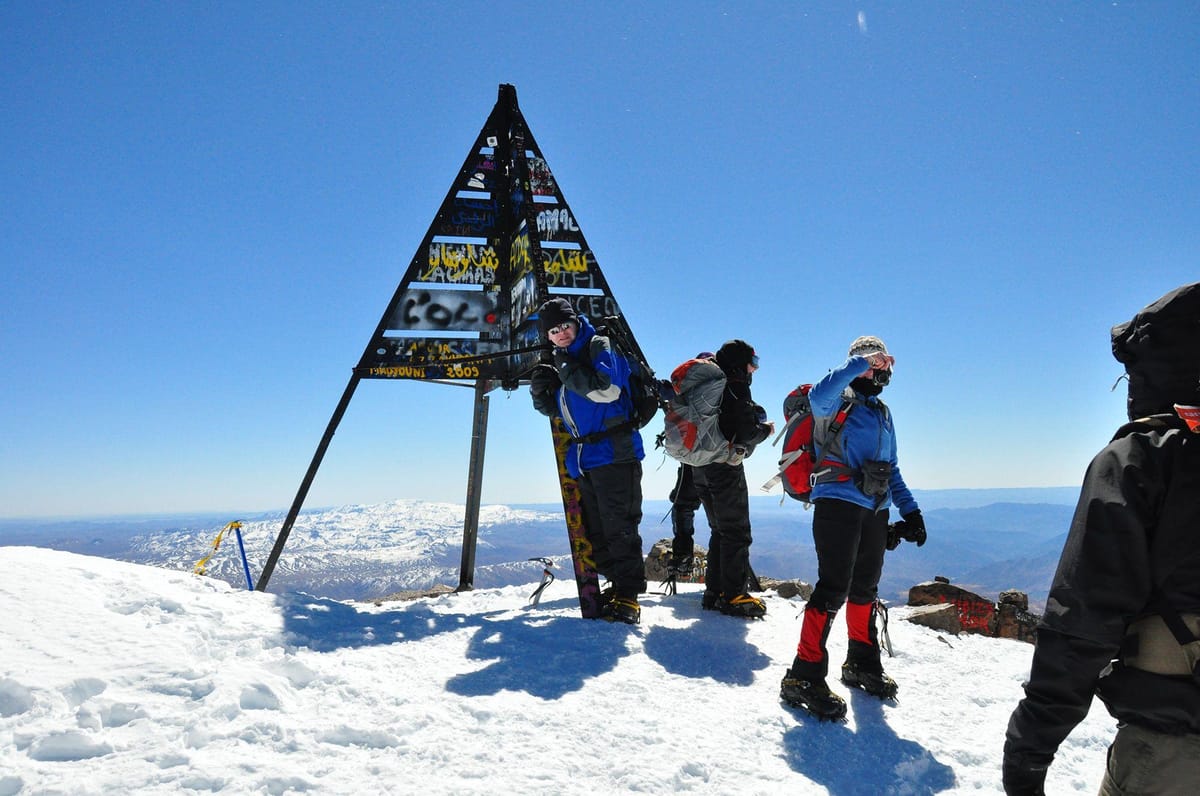
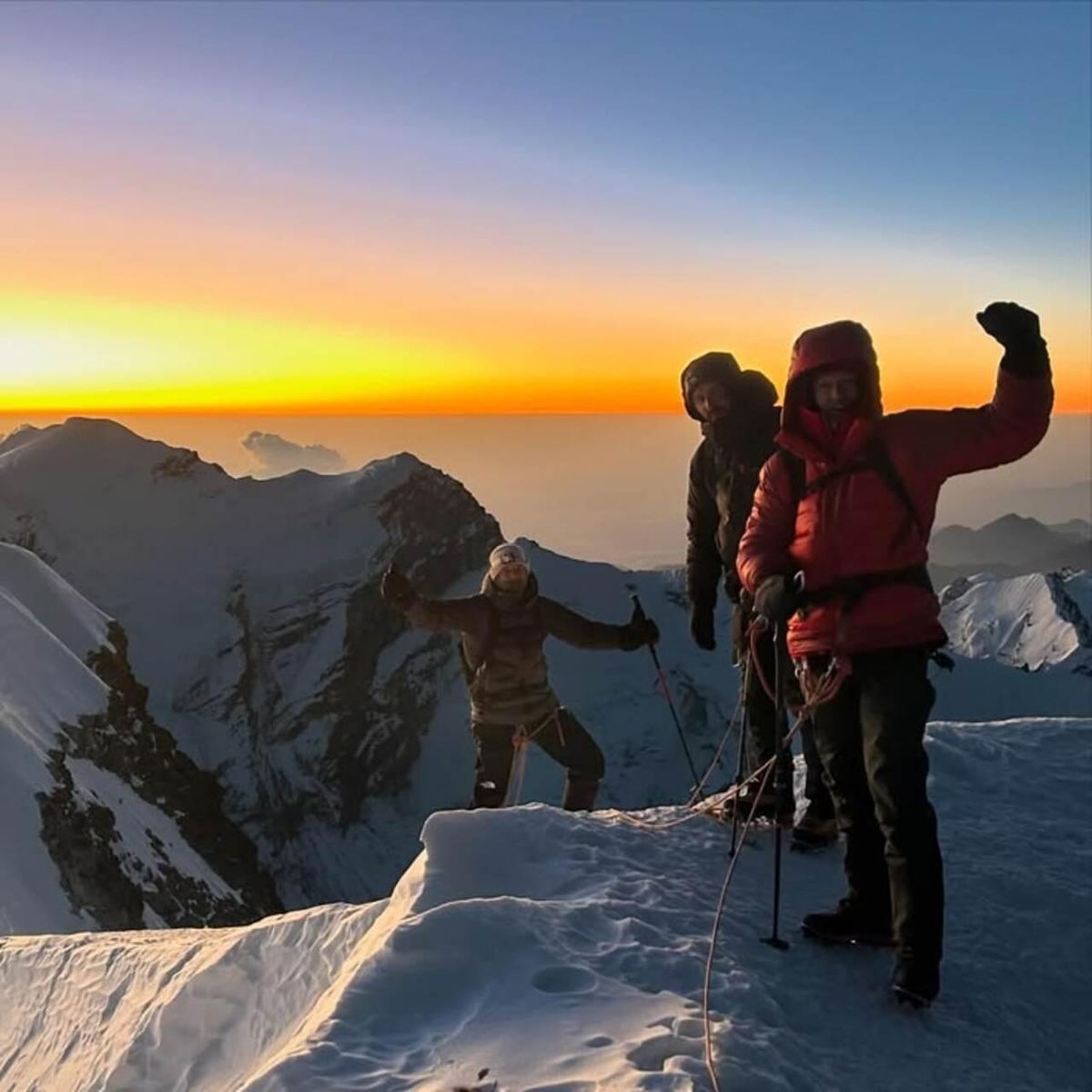
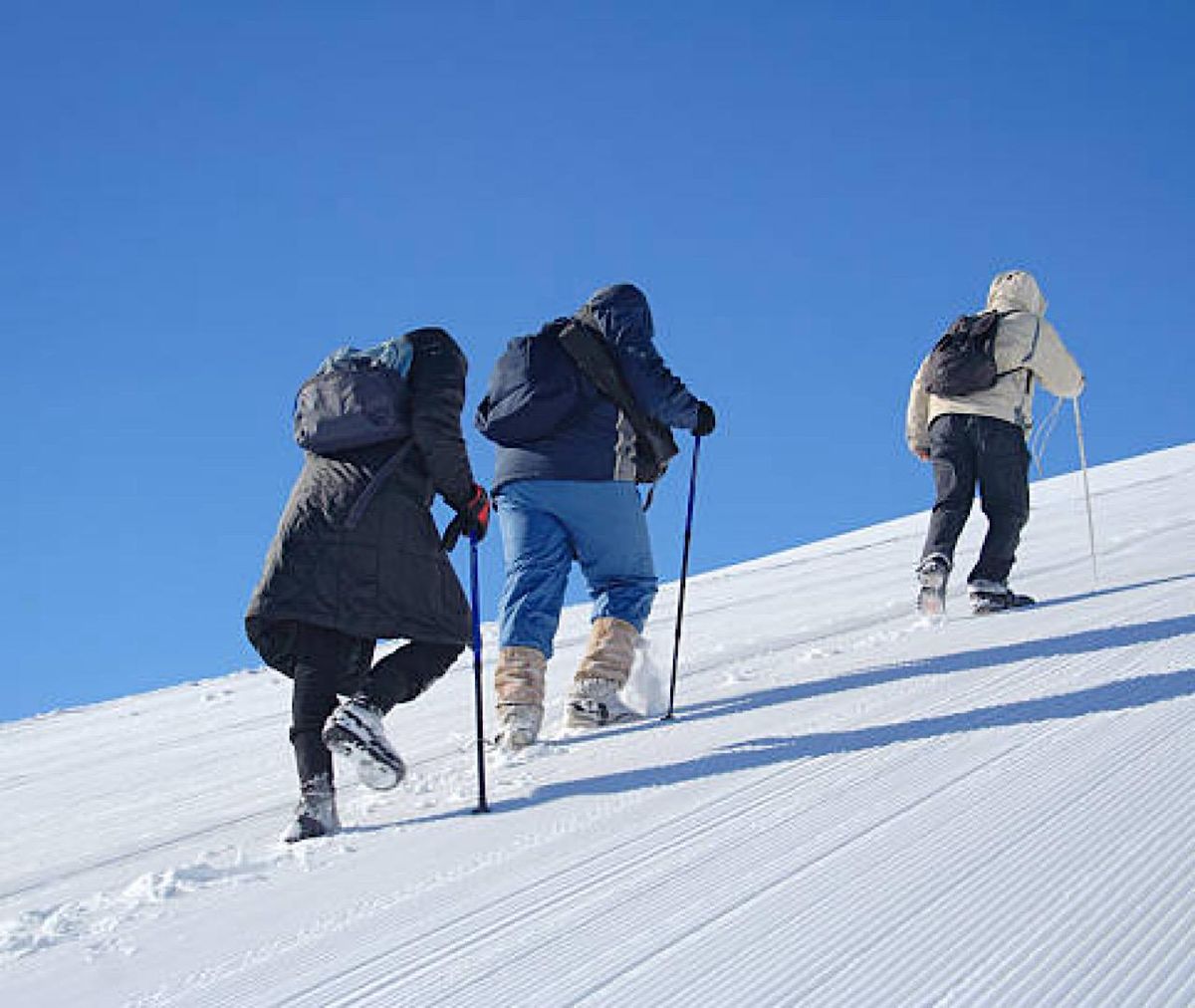
In winter, snow and ice cover the route. You walk in crampons and carry an ice axe. Weather can close the summit. This is a far more serious Toubkal difficulty level and suits people with some winter experience, or who are happy to be taught by their guide.
What makes it easier
- **A licensed guide.** Mandatory for foreign hikers, and the best way to manage pace and safety.
- **Mules carrying the heavy bags.** You only carry a day pack.
- **A slow pace.** The single biggest factor you control.
- **An extra day.** A three-day trek spreads the effort and gives your body time to adjust. See our [3-day itinerary](/blog/toubkal-3-day-trek-itinerary).
- **The right season.** Snow-free months are far kinder to first-timers. See [the best time to climb Toubkal](/blog/best-time-to-climb-toubkal).
Can anyone climb Toubkal?
Not anyone, but more people than you might think. Our groups include office workers, students, and hikers in their sixties. What they share is preparation and patience.
It is probably **not** for you right now if:
- You struggle to walk two or three hours on hills.
- You have knee, heart or breathing problems that limit exercise (ask your doctor first).
- You are not willing to turn back if the guide decides conditions or your health make it unsafe.
Toubkal fitness level: a simple test
A few weeks before your trip, try a day hike of six to eight hours with real climbing, carrying a small pack. If you finish tired but able to walk again the next day, you are in a good place. If not, train more or choose a three-day programme.
Stairs, steep hills and long weekend walks are the best preparation. Strengthen your legs for the descent, not only the climb.
Is Toubkal steep? Section by section
- **Imlil to Aroumd:** a steady climb on a wide path.
- **Aroumd to Sidi Chamharouch:** valley floor, then a rockier climb.
- **Sidi Chamharouch to the refuge:** long, steady uphill on a good path, with the altitude starting to tell.
- **Refuge to the summit:** the steepest part, on scree and rocky ground, in the cold and dark.
[TO CHECK: confirm this section-by-section description matches the route used on each of our programmes.]
How it compares
People often ask how Toubkal compares to other mountains. It is a much shorter trip than Kilimanjaro and has no glaciers like the Alps, but the altitude is real. We will compare these properly in future articles.
What our guests say makes the difference
Guests who enjoy the summit tend to do the same things. They walk slower than they want to, drink and eat regularly, sleep as much as they can, and listen to their guide. Guests who struggle often started too fast, skipped food because of nerves, or arrived with new boots.
So, how hard is Toubkal?
Hard enough that reaching the summit feels like an achievement. Not so hard that you need to be an athlete or a climber. With a guide, the right season and a sensible pace, it is a challenge that most healthy, active people can meet. All our Toubkal treks have free cancellation up to 24 hours before the start (Morocco time), with a full refund.
For the full picture, start with our [Mount Toubkal trek beginner's guide](/blog/mount-toubkal-trek-beginners-guide) and the [Atlas Mountains & Imlil guide](/blog/atlas-mountains-imlil-guide). For gear and preparation, our sister site [Toubkal Views](https://toubkalviews.com) has detailed guides.
Mental difficulty: the part nobody mentions
Much of the Toubkal challenge is in your head. Summit morning starts in the dark and the cold, after a short night. The scree above the refuge seems to go on forever, and you cannot see the top for a long time. Many guests tell us this was the moment they wanted to stop.
What helps is breaking the climb into small pieces. Walk to the next rock, the next bend, the next rest. Do not look at the whole slope. Count steps if it helps. Your guide has seen every kind of tired and knows when a short break and a handful of dates will get you moving again.
Accept that you will feel slow. Almost everyone does at that altitude, including very fit people. Slow is normal; stopping completely and getting cold is what to avoid.
How weather changes the difficulty
The same route can feel very different from one day to the next. Strong wind on the summit ridge makes it colder and tiring. Rain in the valley turns paths slippery. In spring and late autumn, a light snowfall can cover the upper path overnight. Your guide checks conditions and may adjust start times or turn the group around. That is part of what makes a guided trek safer, not a failure.
Turning back is not failing
Every season some trekkers do not reach the summit, because of altitude, tiredness, injury or weather. The mountain will still be there. Reaching the refuge and seeing the High Atlas from 3,000 metres is already an achievement, and the safest decision is always the right one.
Keep reading
- [Mount Toubkal Trek: The Complete Beginner's Guide](/blog/mount-toubkal-trek-beginners-guide)
- [Toubkal 3-Day Trek Itinerary: The Comfortable Way Up](/blog/toubkal-3-day-trek-itinerary)
- [Atlas Mountains & Imlil guide](/blog/atlas-mountains-imlil-guide)