Mount Toubkal trek for beginners: how climbing Toubkal works, the route, fitness, seasons, guides and prices for North Africa's highest mountain.
By Amazouz Morocco Tours team, local guides based in Marrakech and the High Atlas
North Africa's highest peak is closer than you think: two days from Marrakech, no ropes, no climbing experience, just strong legs and a good guide. That is the honest summary of the Mount Toubkal trek, and it is why so many first-time hikers put it on their list.
This guide is for people who have never done a big mountain before. We explain what the trek involves, how the days are organised, what kind of fitness you need, and how to choose the right trip. We guide trekkers in the High Atlas every week, so everything here comes from the trail, not from a brochure.
What is Toubkal?
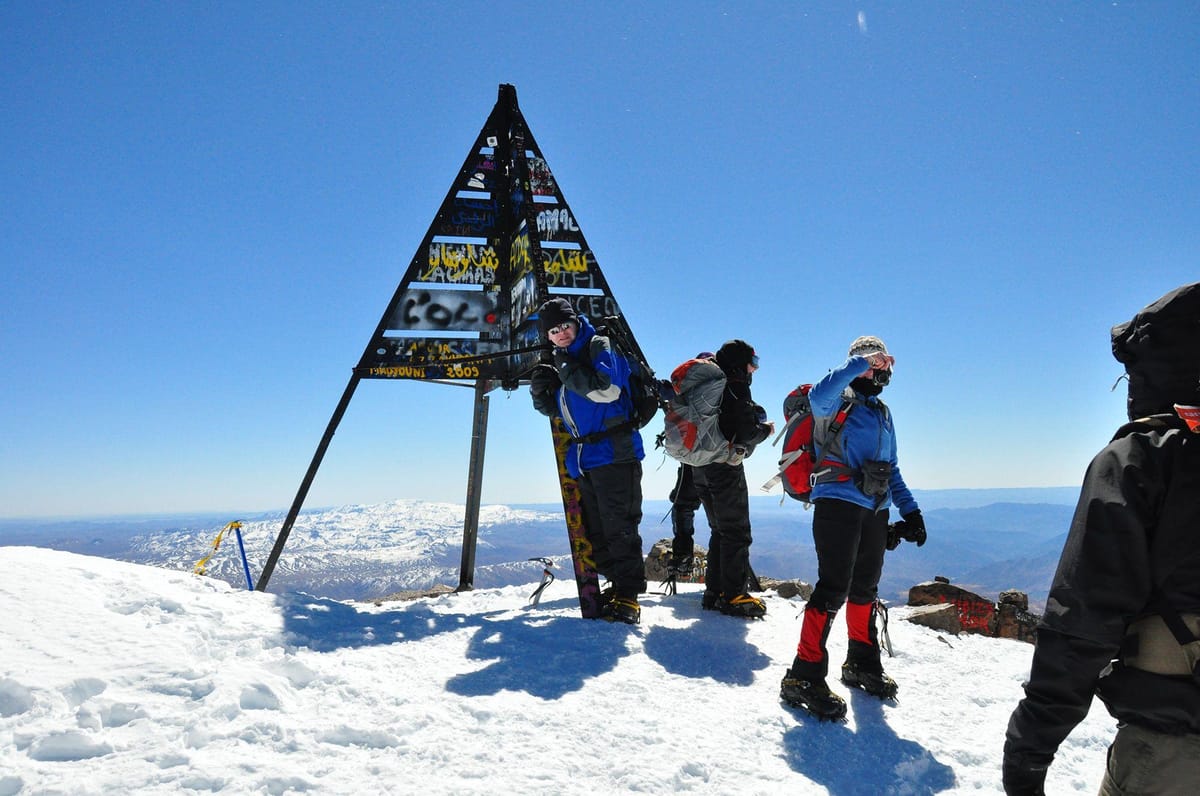
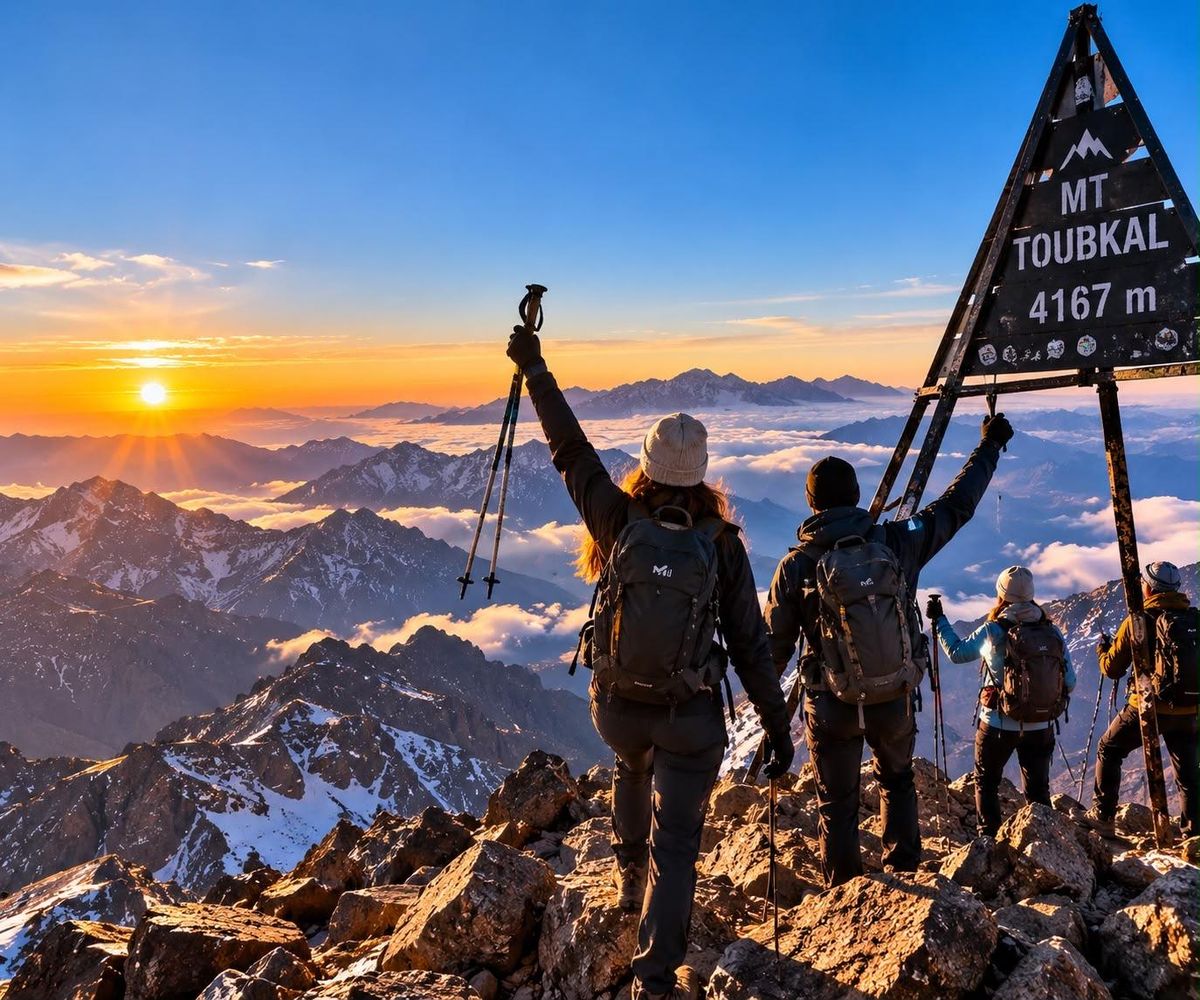
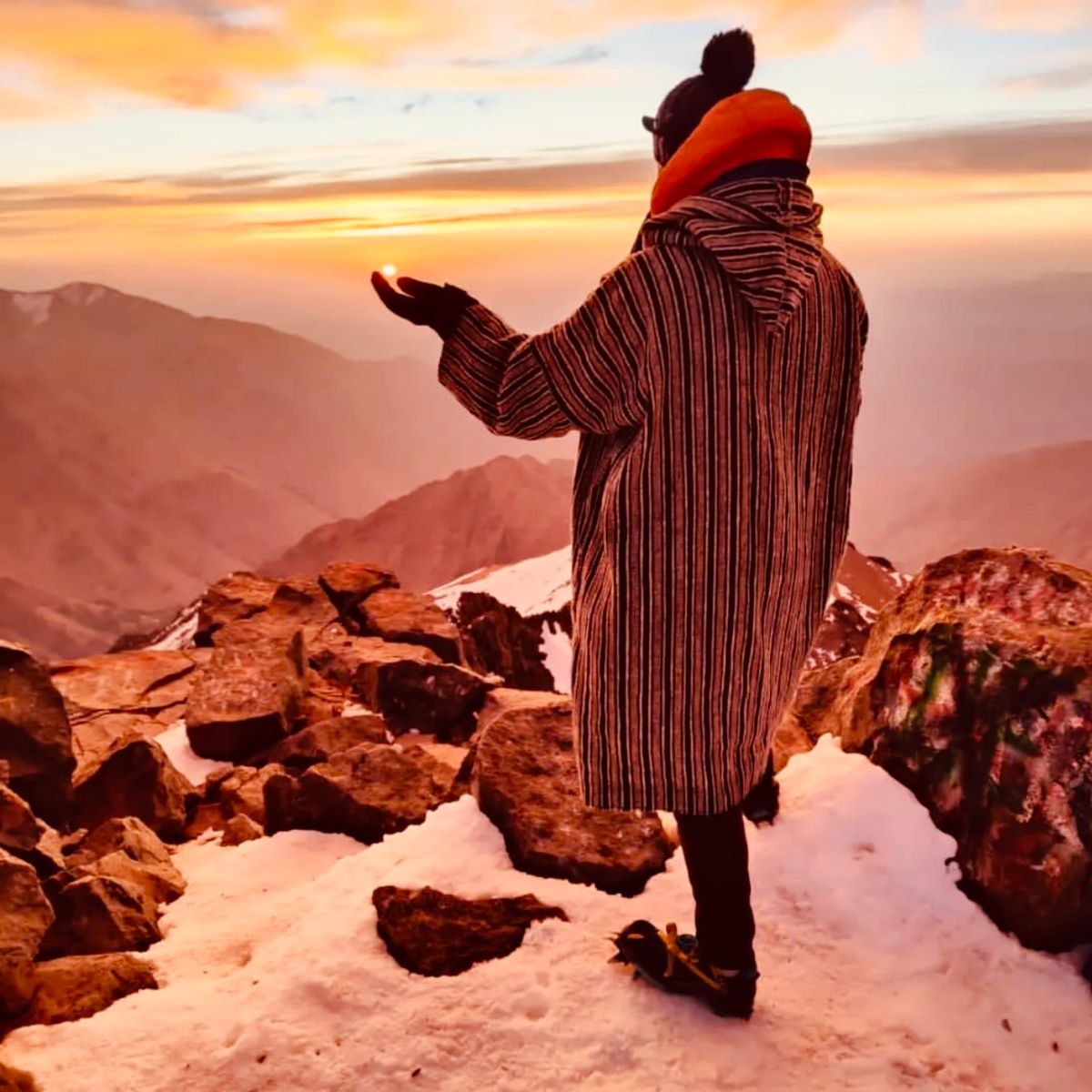
Jbel Toubkal is the highest mountain in North Africa at 4,167 metres. It stands in the High Atlas, inside Toubkal National Park, south of Marrakech. From the summit you look over a sea of ridges and, on clear days, far out over the plains.
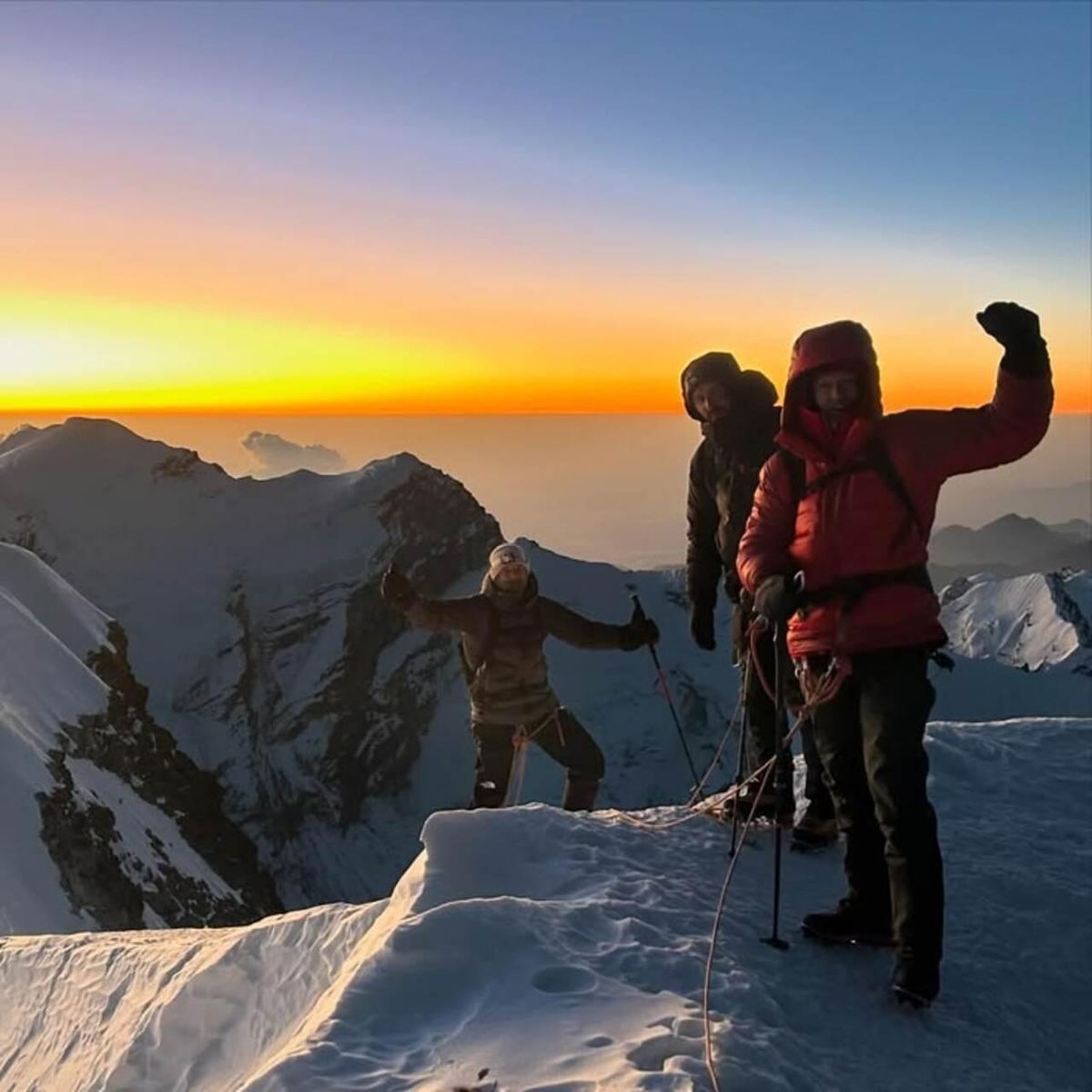
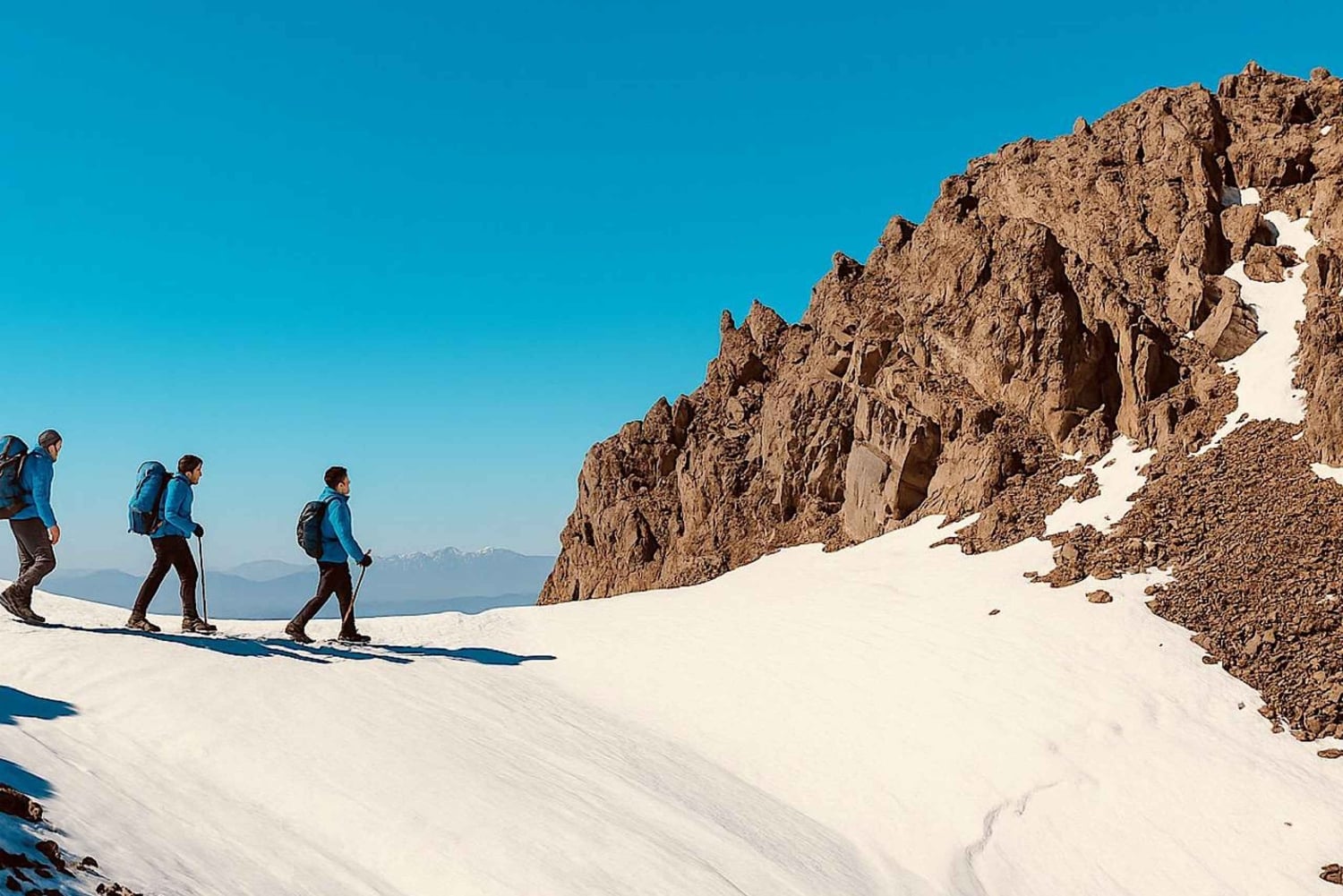
The important point for beginners: on the normal route the Toubkal mountain is a trek, not a climb. There are no vertical walls and no ropes in summer conditions. It is a long, steep walk on rocky paths and scree, made harder by the altitude.
How the Mount Toubkal trek works
Almost every Toubkal hike follows the same pattern:
1. **Marrakech to Imlil.** The village of Imlil sits at about 1,740 metres, around 65 km from Marrakech. The drive takes about 1 hour 15 minutes to 1 hour 30 minutes.
2. **Imlil to the refuge.** You walk up the valley, past the village of Aroumd and the shrine of Sidi Chamharouch, to the mountain refuges below the summit. This is usually a full afternoon or day of walking [TO CHECK: typical walking time on our 2-day programme].
3. **Summit day.** You start very early, climb to the top, then walk all the way back down to Imlil and drive to Marrakech.
On a two-day trip, steps 2 and 3 happen on consecutive days. On a three-day trip you add more time, either an easier first day or an extra night that helps your body adjust. We compare both in detail in our [2-day itinerary](/blog/toubkal-2-day-trek-itinerary) and [3-day itinerary](/blog/toubkal-3-day-trek-itinerary) articles.
Toubkal for beginners: do you need experience?
You do not need to have climbed a mountain before. Many of our guests have only done day walks at home. What you do need:
- **Walking stamina.** Summit day is long, with many hours on your feet, uphill and then downhill.
- **Good knees and ankles.** The descent on loose stones is where most people feel it.
- **Patience with altitude.** Above about 3,000 metres many people feel breathless or get a headache. Walking slowly is the single best strategy.
If you can walk six to eight hours on hilly ground with a small backpack, you have a realistic chance. If you are unsure, read our honest article on [how hard Toubkal is](/blog/how-hard-is-toubkal).
The guide rule
A licensed mountain guide is mandatory for foreign hikers on Toubkal. This has been the rule since 2019. Your guide knows the route in every season, reads the weather, manages your pace and decides when it is safer to turn back. On all Amazouz Toubkal treks the guide is included.
A local team usually also includes a mule and muleteer to carry the main bags and food, and a cook at the refuge on some programmes [TO CHECK: which of our programmes include a cook]. You carry a day pack with water, layers and snacks.
Choosing your season
The season changes the trek more than anything else.
- **Summer and early autumn:** usually snow-free, no crampons needed, the easiest conditions technically.
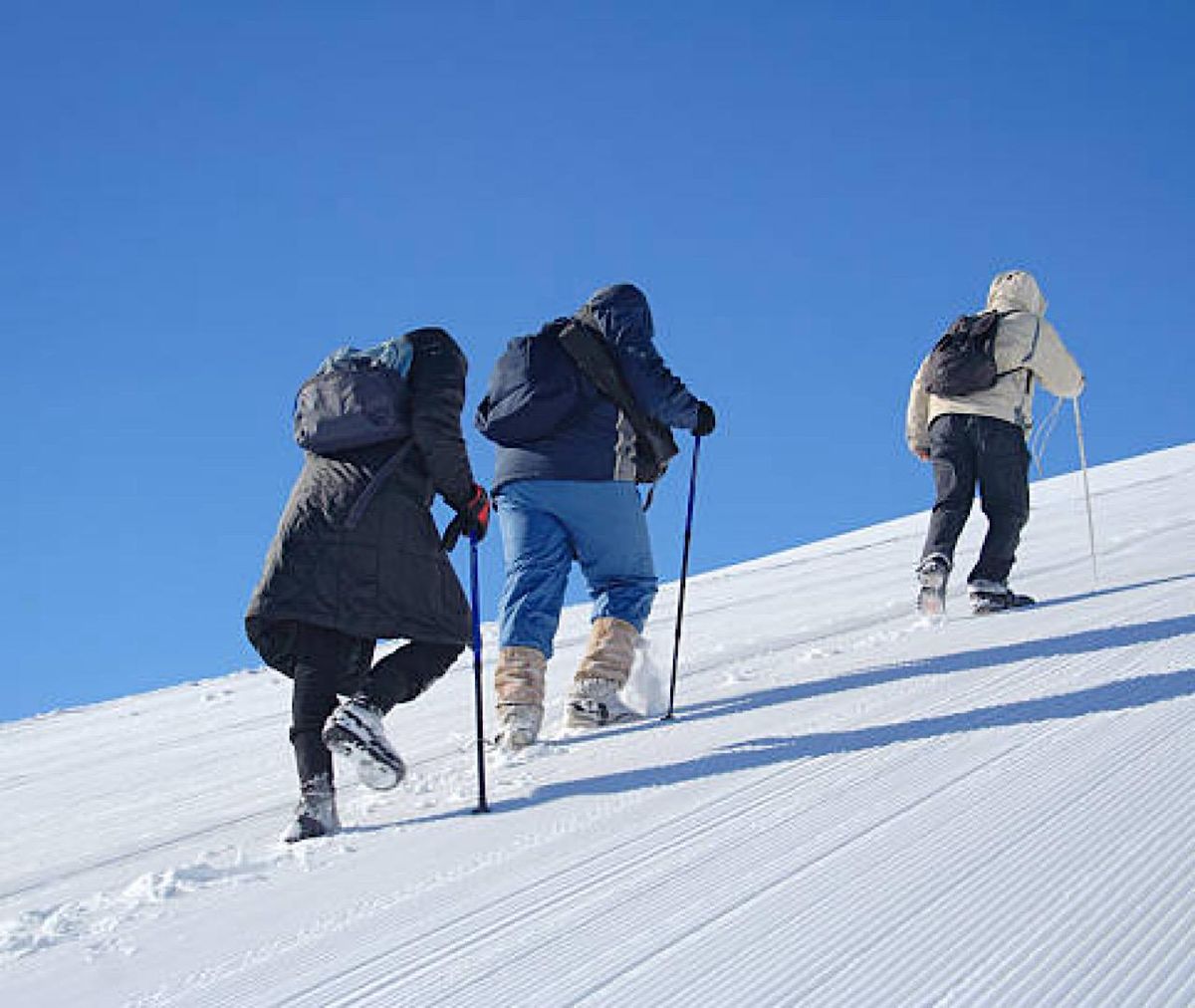
- **Winter:** the mountain is under snow and ice. Crampons and an ice axe are needed, and it becomes a winter mountaineering ascent.
- **Spring:** a mix, with green valleys and snow often still high on the mountain.
We break this down in [the best time to climb Toubkal](/blog/best-time-to-climb-toubkal). For a first mountain, the snow-free months are the most forgiving.
Fitness and preparation
You do not need to be an athlete. Regular walking, stairs and a few longer hikes in the weeks before make a real difference. Wear your boots before the trip so they are broken in.
For a full packing and gear list, and for renting gear in Imlil, see the preparation guides on our sister site [Toubkal Views](https://toubkalviews.com). We do not repeat them here.
Altitude and your health
At 4,167 metres the air holds noticeably less oxygen than at sea level. Mild headaches and shortness of breath are common. Severe headache, vomiting, confusion or loss of balance are warning signs, and you must tell your guide and descend. If you have any heart, lung or blood-pressure condition, are pregnant, or take regular medication, ask your doctor before booking a trek to 4,167 metres.
What it costs
Prices for trekking Toubkal depend on the number of days, group size and what is included. Our current Toubkal treks start from **€105.75 per person** for two days, and three-day climbing treks start from **€206.33 per person**. Each tour page lists exactly what is included and excluded, so you can compare. All our Toubkal treks have free cancellation up to 24 hours before the start (Morocco time), with a full refund.
A typical Toubkal summit trek, day by day
Here is how a classic two-day Toubkal summit trek feels from the inside.
**Morning, day one.** Pickup in Marrakech, the drive across the plain and up into the foothills, and a first tea in Imlil while the mules are loaded.
**Afternoon, day one.** Walking up the valley, a lunch stop, and the long climb to the refuge. You arrive tired but excited, with views of the summit ridges glowing in the evening light.
**Night.** Dinner, an early bed in a shared dormitory, and a short, often broken sleep.
**Day two.** An early start by headlamp, the slow climb up the rocky slopes, the summit marker, photos, and a long descent all the way back to Imlil, then the drive to Marrakech.
It is a big two days, but it is very achievable with a steady pace.
Practical tips for first-timers
- **Walk slower than you think.** Your guide sets the pace for a reason.
- **Drink steadily.** Little and often, all day.
- **Eat even if you are not hungry.** Altitude often kills appetite.
- **Bring warm layers.** It can be cold on the summit even in summer.
- **Respect the turnaround.** If your guide says it is time to go down, go down.
- **Dress respectfully in the villages.** Shoulders and knees covered is appreciated.
Who should not do the trek?
Toubkal is not right for everyone. If you have a medical condition that limits exercise or is affected by altitude, speak to your doctor first. If you have serious knee or back problems, the long descent may be painful. A gentle valley walk around Imlil may be a better choice, and you still see the mountain.
Ready to start?
The Mount Toubkal trek is one of the most rewarding adventures in Morocco, and one of the most accessible big mountains in the world. Choose your season, pick two or three days, and leave the logistics to a local team. Below are four of our most popular Toubkal treks. For more about the region, read our [Atlas Mountains & Imlil guide](/blog/atlas-mountains-imlil-guide).
Keep reading
- [How Hard Is Climbing Mount Toubkal? An Honest Answer](/blog/how-hard-is-toubkal)
- [Toubkal 2-Day Trek Itinerary, Step by Step](/blog/toubkal-2-day-trek-itinerary)
- [Atlas Mountains & Imlil guide](/blog/atlas-mountains-imlil-guide)