Quick answer: Morocco's Sahara region, including Merzouga and Zagora, is a well established part of the country's tourism industry, with daily organised tours, licensed drivers and guides, and established desert camps. The biggest real risks are heat, sun exposure, cold desert nights and ordinary road travel over long distances, not crime. We always recommend checking your own government's travel advice before you go, since that advice is updated regularly and reflects your specific nationality and circumstances.
Why the Sahara feels safer than people expect
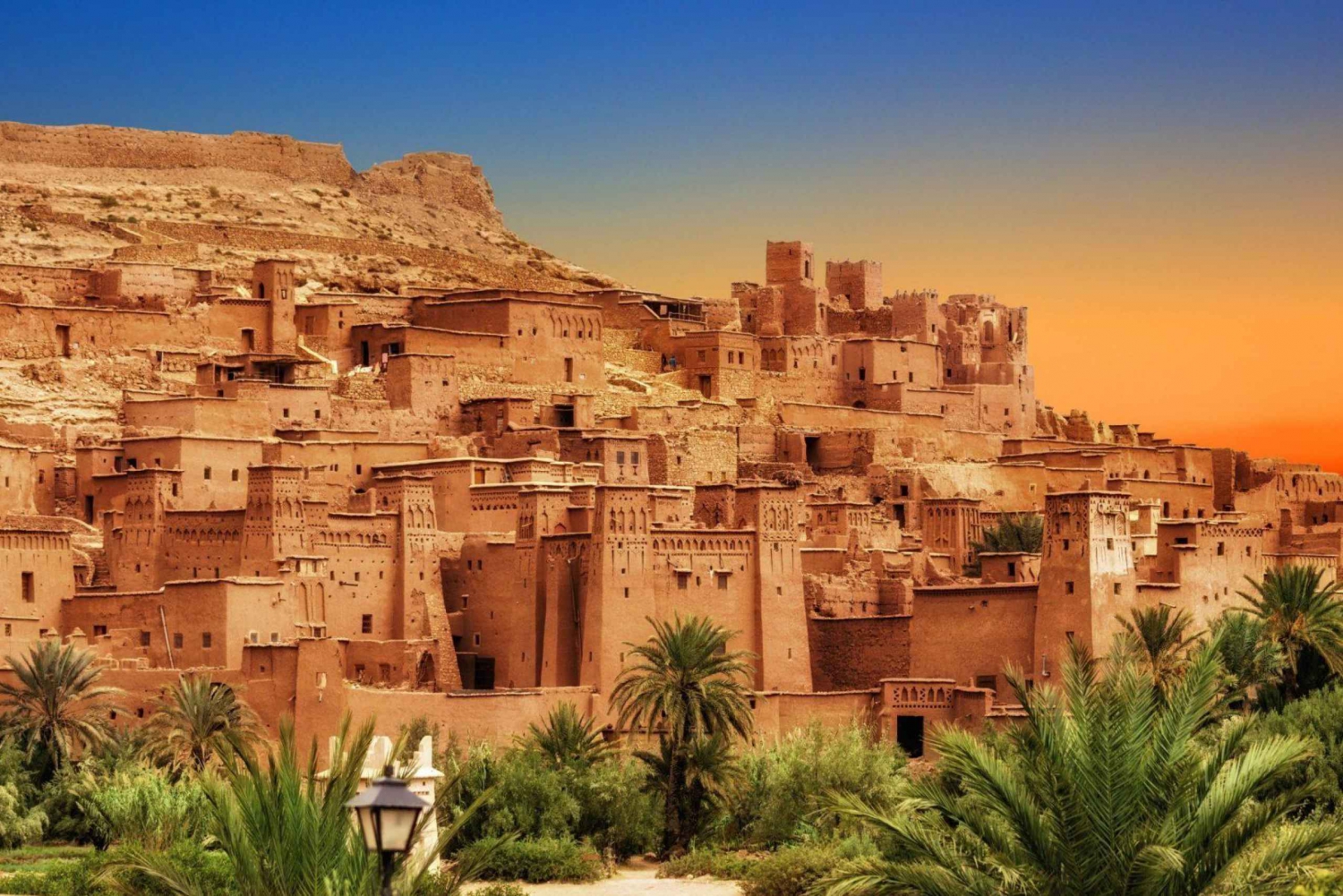
Most first time visitors picture the desert as remote and unpredictable, but the parts of the Sahara that travellers actually visit from Marrakech, around Merzouga and Zagora, are reached by paved roads and served every day by organised tours. Local guides and drivers know the routes well, desert camps operate every night of the season, and the towns along the way, such as Ouarzazate and Rissani, are used to welcoming visitors. Travelling as part of an organised tour, whether shared or private, means someone with local knowledge is handling the driving, the stops and the camp arrangements, which removes much of the uncertainty that can make an unfamiliar destination feel riskier than it is.
Checking your government's travel advice
Before booking any international trip, it is worth checking the official travel advice published by your own government for Morocco. These pages are updated regularly, cover the whole country including the Sahara region, and take into account your nationality, passport and any current local conditions. Because this advice can change and varies from one country to another, we do not try to summarise it here. A quick search for your country's foreign ministry or department of state travel advice for Morocco will give you the most current and relevant picture before you travel.
Health and heat are the main practical concerns
In practice, the challenges travellers encounter in the Sahara are usually physical rather than related to safety from other people. Daytime temperatures can be very high, particularly from late spring through early autumn, and dehydration or heat exhaustion are the most common issues on desert tours. Drinking water regularly, wearing a hat and loose, breathable clothing, and resting during the hottest part of the afternoon all help. At the other extreme, desert nights can get surprisingly cold, especially in winter, so packing warm layers for the evening and early morning matters just as much as preparing for the heat. If you have an existing health condition, it is sensible to speak with your doctor before a desert trip, particularly if you are sensitive to heat or dehydration.
Road travel is part of the experience
Reaching the Sahara from Marrakech involves a long drive, often across the Tizi n'Tichka pass through the High Atlas Mountains and then along desert roads toward Ouarzazate, Zagora or Merzouga. These roads are well travelled and maintained, and tours use experienced local drivers who know the route, but as with any long road journey anywhere in the world, the drive itself is where most of the attention should go. Wearing a seatbelt, taking breaks on longer driving days and choosing a tour with a professional driver all reduce the ordinary risks that come with any multi day road trip, in Morocco or elsewhere.
Camels, camps and everyday precautions
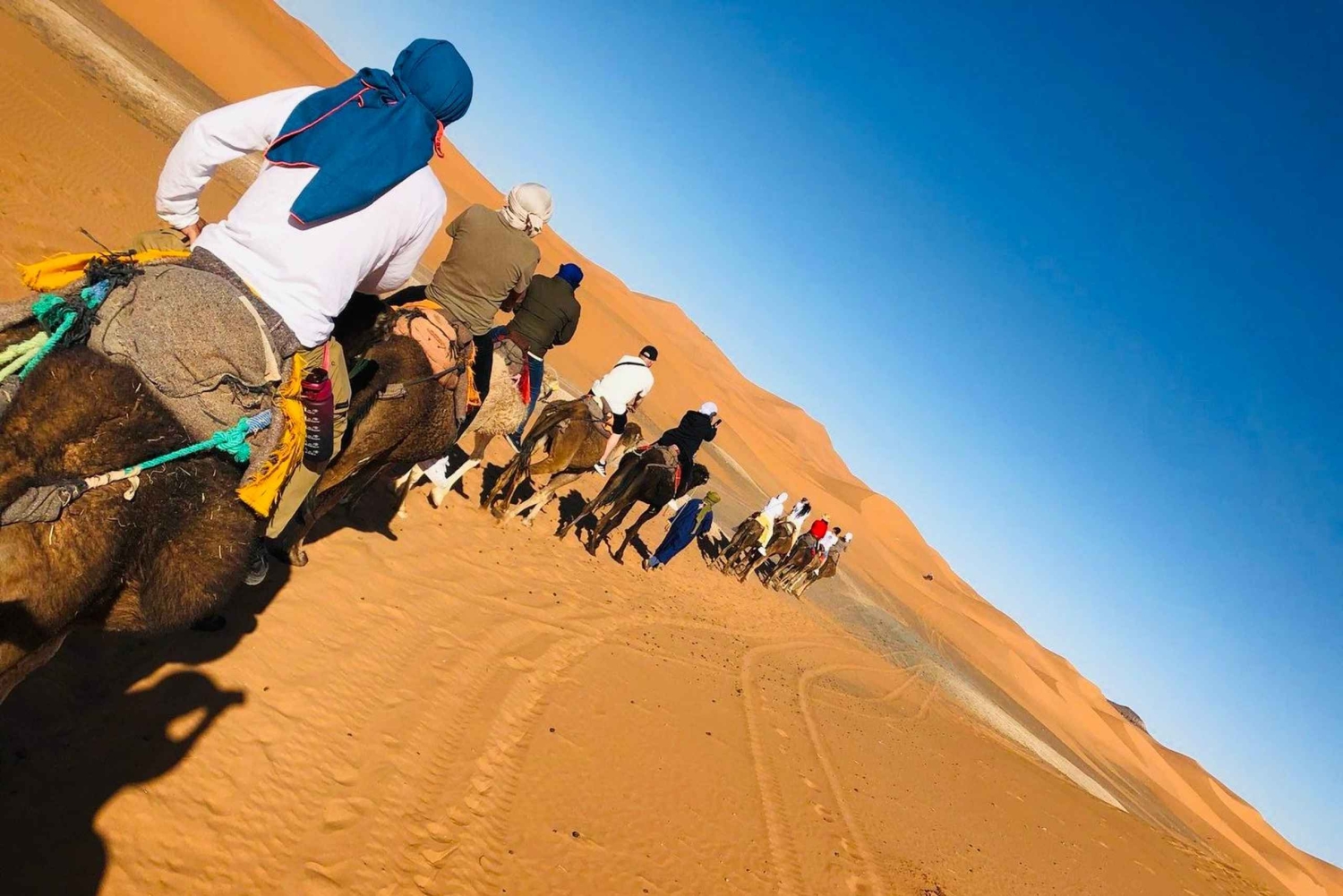
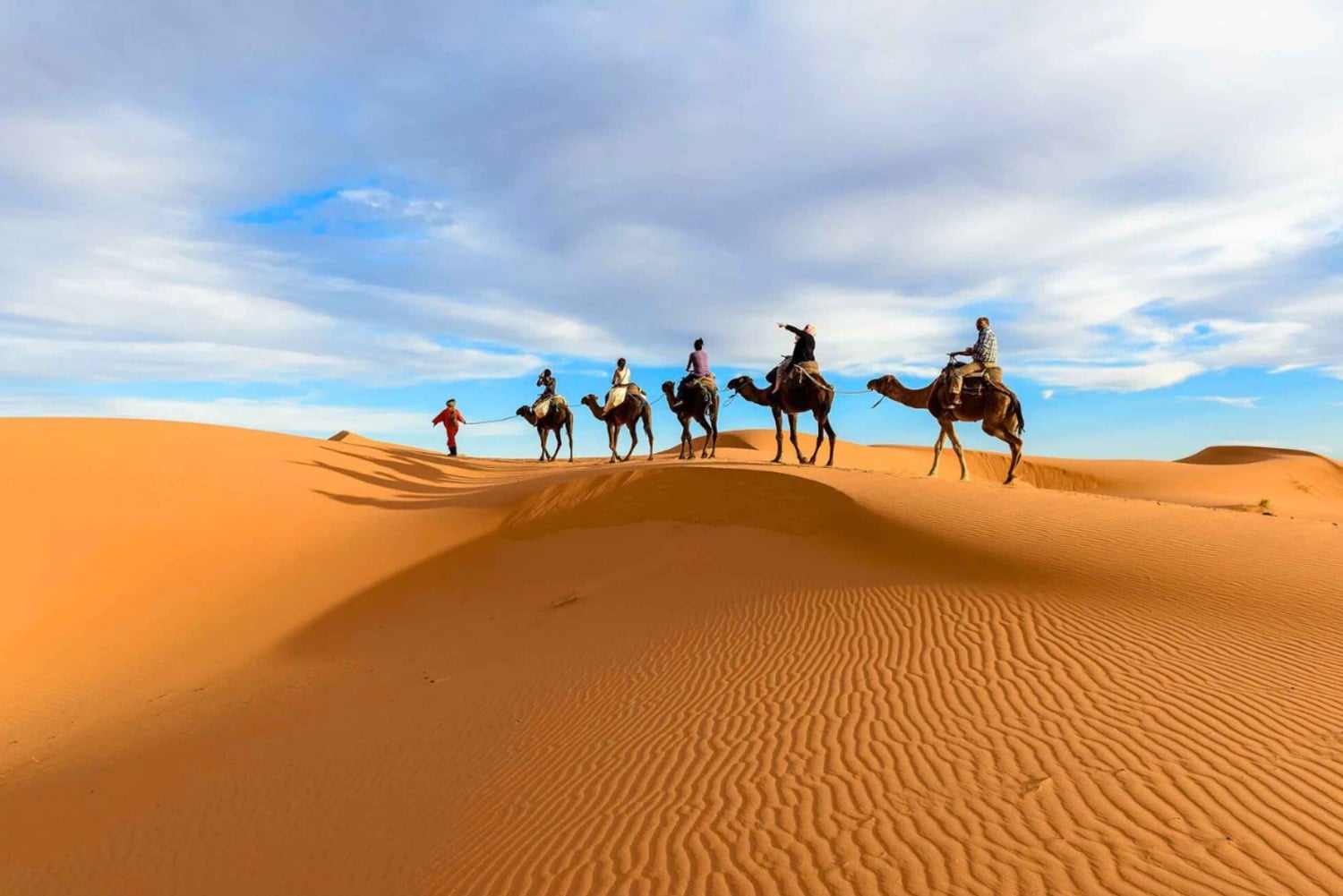
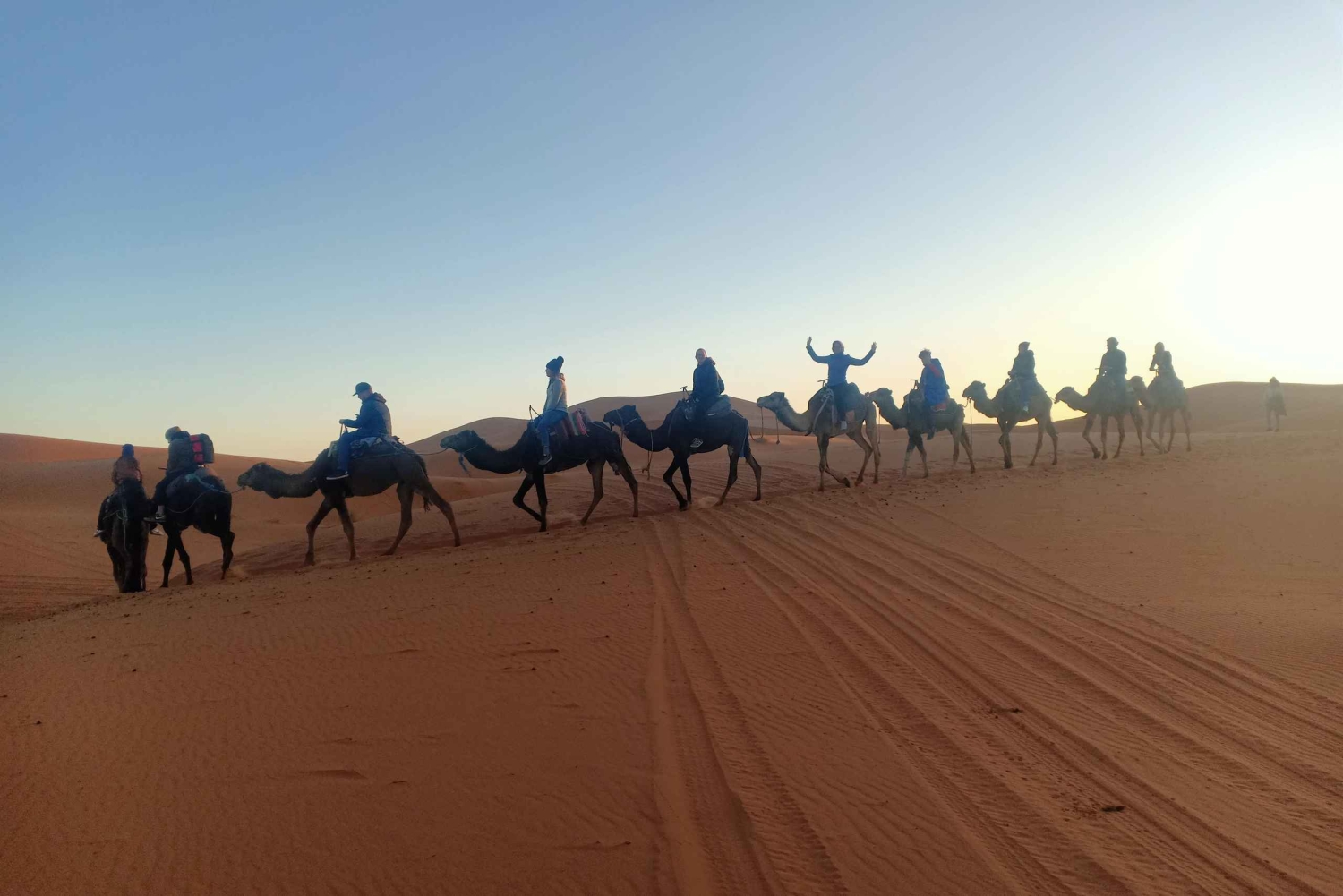
Camel rides at sunset or sunrise are one of the highlights of a desert tour, and they are generally calm, slow paced and led by experienced handlers. As with any activity involving animals, it helps to listen to your guide's instructions, hold on as advised when mounting or dismounting, and avoid sudden movements. In the desert camps themselves, standard sense applies: keep valuables with you or secured, use a torch at night since camps are not lit like a city street, and ask your guide about anything you are unsure of. None of this is specific to Morocco or to the desert, it is the same everyday care you would take at any outdoor destination.
Travelling with a licensed, organised tour
Choosing an organised tour rather than attempting the desert independently removes a lot of the guesswork. A licensed driver and an established operator know the road conditions, the camp arrangements and what to do if weather or circumstances require a change of plan. For trekking and more active sides of a Morocco trip, guiding is handled by accredited local guides, which is part of why we recommend always booking through a recognised operator rather than relying solely on informal arrangements. If you are also planning to combine the desert with Mount Toubkal, our guide to Mount Toubkal and the Sahara in one week explains how both fit together, and our Sahara tour mistakes article covers planning details worth knowing before you book.
Women travelling alone and solo travellers
Solo travellers, including women travelling alone, regularly join Sahara tours, and travelling with an organised group or a private driver and guide is generally the most comfortable way to do so, since you are not navigating transport, accommodation and routes on your own. Dressing modestly, particularly in rural towns and villages along the route, is a matter of local custom and comfort rather than a strict rule, and most travellers find Moroccan hospitality in the desert region warm and welcoming. If you have specific concerns as a solo traveller, your government's travel advice page is again a good place to look for guidance tailored to current conditions.
What we recommend before you go
Beyond checking your government's travel advice, a few practical steps make any Sahara trip smoother: book with an established operator who uses licensed drivers, pack for both heat and cold since desert temperatures swing widely between day and night, carry a basic first aid kit and any personal medication, and keep a copy of your travel insurance details and embassy contact information with you. None of this is unique to the Sahara, it is the same preparation sensible travellers bring to any trip abroad, and it is exactly what makes a desert tour from Marrakech feel like a well run, enjoyable journey rather than an uncertain one.
A region built for visitors
The Sahara around Merzouga and Zagora has welcomed travellers for decades, and the infrastructure, from paved roads to established camps to experienced guides, reflects that. The honest answer to whether it is safe is the same honest answer for travel anywhere: check your own government's current advice, take sensible precautions around heat, health and road travel, and travel with an established, licensed operator, and the Sahara is every bit as safe as the rest of a well planned Morocco trip.
Frequently asked questions
- Is the Sahara Desert in Morocco safe to visit?
- Yes, the parts of the Sahara visited by travellers, including Merzouga and Zagora, are a well established part of Morocco's tourism industry, reached by organised tours with licensed drivers and experienced guides.
- Should I check my government's travel advice before visiting?
- Yes, we recommend checking the official travel advice published by your own government for Morocco before you travel, since it is updated regularly and reflects your nationality and current conditions.
- What are the main practical risks on a Sahara tour?
- In practice, heat, sun exposure, dehydration, cold desert nights and ordinary long distance road travel are the main practical concerns, more than risks from other people.
- Is it safe to travel to the Sahara alone as a woman?
- Solo travellers, including women, regularly join Sahara tours, and travelling with an organised group or a private driver and guide is generally the most comfortable way to do so.
- Are the roads to Merzouga and Zagora safe?
- The roads are well travelled and used daily by tour operators, including the route over the Tizi n'Tichka pass, and tours use experienced local drivers who know the conditions well.
- Are camel rides in the Sahara safe?
- Camel rides are generally calm and slow paced, led by experienced handlers, and following your guide's instructions when mounting, riding and dismounting is the main precaution to take.
- Is it better to book an organised tour rather than travel independently?
- Booking with an established operator that uses licensed drivers and guides removes much of the uncertainty of independent desert travel, since they know the roads, camps and how to handle changing conditions.
- Does the Sahara get cold at night?
- Yes, desert nights can be surprisingly cold, especially in winter, so packing warm layers for the evening and early morning is as important as preparing for daytime heat.
- What should I pack with health and safety in mind?
- A hat, sun protection, warm layers for the evening, plenty of water, any personal medication, a basic first aid kit and your travel insurance details are all sensible to bring.
- Who should I ask if I have specific safety concerns before my trip?
- Your tour operator can answer practical questions about the itinerary and camps, while your own government's travel advice page is the right source for current, nationality specific guidance.