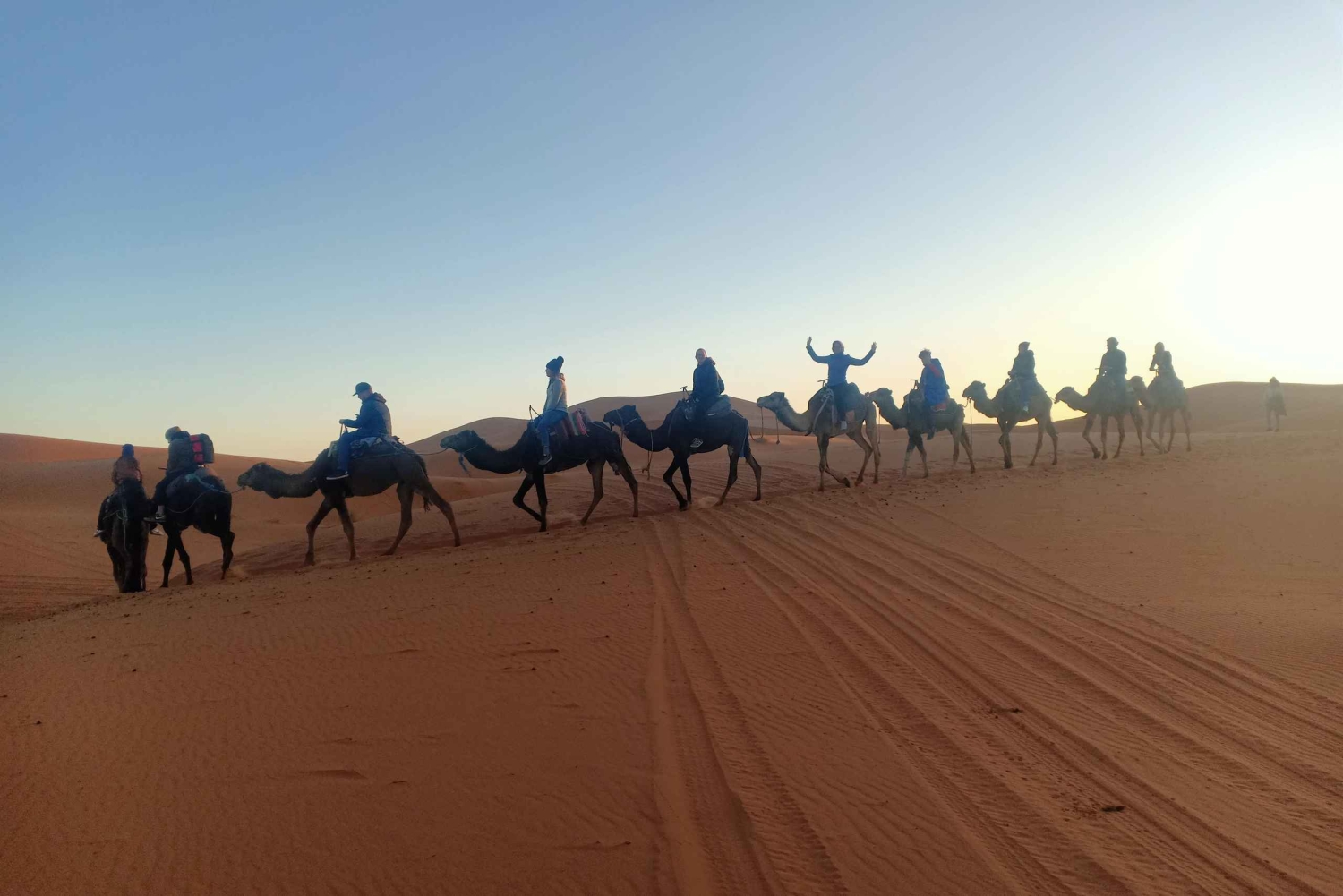
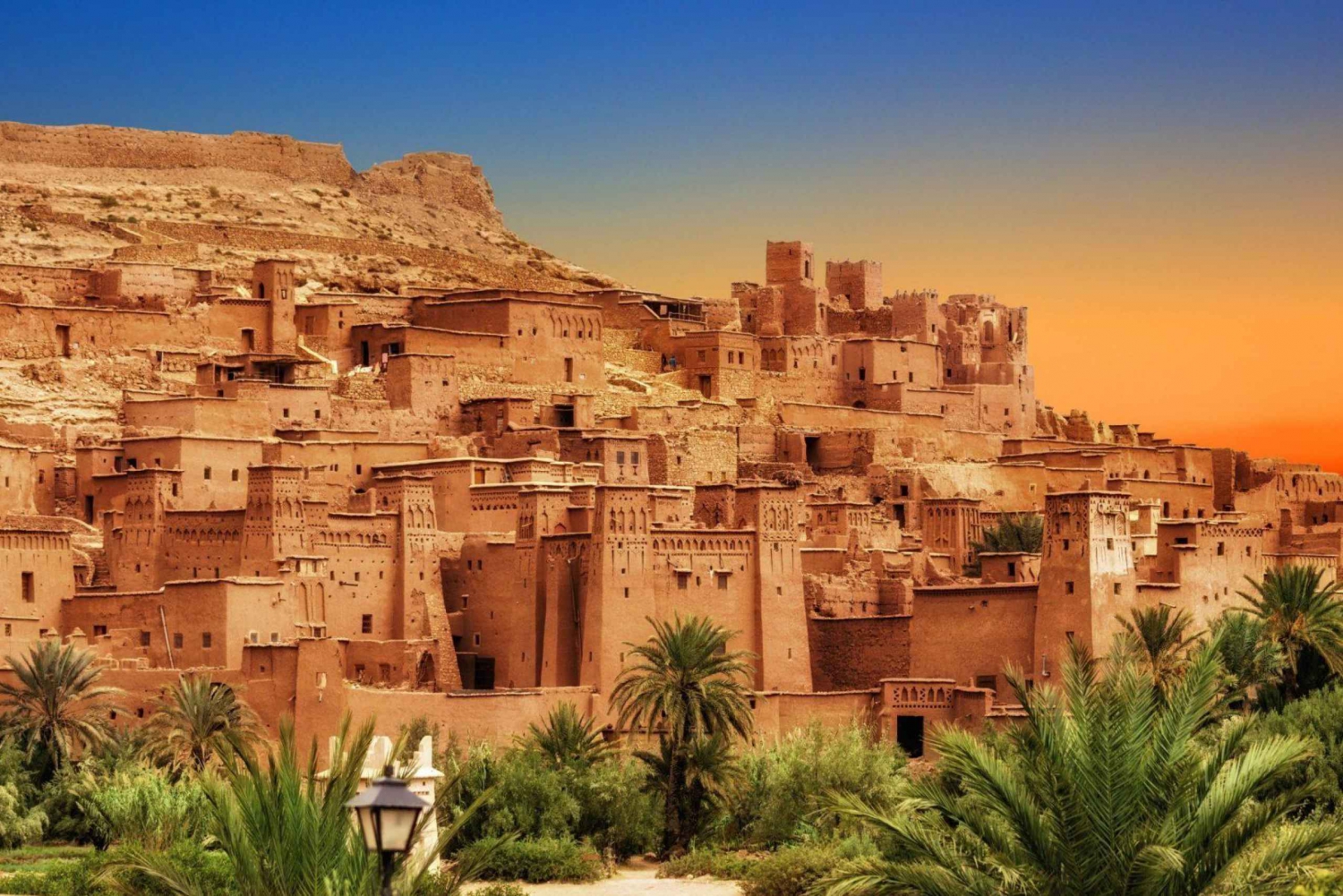
Yes, you can visit the desert during Ramadan, and evenings in camp can be especially warm, though the details of what changes are worth understanding before you book.
What actually changes on a Sahara desert tour during Ramadan, from meal timing to the pace of daily life, and what to confirm before you book.
Quick answer: Ramadan is the Islamic month of fasting, and its dates shift earlier each year because the Islamic calendar is lunar, so there is no fixed date range to plan around from one year to the next. Sahara desert tours run as normal during Ramadan, including the drive to Merzouga, the camel ride and the overnight camp stay, but your driver, guide and camp staff may be fasting during daylight hours, which can affect pace and timing. We do not promise a specific iftar service or sunset-timed dinner as part of any tour, so if this matters to your plans, the best step is to confirm current arrangements with our team before you travel.
Why Ramadan dates matter for planning
Because Ramadan follows the lunar calendar, it moves roughly ten or eleven days earlier each year against the Gregorian calendar, so a trip planned for the same month next year may fall inside or outside the fasting period entirely. Rather than relying on when Ramadan fell during a previous trip, check the current year's dates as soon as you start planning, and let our team know if your travel window might overlap, so we can talk through what that means for your specific tour.
Your driver and guide during the fast
Many Moroccan drivers, guides and camp staff observe the Ramadan fast, meaning no food or water from dawn until sunset. This is a personal commitment that does not generally stop a desert tour from running, but it can shape the rhythm of the day. Your driver may prefer certain timings for the longer driving stretches, and the team may pace the day slightly differently around the hardest hours of the afternoon heat. Most travellers who visit during Ramadan come away impressed by how committed their driver and guide remain to a smooth, well-run trip even while fasting.
What happens with meals in camp
We do not promise a specific iftar service, a sunset-timed dinner or any particular menu arrangement as part of a Sahara tour during Ramadan, since the exact setup can vary by camp, by date and by group size. If breaking the fast at the correct time matters to your own plans, or if you are curious how a particular camp handles dinner during Ramadan, message our team on WhatsApp before booking so we can check the current arrangement for your travel dates rather than leaving you to guess. For a sense of how iftar and the evening meal generally work elsewhere in Morocco, our guide to Agafay during Ramadan covers the same seasonal rhythm, even though it is written about a different desert destination near Marrakech.
A different pace during the day
During Ramadan, daytime life across Morocco, including in the towns and villages along the route to Merzouga, can feel quieter than usual, since many residents are fasting from dawn until sunset and some cafes and restaurants reduce their hours during the day. Travellers who are not fasting can generally still find places to eat along the way, particularly at stops used to tourists, though it is respectful to be discreet about eating or drinking in public during fasting hours. Evenings tend to pick up again once the fast breaks, with a different, often livelier mood taking over after dark, which can carry through to the atmosphere in camp once dinner is served.
What stays the same in the desert
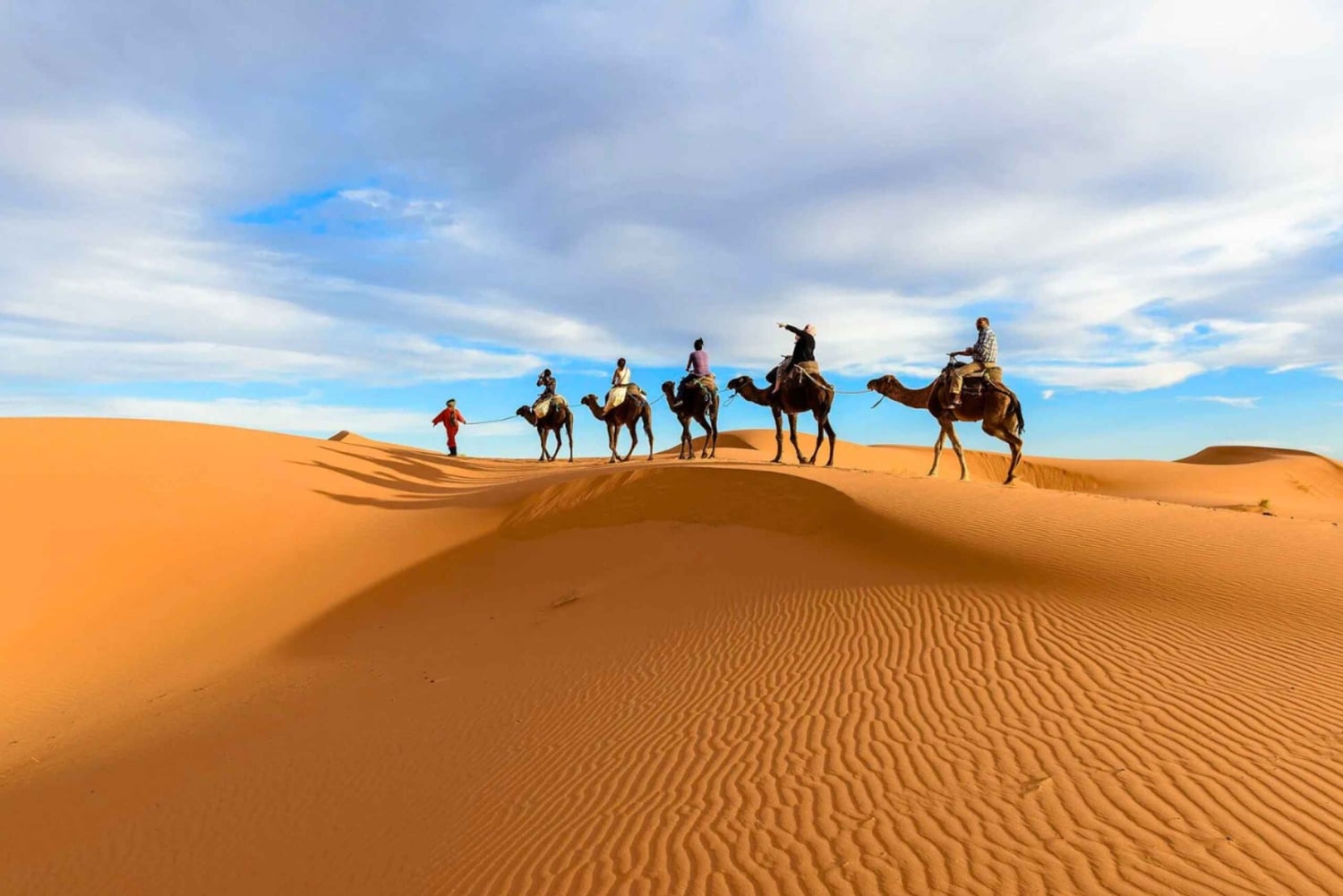
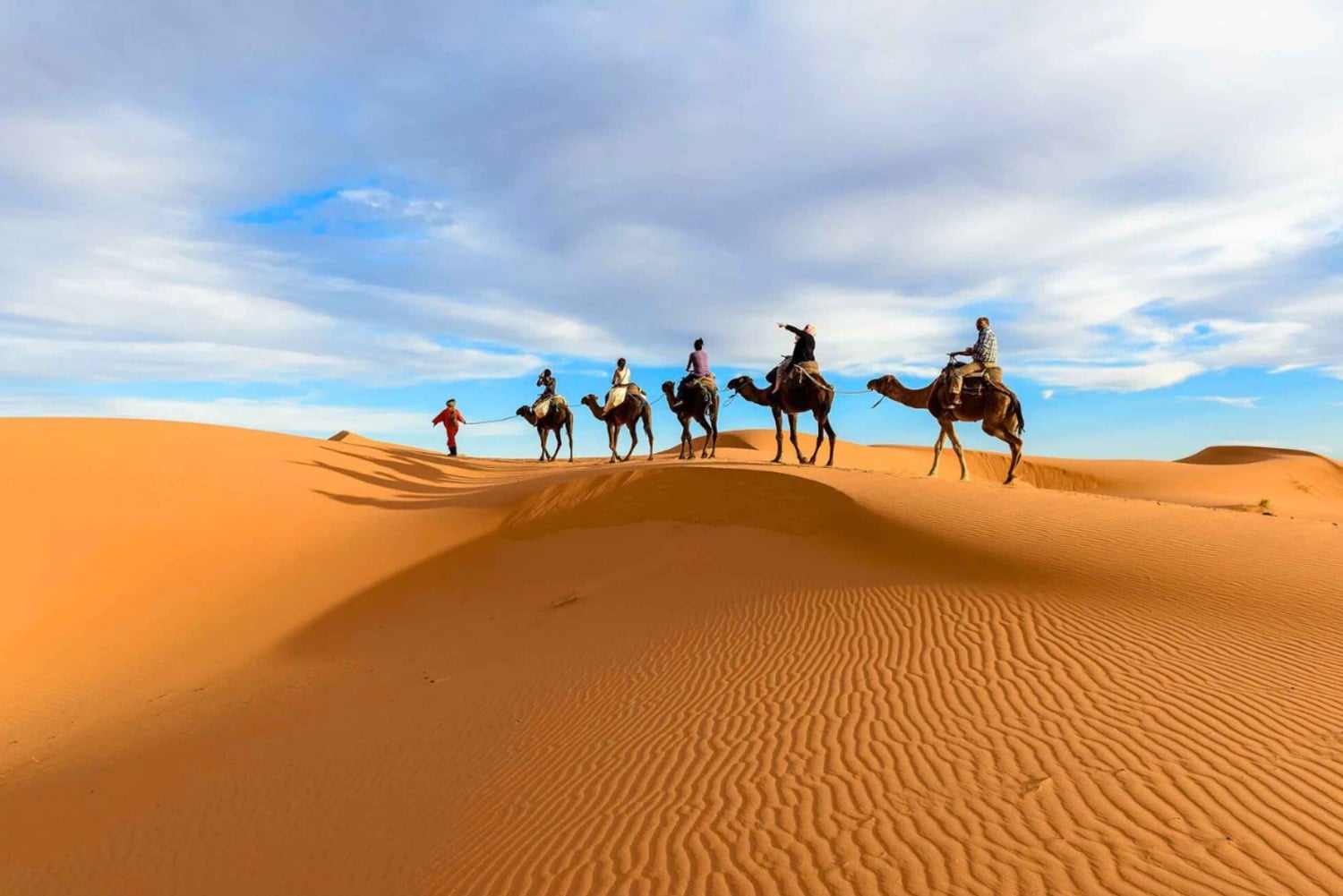
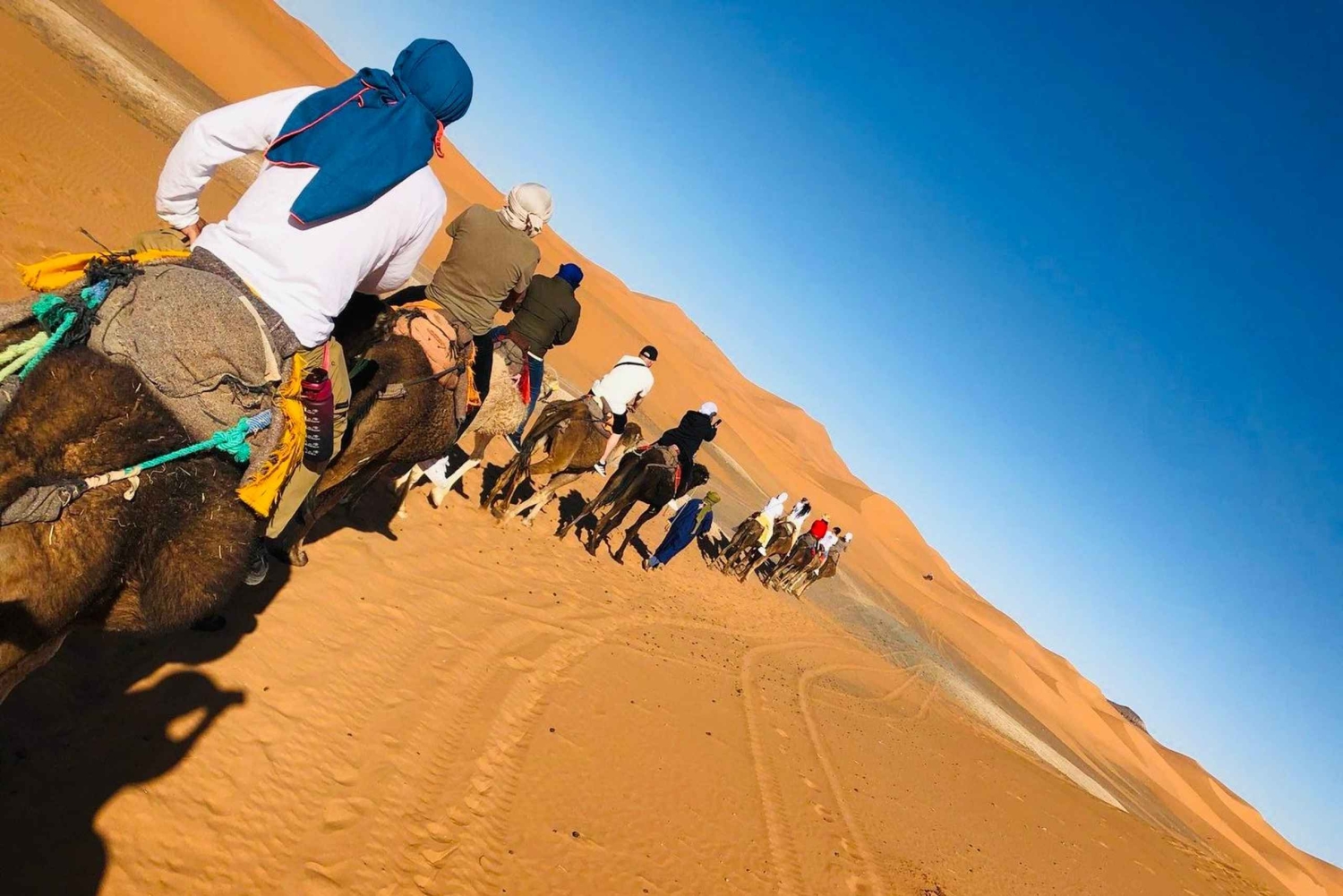
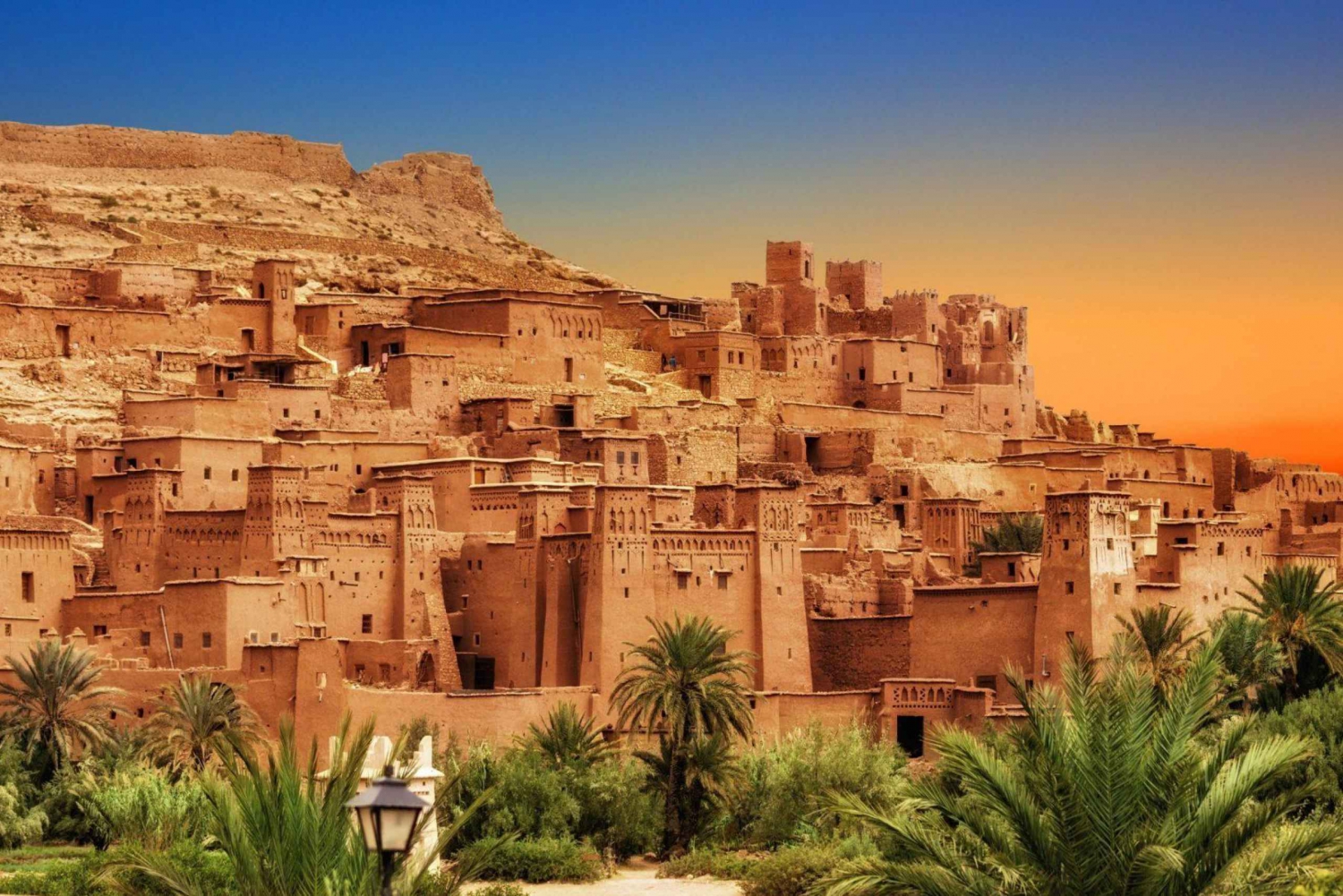
The dunes, the camel ride into Erg Chebbi and the overnight camp stay look the same regardless of the time of year, since the Sahara's landscape does not change with the calendar. The core structure of a multi-day tour, the drive from Marrakech, the stops at Ait Ben Haddou, Dades or Todra depending on the itinerary, and the night under the stars, continues to run during Ramadan much as it would at any other time. What can shift is pacing and the timing of meals, rather than the route or the experience itself.
Respectful travel during Ramadan
Visitors are not expected to fast, and staying hydrated and fed remains important for anyone travelling through desert heat regardless of the season. That said, a degree of discretion when eating or drinking in front of a fasting driver or guide, particularly during the long driving legs of a multi-day tour, tends to be appreciated. Dressing modestly and being patient with any shifts in daily rhythm during Ramadan are simple ways to travel considerately through this period.
Planning tips if your trip falls during Ramadan
Check the current year's Ramadan dates before you book, since they shift earlier every year and are easy to misjudge from memory. Message our team on WhatsApp with your travel dates if you want to understand how Ramadan might affect your specific tour, particularly around meal timing in camp. Build a little flexibility into your schedule, since the pace of the day and the hours restaurants keep in towns along the route can differ from a non-Ramadan trip. If you are also considering a Toubkal climb on the same trip, our guide to climbing Toubkal during Ramadan covers the same fasting considerations from the mountain side of a Morocco itinerary.
Why travellers still choose the Sahara during Ramadan
Some travellers deliberately time their visit during Ramadan, since the desert feels a little quieter and the cultural rhythm of a fast broken each evening around a shared meal adds something that is simply not there outside the holy month. Others prefer to avoid Ramadan for scheduling reasons, and that is equally reasonable. Either way, going in with accurate expectations, confirmed with our team ahead of time rather than assumed, makes for a smoother trip than guessing at what a particular year's dates will mean for your tour.
Compare the tours below, all running with current availability and prices, and message our team on WhatsApp if you want to confirm what Ramadan means for your specific travel dates before you book.
Yes, Sahara desert tours run as normal during Ramadan, including the drive to Merzouga, the camel ride and the overnight camp stay.
When does Ramadan fall each year?
Ramadan follows the lunar calendar, so its dates shift earlier by about ten to eleven days each year on the Gregorian calendar. Always check the current year's dates before planning your trip.
Will my driver or guide be fasting during the tour?
Many Moroccan drivers, guides and camp staff observe the Ramadan fast, meaning no food or water from dawn until sunset. This is a personal commitment and does not generally stop a tour from running.
Is dinner timed around sunset for iftar during Ramadan?
This can vary by camp and by year, and we do not promise a specific iftar-timed dinner service. Message our team on WhatsApp before booking so we can check the current arrangement for your travel dates.
Are restaurants open during the day in towns along the desert route?
Some reduce their hours or close until sunset, though stops used to tourists often still serve food during the day. It is respectful to be discreet about eating or drinking in public during fasting hours.
Does the desert tour itinerary change during Ramadan?
The core route and stops stay the same, though pacing and meal timing can shift slightly depending on the camp and the driver's own schedule that day.
Is it respectful to eat and drink as a non-fasting traveller?
Yes, travellers are not expected to fast and staying hydrated is important, but a degree of discretion around a fasting driver or guide is generally appreciated.
Is the Sahara quieter during Ramadan?
Many travellers find the desert and the towns along the route feel a little quieter during the day, with evenings picking up again once the fast breaks.
Should I combine a Ramadan desert trip with a Toubkal climb?
Some travellers do combine both, and our guide to climbing Toubkal during Ramadan covers the same fasting considerations from the mountain side of a trip.
How do I confirm what to expect for my specific travel dates?
Message our team on WhatsApp with your travel dates, and we can confirm current arrangements for your specific tour rather than relying on general assumptions.
Day 1: Marrakech – Ait Ben Haddou – Dades Gorges The journey from Marrakech to Todra Gorge via Kasbah Ait Benhaddou is a popular route for those seeking to experience the beauty and history of Morocco’s desert landscapes. Starting in Marrakech, the drive takes you through the High Atlas Mountains, passing through small Berber villages and stunning scenery along the way.
3 daysper person
4.0· 195 external ratings
Book & pay online
From €130per person
Final price depends on the selected option and availability.
✅Day 1: Marrakech To Kasbah Ait Ben Haddou To Dades Valley Your adventure begins with an early morning departure from Marrakech, crossing the Tizi n'Tichka Pass, the highest in North Africa, offering stunning views of the Atlas Mountains. En route, you'll visit the ancient Ait Benhaddou, a UNESCO World Heritage site famous for its earthen architecture.
3 daysper person
4.6· 49 external ratings
From €149per person
Final price depends on the selected option and availability.
Experience Morocco’s south on a 4-day journey from Marrakech to the Merzouga Sahara and back, with two nights in the desert region. Travel from the peaks of the High Atlas to ancient ksars, palm-filled valleys, dramatic canyons, and the vast golden dunes of Erg Chebbi. Day 1: Marrakech – Ait Benhaddou – Dades Valley
4 daysper person
5.0· 10 external ratings
Book & pay online
From €224per person
Final price depends on the selected option and availability.
Day 1: Marrakech - Atlas Mountains - Visit Kasbah Ait Ben Haddou - Dades Your 4-days 3-night desert trip from Marrakech to Merzouga will begin early in the morning. Get picked up at your accommodation or at the closest location that is accessible by car.
4 daysper person
5.0· 9 external ratings
Book & pay online
From €429per person
Final price depends on the selected option and availability.