The standard Toubkal route runs from Imlil through Sidi Chamharouch to the refuge, then up the south cirque to the 4,167 metre summit. Here is the route, landmark by landmark.
What does the route up Toubkal actually look like, mile by mile? Here is the path from Imlil to the summit, landmark by landmark.
Quick answer: the standard Toubkal route starts in the village of Imlil, climbs through the Mizane valley past Sidi Chamharouch, continues up to the Toubkal refuge where trekkers spend the night, then finishes with an early morning push up the south cirque to the 4,167 metre summit. It is the same route used on almost every guided Toubkal itinerary, and it does not require technical climbing, though the terrain gets steeper and rockier the higher you go.
Starting point: Imlil
Every Toubkal trek begins in Imlil, a Berber village in the High Atlas that sits well above Marrakech in altitude, giving trekkers a head start on acclimatisation before the real climbing begins. Imlil has mule handlers, small shops, cafes and the last proper buildings you will see until you reach the refuge. Guided tours typically transfer trekkers from Marrakech to Imlil by road, and the walking trek itself starts from here. Mules carry the bulk of the luggage from this point onward, so trekkers generally only need a daypack for the walk.
Imlil to Sidi Chamharouch
From Imlil, the trail follows the Mizane valley, a wide, scenic walk through terraced fields, walnut trees and small hamlets before the landscape opens into bare mountain terrain. The path is well trodden and used daily by mules, guides and trekkers, so route finding on this section is straightforward. Around the midpoint of the day's walk, the trail reaches Sidi Chamharouch, a small shrine and seasonal stopping point built around a large white rock, where trekkers often pause for tea or a short rest before continuing. Sidi Chamharouch marks a useful psychological milestone: the valley floor is behind you, and the trail begins climbing more noticeably from here.
Sidi Chamharouch to the Toubkal refuge
Beyond Sidi Chamharouch, the trail steepens and the vegetation thins out as the valley narrows. This stretch is the longest sustained climb of day one, zig-zagging up rocky ground with the peaks of the massif coming into view ahead. Trekkers typically reach the Toubkal refuge in the afternoon, where they rest, eat and sleep before the summit attempt. The refuge sits on the standard route at a high altitude, cold enough at night that warm layers matter even outside winter, and it functions as the base camp for the whole trek rather than just an overnight stop.
The refuge to the summit: the south cirque
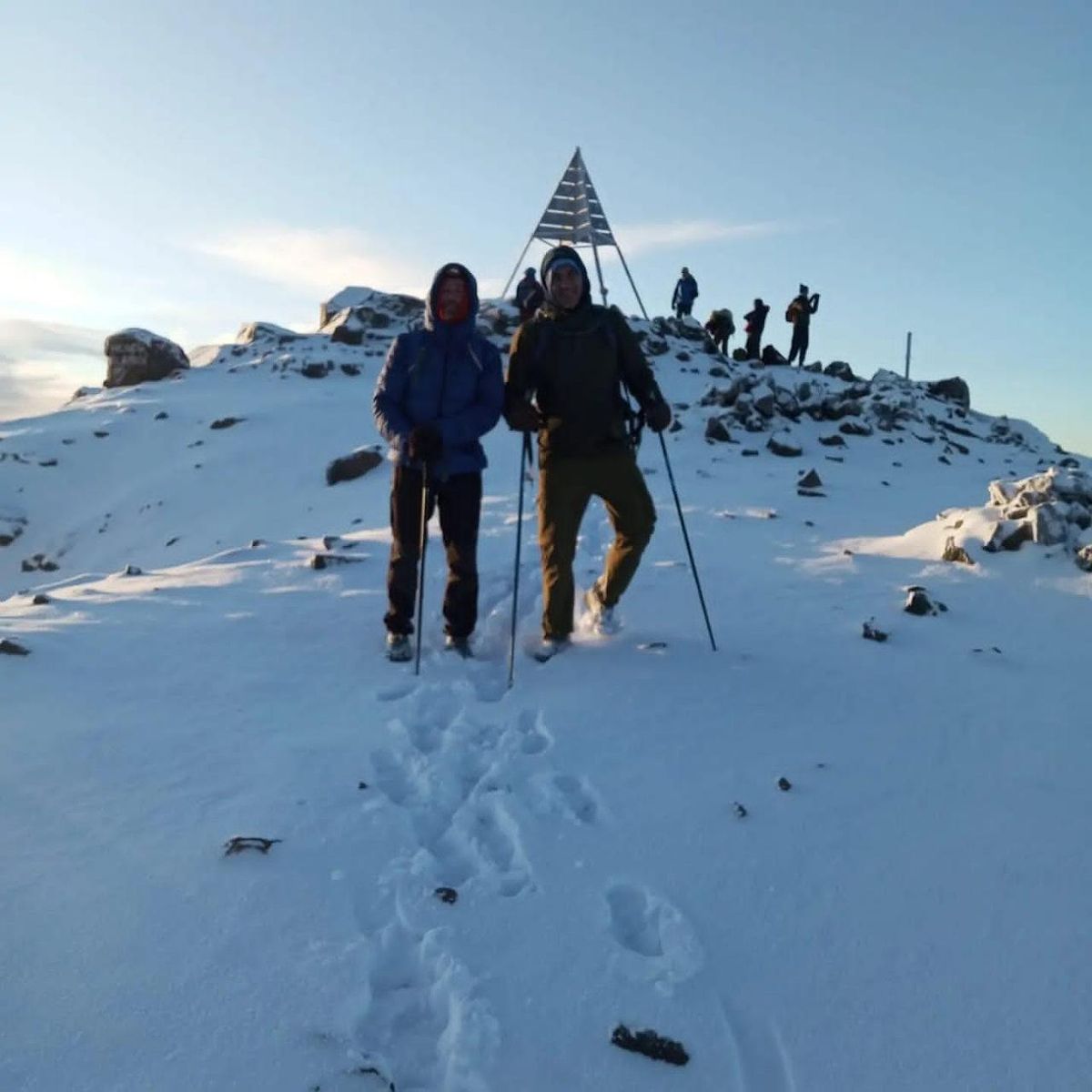
Summit day starts well before sunrise, with trekkers setting off from the refuge by headlamp. The route climbs through the south cirque, a wide bowl of scree and rock that is the standard, non-technical way up Toubkal. The gradient is steady and unglamorous for the first stretch, then steepens noticeably on the final approach to the ridge just below the summit. In winter and early spring, this section often holds snow and ice, and a licensed guide will use crampons and sometimes ice axes with the group. In summer, it is a long, rocky scramble rather than a snow climb, but still physically demanding at altitude.
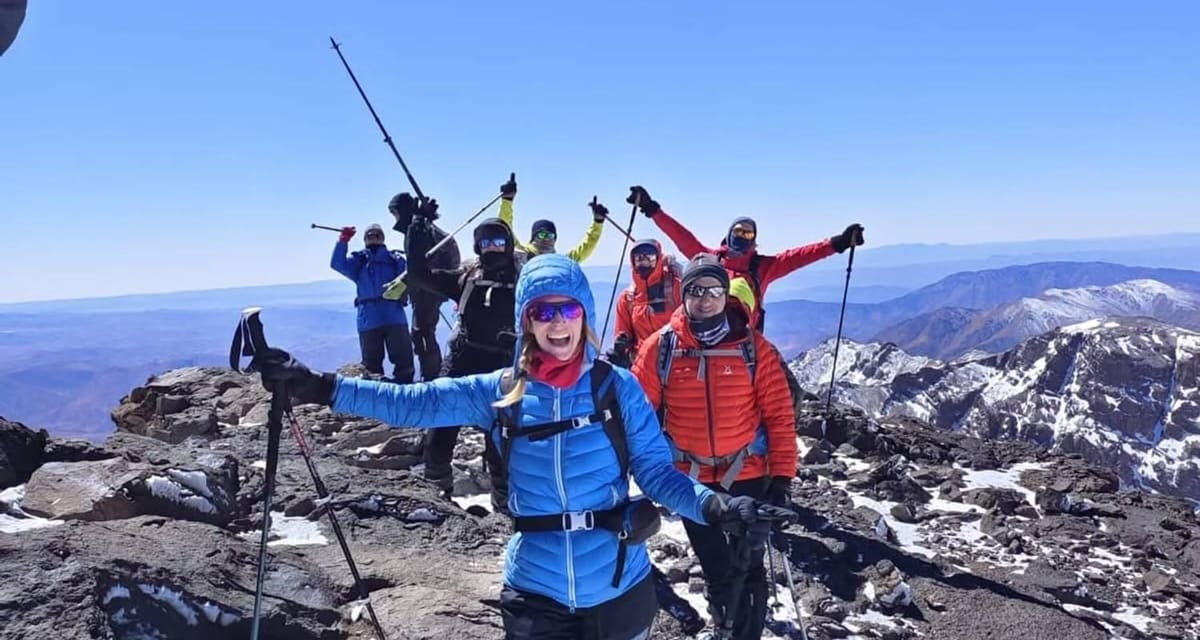
The route tops out on a narrow ridge before the last short climb to the summit itself, marked by a distinctive metal pyramid structure that most trekkers recognise from photos before they ever see it in person. From here, the standard route offers a near full panorama of the High Atlas, and on clear days, the view stretches toward the Sahara in one direction and the lower Atlas foothills in the other. Most groups spend a limited amount of time at the top, since the goal on summit day is to get up, enjoy the view safely, and get back down before weather or fatigue become a bigger factor.
The descent
Coming down follows the same route in reverse: back along the south cirque to the refuge, where trekkers usually collect any bags left behind and have a short rest, then continue down through Sidi Chamharouch and the Mizane valley to Imlil. On a standard 2 day itinerary, this entire descent happens on the same day as the summit push, making for a very long final day. On longer itineraries with an extra acclimatisation day, the pace is gentler but the route itself does not change.
Why this route and not an alternative
The south cirque route described here is the standard route used by the vast majority of guided Toubkal treks, including every itinerary we offer. Other approaches to the summit exist on the mountain, but they are longer, more technical, or simply far less used, and a licensed guide will default to this route for good reason: it is the most direct, most supported and most predictable way to reach the top safely. If you are booking a Toubkal trek, this is almost certainly the route your guide will take.
Walking this route yourself
Reading a route description is useful for understanding the shape of the trek, but a licensed mountain guide is mandatory for foreign hikers climbing Toubkal, and for good reason: weather on the upper mountain changes quickly, and the final approach to the summit has no marked path in the way a lower trail does. The tours below follow the exact route described here, with a guide, mules, meals and the refuge overnight stay included, so you can focus on the walking rather than the logistics.
What to expect underfoot
The surface changes noticeably along the route. The lower Mizane valley section is a mix of packed dirt and stone, easy underfoot and gentle enough for a conversational pace. Above Sidi Chamharouch, the trail becomes rockier and dustier, with loose stones on some switchbacks. The south cirque above the refuge is mostly scree, loose rock that shifts slightly with each step, which is part of why pacing and proper boots matter more on this stretch than lower down. None of this requires climbing equipment on the standard summer route, but sturdy, broken-in hiking boots make a real difference to comfort and confidence.
Frequently asked questions
What is the standard route up Toubkal?
The standard route runs from Imlil through the Mizane valley and Sidi Chamharouch to the Toubkal refuge, then up the south cirque to the summit at 4,167 metres. This is the route used on every guided tour we offer.
Where does the Toubkal trek start?
The trek starts in Imlil, a Berber village in the High Atlas that serves as the trailhead for the standard route and the last point with shops, cafes and proper buildings before the mountain terrain begins.
What is Sidi Chamharouch?
Sidi Chamharouch is a small shrine and stopping point built around a large white rock, roughly midway through the first day's walk from Imlil toward the refuge. Many trekkers pause here for tea.
Where do trekkers sleep on the route?
Trekkers sleep at the Toubkal refuge on the standard route, which sits high on the mountain and functions as the base for the early summit push the next morning.
What is the south cirque?
The south cirque is the wide bowl of scree and rock above the refuge that forms the standard, non-technical way up to the summit ridge. It is used on nearly all guided Toubkal ascents.
Is the route to the summit marked?
The lower trail from Imlil to the refuge is well trodden and easy to follow, but the upper mountain above the refuge has no clearly marked path, which is part of why a licensed guide is mandatory for foreign hikers.
Does the route require technical climbing?
No, the standard route does not require technical climbing or ropes. In winter and early spring the upper section can hold snow and ice, in which case a guide will use crampons with the group.
How does the descent route differ from the ascent?
The descent follows the same route in reverse, from the summit back through the south cirque to the refuge, then down through Sidi Chamharouch and the Mizane valley to Imlil.
Can I follow this route without a guide?
No, a licensed mountain guide is mandatory for foreign hikers climbing Toubkal, including on this standard route. All of our tours include a guide for the full route.
Which tour follows this exact route?
Every Toubkal tour we offer, from the 2 day ascent to the longer acclimatisation treks, follows this same Imlil to summit route. Choose one of the tours below to book it with a licensed guide included.
Experience an unforgettable adventure to the summit of Mount Toubkal (4,167m), the highest peak in North Africa, on this professionally guided 2-day trekking experience from Marrakech. Perfect for active travelers seeking a rewarding mountain challenge, this trek combines spectacular High Atlas scenery, authentic Berber culture, and the thrill of reaching one of Morocco’s most iconic summits. Your journey begins with an early morning departure from Marrakech to the mountain village of Imlil, the gateway to Toubkal National Park.
2 daysper person
4.3· 42 external ratings
Book & pay online
From €181per person
Final price depends on the selected option and availability.
Embark on a winter trek in Morocco, starting in Marrakech. Admire the snow-covered mountains, the beautiful valleys, and the wild and ancient atmosphere. Climb the highest peak in North Africa, Mount Toubkal, and take in the views of the Atlas Mountains and the Berber villages and valleys.
2 daysper person
4.2· 11 external ratings
From €286per person
Final price depends on the selected option and availability.
Day 1: Marrakech – Imlil – Trek to Toubkal Refuge (3206m) Start your Mount Toubkal trek from Marrakech with hotel pickup and transfer to Imlil village, the gateway to the High Atlas Mountains. Begin your guided hike through the Atlas Mountains trekking route, passing Berber villages and the sacred site of Sidi Chamharouch.
3 daysper person
3.9· 7 external ratings
Book & pay online
From €226per person
Final price depends on the selected option and availability.