Practical, guide-led advice on how our licensed mountain guides help you reach the Toubkal summit safely, with honest tips on pace, decisions and what to expect on summit morning.
Reaching 4,167 metres is not about rushing. Our licensed mountain guides, who lead every Toubkal climb we run, say the same thing after each season: the climbers who summit comfortably are the ones who listen to their guide and pace themselves rather than the ones who move fastest at the start.
Quick answer: Our guides' core advice for reaching the Toubkal summit is simple. Walk at a slow, steady pace from the first morning, especially on the approach to the refuge, since arriving tired reduces your chances on summit day. Eat and drink regularly rather than waiting until you feel hungry or thirsty. Expect a pre-dawn start on summit morning, cold temperatures at altitude even in summer, and a final scree section that takes patience rather than speed. A licensed mountain guide leads every one of our Toubkal climbs, as this is mandatory for foreign hikers, and that guide will adjust the plan on the day based on weather, group fitness and conditions on the mountain. If you are not already booked, you can speak to our team about a suitable package before deciding on dates.
Table of contents: What our guides tell every group before setting off, pacing yourself on the way to the refuge, what summit morning actually involves, decisions a guide makes for you, questions to ask your guide before you go, booking your climb with a guide included, frequently asked questions.
What our guides tell every group before setting off
Before any group leaves Imlil, our guides run through a short briefing covering the route, the weather for the days ahead and what to carry. This is also when they check that everyone has suitable footwear and warm layers for the summit, since conditions at 4,167 metres can be very different from Marrakech. Guides repeat a few points often because they matter: walk slower than feels necessary at first, drink water before you feel thirsty, and tell the guide immediately if you feel unwell rather than pushing through it. These are not formalities. Our guide on how hard climbing Toubkal really is covers the physical side of the trek in more depth, but the guidance itself, delivered in person on the trail, is what makes the biggest practical difference.
Pacing yourself on the way to the refuge
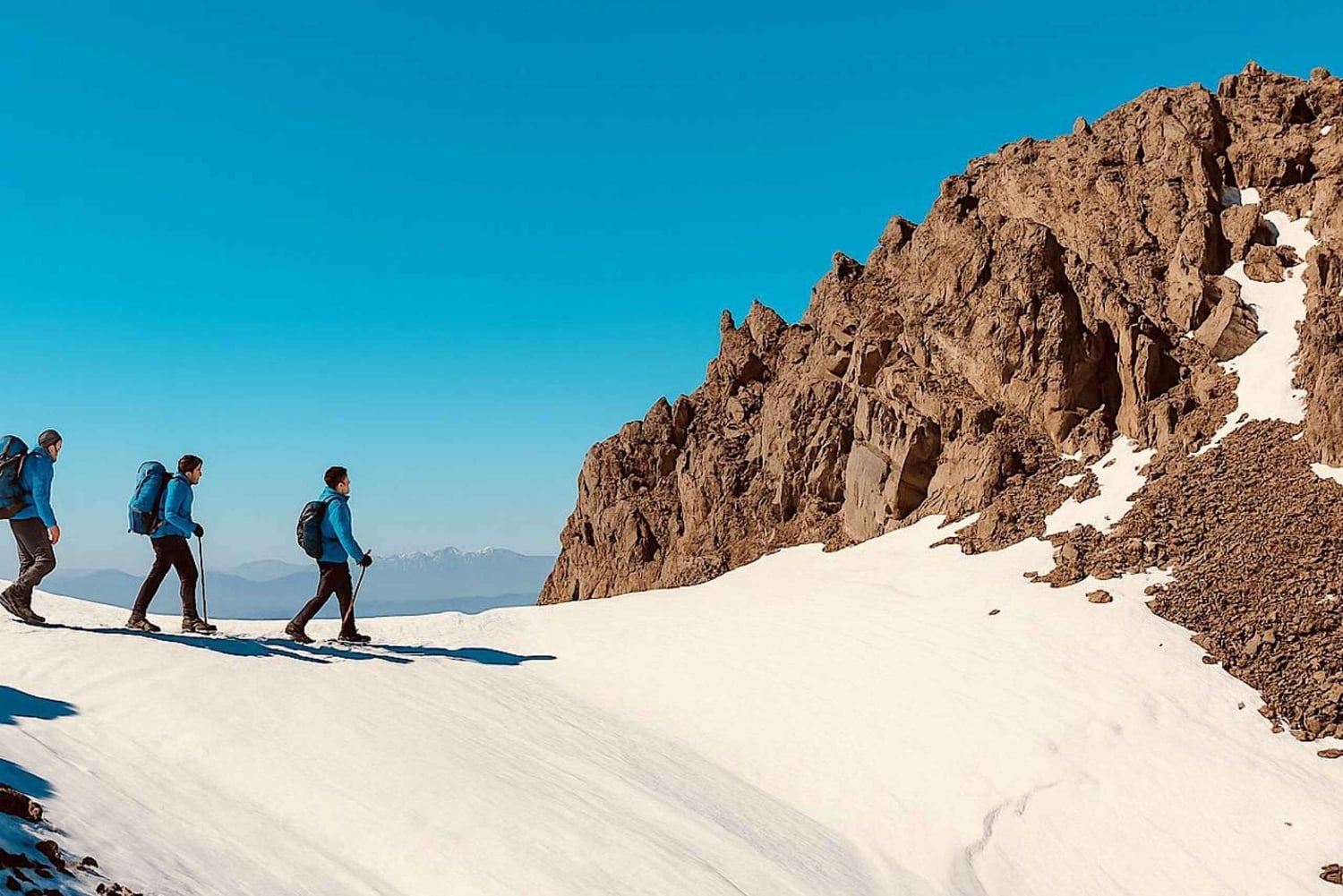
The walk from Imlil to the Toubkal refuge is long before the climb even begins, and our guides consistently say that pacing on this first stretch affects how a climber feels the next morning. Hikers who arrive at the refuge exhausted rarely recover enough overnight to feel strong on summit day. A guide will naturally slow a group down on the approach if they sense people are overexerting themselves, and will also suggest short rest stops at points where the path steepens. If you are deciding between a 2-day and a longer package partly because of this pacing question, our comparison of Toubkal climb packages sets out how the extra day in longer itineraries changes this pressure.
What summit morning actually involves
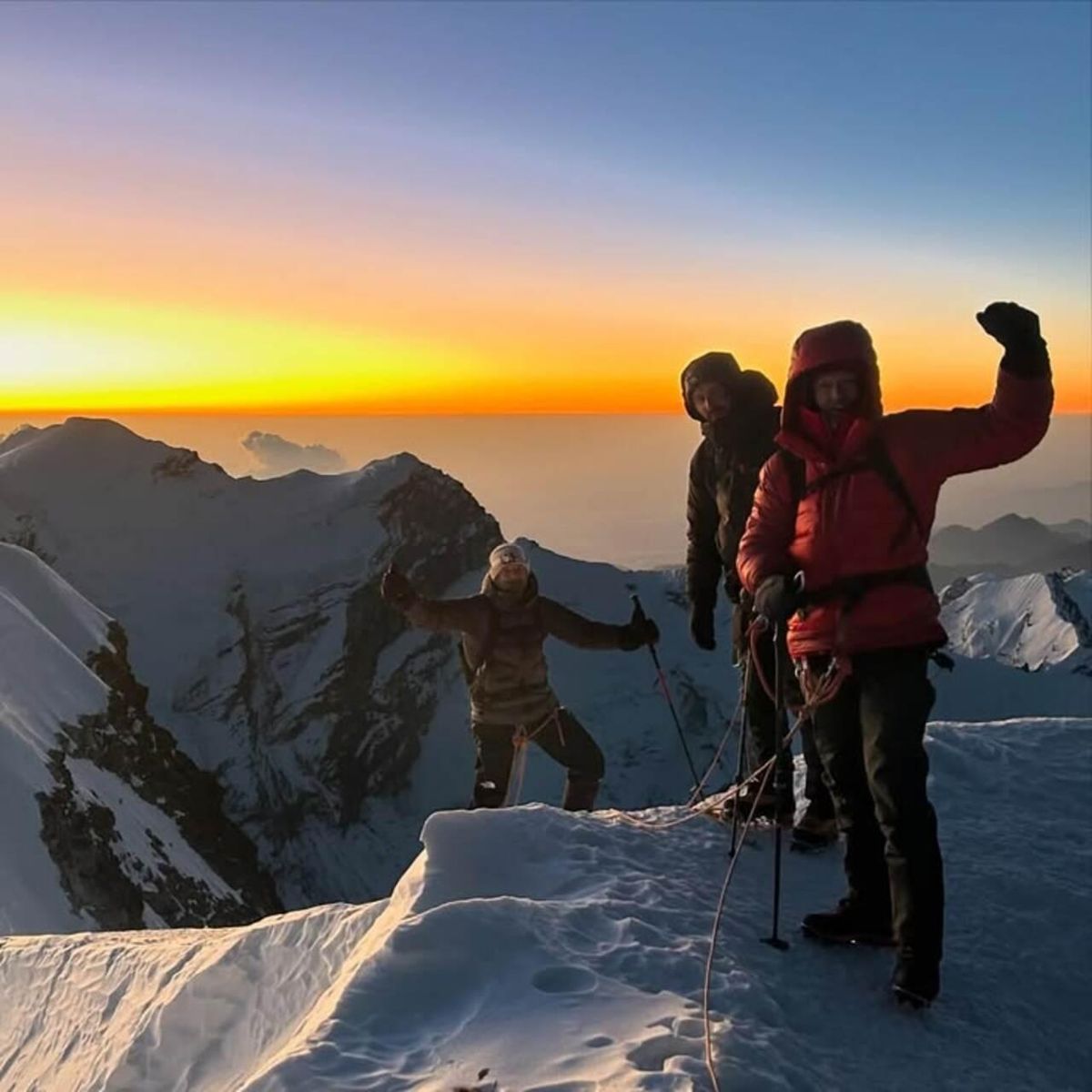
Summit day starts in the dark, usually around three or four in the morning, so that climbers reach the top and begin descending before the afternoon weather changes. Guides lead groups with head torches along a rocky and, in places, loose scree path that keeps a steady gradient rather than a single steep push. The temperature at this hour, even in summer, is cold enough that guides recommend keeping warm layers on until the sun is properly up. The last section before the summit is the part most climbers find mentally harder than physically harder, since the scree makes each step feel less productive than it is. Guides often break this final stretch into short, achievable targets rather than letting a group focus on the summit itself, which keeps morale up when the pace naturally slows with altitude.
Decisions a guide makes for you
Part of what you are paying for with a licensed guide is judgement, not just route knowledge. Guides constantly assess weather, snow conditions, and how individual climbers are coping, and they have the authority to slow a group, delay a start, or in rare cases turn a climber back if conditions or symptoms make continuing unsafe. This is a conservative approach by design. No guide can guarantee a summit, and any adviser who promises one is not being honest about mountain conditions, but our guides' experience means decisions are rarely made lightly or without clear reasons explained to the group. If health or altitude is a particular concern for you, it is always worth speaking with a doctor before your trip, since a guide manages the climb but cannot replace medical advice.
Questions to ask your guide before you go
It is worth asking your guide, once you meet in Imlil, about the specific conditions expected for your dates, since Toubkal changes significantly between seasons. Questions about pace, expected weather at the summit, and what to do if you start to feel unwell are all reasonable and guides are used to answering them clearly. Our Atlas Mountains and Imlil guide has further detail on the villages and trailheads your guide will walk you through on the way up, which is useful context before you set off.
Booking your climb with a guide included
Every Toubkal package we offer includes a licensed mountain guide as standard, since this is a legal requirement for foreign hikers in the Toubkal National Park, along with transport from Marrakech and the accommodation and meals listed on the specific tour page. Booking takes a few minutes online, payment is made securely by card or PayPal, and your place is confirmed once that payment is verified. You can cancel free of charge up to 24 hours before departure. Our local team has 16 years of experience organising these climbs and works with more than 15 accredited mountain guides, so the advice above reflects what our guides actually tell climbers on the mountain, season after season.
If you want a guide's honest view on your specific dates or fitness level before booking, our team is happy to talk it through with you first.
What is the single most useful tip for reaching the Toubkal summit?
Walk at a slow, steady pace from the first day, especially on the approach to the refuge, since arriving tired reduces your chances of a comfortable summit day.
What time does summit morning start?
Guides typically start summit morning around three or four in the morning so climbers can reach the top and descend before afternoon weather changes.
Is a guide mandatory for climbing Toubkal?
Yes, a licensed mountain guide is mandatory for foreign hikers climbing Toubkal, and one is included on every package we offer.
Can a guide turn a climber back before the summit?
Yes, guides assess conditions and individual climbers throughout the day and can slow, delay or, in rare cases, turn back a climber if continuing is not safe.
How cold is it near the summit?
Temperatures near the 4,167 metre summit are cold even in summer, so warm layers are needed for the early morning push.
Should I ask my guide questions before the climb?
Yes, guides expect and welcome questions about pace, expected conditions and what to do if you feel unwell once you meet in Imlil.
Does a guide guarantee I will reach the summit?
No, no guide can guarantee a summit, since weather, conditions and individual fitness all play a role, but experienced guides give you the best realistic chance.
Should I speak to a doctor before attempting Toubkal?
Yes, if you have any health concerns or questions about altitude, speaking with a doctor before your trip is recommended, since a guide manages the climb but is not a medical professional.
Climb to the summit of Mount Toubkal, the highest mountain in North Africa, on a 3-day trek from Marrakech. Visit ancient Berber villages, see waterfalls, and admire views of the Atlas Mountains.
3 daysper person
4.5· 786 external ratings
Book & pay online
From €225per person
Final price depends on the selected option and availability.
Experience an unforgettable adventure to the summit of Mount Toubkal (4,167m), the highest peak in North Africa, on this professionally guided 2-day trekking experience from Marrakech. Perfect for active travelers seeking a rewarding mountain challenge, this trek combines spectacular High Atlas scenery, authentic Berber culture, and the thrill of reaching one of Morocco’s most iconic summits. Your journey begins with an early morning departure from Marrakech to the mountain village of Imlil, the gateway to Toubkal National Park.
2 daysper person
4.3· 42 external ratings
Book & pay online
From €181per person
Final price depends on the selected option and availability.
Begin your adventure in Marrakech with a comfortable transfer to Imlil village, the gateway to the High Atlas Mountains. Upon arrival, be welcomed by your mountain team and enjoy your first traditional Moroccan dinner prepared by local Berber cooks. Over the next days, progressively ascend through stunning mountain landscapes toward the Toubkal Refuge (Neltner Refuge) before making your summit attempt to Jebel Toubkal (4167m).
4 daysper person
4.6· 19 external ratings
Book & pay online
From €226per person
Final price depends on the selected option and availability.