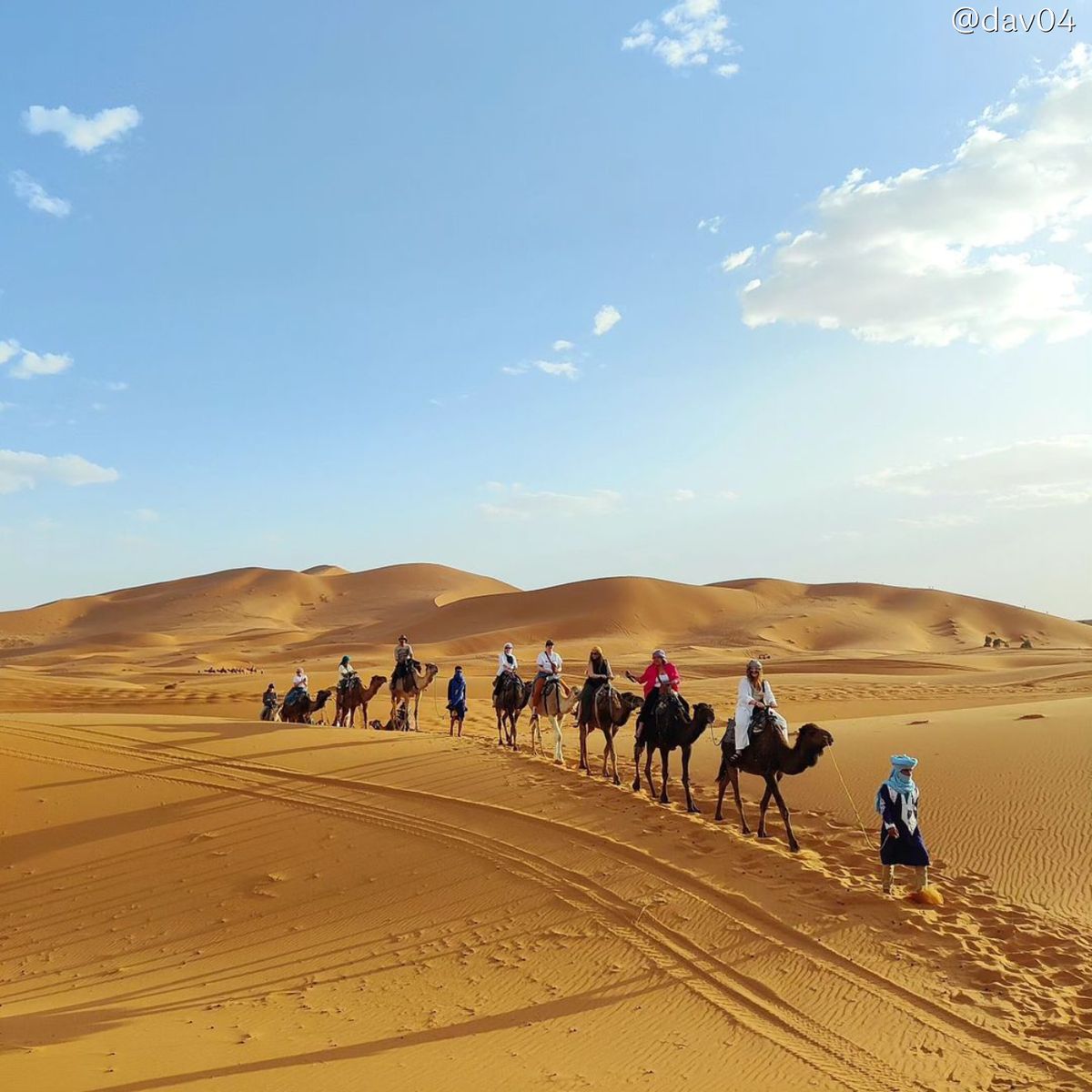
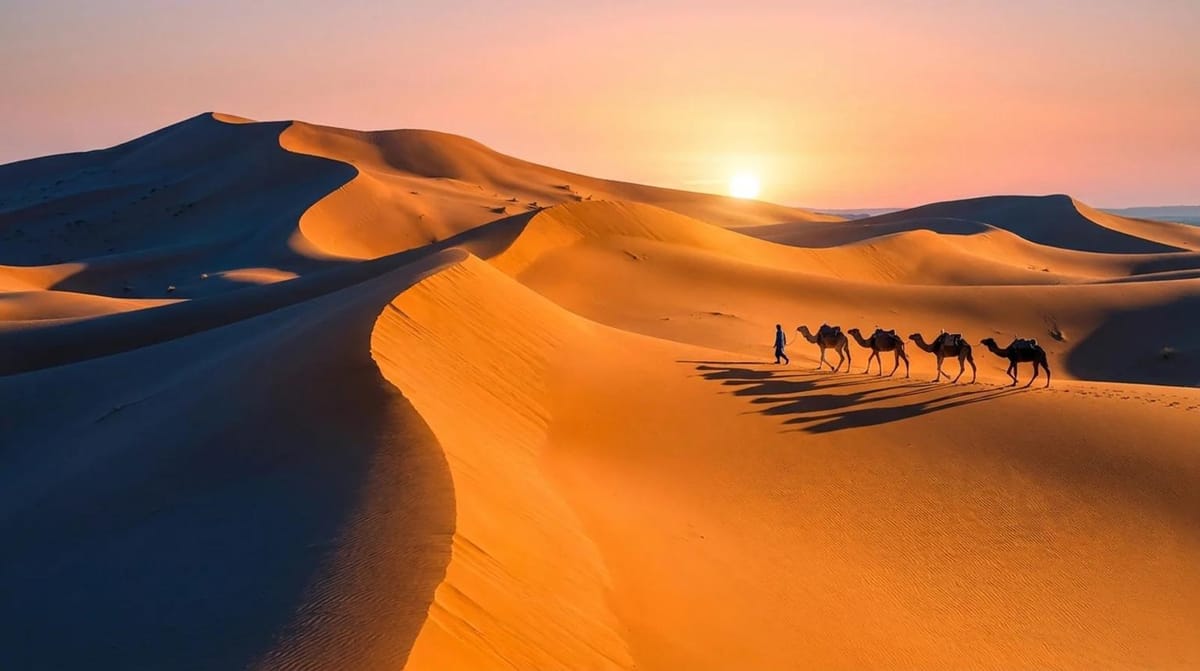
Pick the right month and the desert is warm by day, cool by night and comfortable for camels, a sandboard run and a night under the stars.
A decision guide to choosing when to visit the Sahara near Merzouga and Zagora, comparing spring, summer, autumn and winter trade-offs for different kinds of travellers.
Quick answer: There is no single wrong time to visit the Sahara, since the desert near Merzouga and Zagora is set up for travellers year round, but the shoulder months of spring and autumn generally offer the easiest balance of warm days and mild nights for most travellers. Summer brings intense midday heat that rewards planning activities around the cooler hours, while winter brings pleasant days but genuinely cold nights that call for extra layers at camp. This guide is a decision tool for choosing when to go; for the general conditions behind these recommendations, see our Sahara desert weather month by month guide.
Matching the season to your trip style
The best time to visit the Sahara depends less on finding a single ideal month and more on matching the season to what you want from the trip and how comfortable you are with heat or cold. A couple chasing a quiet, mild evening at camp will weigh the seasons differently from a family travelling in peak summer school holidays, or a photographer hoping for crisp, clear winter skies. The sections below walk through who each season tends to suit best.
Spring, generally reliable for most travellers
Spring is one of the most popular windows to visit, with warming daytime temperatures and nights that are cool rather than cold, a combination that suits most travellers without much need to plan around extreme heat or cold. If this is your first Sahara trip and you are not sure how you will handle desert conditions, spring is a sensible, low-risk choice for a camel trek and overnight camp stay.
Autumn, a close second
Autumn mirrors spring in many ways, with the desert cooling gradually from summer heat into a comfortable stretch of warm days and mild nights, particularly from September into October. Travellers who prefer quieter trails and a more relaxed pace sometimes favour autumn, since it falls outside the busiest summer season for Morocco overall.
Summer, for travellers who do not mind the heat
Summer is the hottest time to visit the Sahara, and it is worth choosing deliberately rather than by accident if you are sensitive to high midday temperatures. Travellers who do choose summer tend to build their day around it, scheduling the camel trek, sandboarding and camp arrival for the cooler morning and evening hours and resting through the hottest part of the afternoon. Our Sahara in summer guide covers how to enjoy this season on its own terms rather than fighting against it.
Winter, for cold nights and clear skies
Winter days in the desert are typically mild and sunny, which surprises many travellers who expect the whole season to feel cold, but nights do turn genuinely cold once the sun goes down. This is the trade-off winter travellers make, warm and pleasant daytime conditions in exchange for needing real layers and extra blankets after dark. In return, winter often delivers some of the clearest night skies of the year, a strong draw for anyone hoping to see the Sahara's stargazing at its best, as covered in our Sahara in winter guide.
Choosing based on how many nights you plan to stay
Travellers spending just one night in the desert tend to feel seasonal extremes less, since a single evening of cold or a single afternoon of heat is easier to manage than several days of either. If you are considering two nights rather than one, it is worth weighing the season a little more carefully, since you will experience both a full day and two evenings of whatever conditions that month brings. Our one night or two nights in the Sahara guide looks at this trade-off from the angle of trip length rather than season.
Family travel and the best time to go
Families travelling with young children often lean toward spring or autumn for the same reason solo travellers and couples do, a comfortable middle ground that avoids extreme heat during the day and extreme cold overnight. That said, families who can only travel during school summer holidays should not rule out the desert, since planning camel rides and camp arrival around cooler hours works well for children too, as covered in our Sahara desert with kids guide.
Stargazing and photography timing
Clear skies are common across most of the year in the desert, but winter's drier, crisper air is often considered especially good for stargazing, while golden hour light for photography is strong in every season given the open, unobstructed horizon. If astrophotography or sunset and sunrise photography is a priority for your trip, timing your visit around a specific season matters less than timing your activities around the right hours of the day once you are there.
Comparing our Sahara desert tours
Whichever season you choose, the tours below run year round from Marrakech with current availability and checkout prices, so you can match the route, camp style and trip length to the time of year that suits you best.
Booking windows and availability
Desert tours run year round regardless of season, so availability is rarely the deciding factor in choosing when to go, it mostly comes down to personal comfort with heat or cold and the rest of your Morocco itinerary. Booking a little ahead is still sensible around any particularly popular travel window, but there is no season when the desert route is closed or unavailable.
Making your final decision
If you are still unsure, spring and autumn are the easiest starting point for a first Sahara trip, while summer and winter both reward travellers willing to plan around their particular trade-off, heat in the day or cold at night. Whatever you choose, checking a closer forecast as your travel dates approach is still worth doing, since general seasonal patterns are a guide rather than a guarantee for any single week.
What is the best month to visit the Sahara desert?
There is no single best month, but spring and autumn generally offer the easiest balance of warm days and mild nights for most travellers.
Is it worth visiting the Sahara in summer?
Yes, summer works well if you plan activities like camel treks and sandboarding around the cooler morning and evening hours and rest during the hottest part of the day.
Is the Sahara too cold to visit in winter?
No, winter days are usually mild and sunny, it is mainly the nights that turn cold, which desert camps prepare for with extra bedding and warm layers.
When is the best time for stargazing in the Sahara?
Clear skies happen across most of the year, but winter's crisper, drier air is often considered especially strong for stargazing.
What season is best for a Sahara trip with kids?
Spring or autumn tend to suit families best since they avoid extreme heat or cold, though a summer trip can still work well if activities are timed around cooler hours.
Does the best time to visit change if I am only staying one night?
A single night in the desert makes seasonal extremes easier to manage than a longer stay, so the choice of season matters less for a one night trip.
Is spring or autumn better for visiting the Sahara?
Both offer a similar comfortable balance of warm days and mild nights, so the choice often comes down to your wider Morocco travel dates rather than the desert conditions alone.
Should I avoid the Sahara during the hottest summer weeks?
You do not need to avoid them, but travellers sensitive to heat may prefer spring or autumn, while those comfortable planning around midday heat can still enjoy a summer visit.
How do I pack differently depending on the season I visit?
Warm layers for cold nights matter in every season, with extra emphasis on sun protection for hot months and heavier layers or blankets for winter evenings.
Where can I read about general Sahara weather conditions by month?
Our Sahara desert weather month by month guide covers the typical day and night conditions behind the seasonal recommendations in this guide.
A three-day road journey from Marrakech over the High Atlas to the golden Erg Chebbi dunes at Merzouga. You stop at the kasbah of Ait Ben Haddou, sleep in the Dades Valley, walk into the Todra Gorge and spend a night at a desert camp after a camel ride at sunset.
3 daysper person
4.9· 23,326 external ratings
Book & pay online
From €139per person
Final price depends on the selected option and availability.
A more comfortable three-day journey from Marrakech to the Erg Chebbi dunes. You travel over the High Atlas, visit Ait Ben Haddou and the Todra Gorge with a local guide, spend a night in the Dades area and a night at a luxury desert camp after a sunset camel ride.
3 daysper person
4.7· 2,558 external ratings
Book & pay online
From €264per person
Final price depends on the selected option and availability.
A two-day trip from Marrakech that gives you a night in the desert without the long drive to Merzouga. You cross the High Atlas, visit Ait Ben Haddou, follow the palm groves of the Draa Valley and ride a camel to a camp in Zagora at sunset.
2 daysper person
4.5· 2,327 external ratings
Book & pay online
From €90per person
Final price depends on the selected option and availability.
Day 1: Marrakech → Ait Ben Haddou → Dades Valley Depart from Marrakech and travel through the High Atlas Mountains, crossing the famous Tizi n'Tichka Pass. Visit the UNESCO World Heritage site Ait Ben Haddou, a historic fortified village.
4 daysper person
4.6· 6 external ratings
Book & pay online
From €260per person
Final price depends on the selected option and availability.