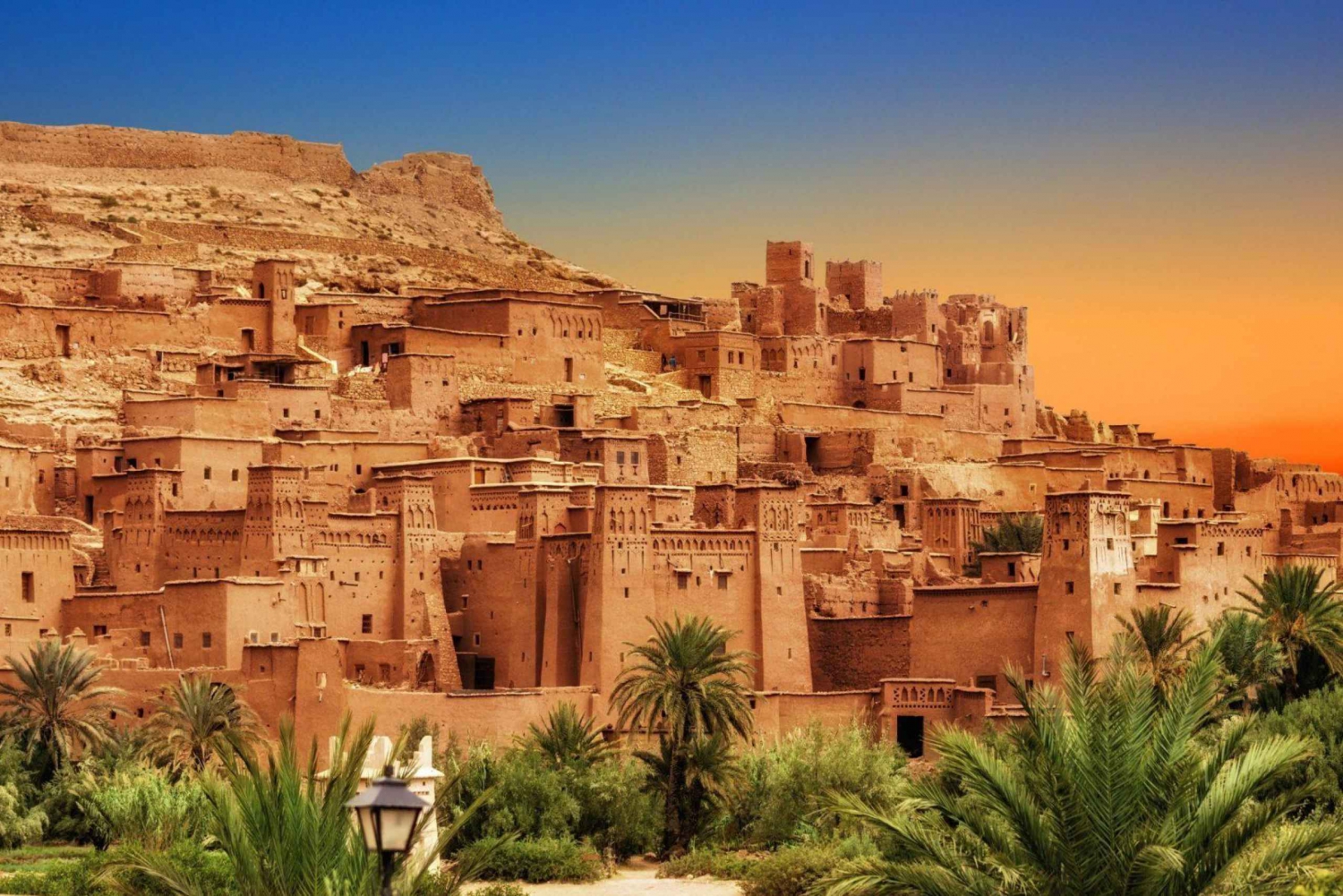
From 40 degree afternoons to nights that feel surprisingly cold, the Sahara changes character with every month of the year.
A general, month-by-month look at Sahara desert weather conditions near Merzouga and Zagora, covering typical day and night patterns across the year without precise temperature figures.
Quick answer: Sahara desert weather near Merzouga and Zagora follows a simple pattern, hot and generally dry through spring and summer with intense midday sun, mild and pleasant through autumn and winter by day, and cold after sunset for most of the year once the sand stops holding the day's heat. Daytime conditions are comfortable for a camel trek and desert camp stay across nearly every month, while night temperatures drop more than most first time visitors expect, so layers matter whenever you go. This guide looks at general conditions month by month; for help choosing when to actually book your trip, see our best time to visit the Sahara in Morocco guide.
How desert weather behaves across the year
The Sahara near Merzouga and Zagora sits in a dry, exposed landscape, so conditions swing more sharply between day and night than they do in Marrakech or along the coast. Clear skies are the norm almost year round, which is part of why the stargazing is so good, but that same clear sky lets heat escape quickly after sunset, even in the warmer months. Rain is rare and usually brief when it does happen, so weather here is mostly a question of temperature and wind rather than wet or dry days.
January and February
Winter mornings in the desert start cool and sometimes genuinely cold, with warmer and pleasant conditions building through the middle of the day under strong, direct sun. Evenings and nights are the coldest of the year, which is exactly why desert camps provide blankets and heavier bedding during these months. Clear winter skies also tend to produce some of the sharpest stargazing of the year, a detail covered in more depth in our Sahara in winter guide.
March and April
Spring brings a steady warming trend, with comfortable daytime temperatures and nights that are still cool but noticeably milder than deep winter. This is a popular stretch for travellers who want warm days without the more intense heat of summer, and conditions are generally considered reliable for camel treks and overnight stays in the dunes.
May and June
By late spring, daytime heat is building toward summer levels, particularly in the early afternoon, while mornings and evenings remain pleasant for activities like sandboarding or a camel trek toward camp. June marks the start of the hottest stretch of the year, so travellers sensitive to heat often prefer to schedule desert time for early morning or late afternoon during this period.
July and August
Midsummer is the hottest time to visit the Sahara, with intense midday sun that makes shade and hydration a priority for several hours each day. Evenings cool down from the daytime peak but still tend to stay mild rather than cold, unlike the sharp overnight drop seen in winter. Many travellers who visit in summer simply plan around the heat, resting during the hottest hours and saving camel rides, sandboarding and camp activities for morning and evening, a pattern covered in our Sahara in summer guide.
September and October
Early autumn still carries some summer warmth, easing noticeably as the weeks go on, with October often striking a comfortable balance between warm days and nights that are cool rather than cold. This transitional period is popular with travellers who prefer not to deal with either the deep winter chill or the peak summer heat.
November and December
By late autumn, nights are turning colder again while days generally remain mild and sunny, continuing the shift back toward winter conditions. December conditions resemble early winter, with warm middays, cooler shoulder hours and cold nights once the sun goes down, so packing for both ends of the temperature range matters.
Wind and sandstorms
Occasional wind events can occur in the desert at various times of year, sometimes stirring up sand and reducing visibility for a period. These are generally short lived rather than prolonged, and camps and guides are well used to managing them, but it is one more reason a scarf or buff is useful packing regardless of season. Specific packing advice for different conditions is covered in our what to pack for a Sahara desert tour guide.
Humidity and sun exposure
Humidity in the desert is generally low across the year, which makes the heat feel different from a humid climate even on the hottest days, since shade brings quick relief. Sun exposure is strong in the desert at almost any time of year because there is little cover beyond camp tents and the occasional palm grove, so sunscreen and a hat are worth packing regardless of the month you travel. This also applies on seemingly mild winter days, when strong midday sun can still catch travellers off guard despite cooler air temperatures.
Planning around the general pattern
Because the desert swings between warm days and cold nights for most of the year, the detail that matters most for planning is less about picking a single perfect month and more about packing and expectations. Layers that can come off during a hot midday and go back on after sunset work for nearly any time of year, and a guide on the ground can always give the latest read on conditions closer to your travel dates. For help turning these general patterns into an actual decision about when to book, our best time to visit the Sahara in Morocco guide walks through the trade-offs season by season.
Comparing our Sahara desert tours
Whatever month suits your schedule, the tours below run year round from Marrakech, with current availability and checkout prices, so you can see which route and camp style fits the season you are travelling in.
A note on forecasts
General seasonal patterns are a useful guide for packing and planning, but short term weather can vary from year to year, so it is worth checking a closer forecast as your trip approaches rather than relying only on seasonal averages. Our team and guides on the ground can also advise on current conditions if you have specific concerns before departure.
Yes, nights in the desert are noticeably colder than the day across most of the year, even when daytime temperatures feel warm, so warm layers and extra blankets at camp matter in every season.
What is the hottest time of year in the Sahara?
Midsummer brings the most intense midday heat, with far milder and more comfortable conditions in the morning and evening even during the hottest months.
Is winter too cold to visit the Sahara?
No, winter days are generally mild and sunny with pleasant conditions for a camel trek, it is mainly the nights that turn cold, which desert camps prepare for with extra bedding.
Does it rain in the Sahara desert?
Rain is rare in this part of the desert and usually brief when it does occur, so weather planning is mostly about temperature swings between day and night rather than rainfall.
Are sandstorms common in Merzouga or Zagora?
Wind events that stir up sand can happen occasionally, but they tend to be short lived, and guides and camps are experienced in managing them when they occur.
Which months have the mildest desert weather?
Spring and autumn generally offer a comfortable middle ground between the cold winter nights and the intense summer heat, which is why many travellers favour these shoulder seasons.
Do I need warm clothes if I visit in summer?
Yes, even in summer the evening and early morning hours are cooler than the day, so a light jacket or warm layer is still worth packing alongside summer clothing.
How should I plan activities around desert weather?
Scheduling camel treks, sandboarding and camp arrival for the cooler morning and evening hours works well in every season, with midday better suited to rest and shade.
Is the desert weather different in Merzouga compared to Zagora?
Both areas follow a similar hot day, cold night pattern typical of this part of the Sahara, though specific conditions on any given day can vary slightly between the two.
Where can I get help deciding when to book my trip?
Our best time to visit the Sahara in Morocco guide walks through the trade-offs between seasons to help you match the weather pattern to what you want from the trip.
A three-day road journey from Marrakech over the High Atlas to the golden Erg Chebbi dunes at Merzouga. You stop at the kasbah of Ait Ben Haddou, sleep in the Dades Valley, walk into the Todra Gorge and spend a night at a desert camp after a camel ride at sunset.
3 daysper person
4.9· 23,326 external ratings
Book & pay online
From €139per person
Final price depends on the selected option and availability.
A more comfortable three-day journey from Marrakech to the Erg Chebbi dunes. You travel over the High Atlas, visit Ait Ben Haddou and the Todra Gorge with a local guide, spend a night in the Dades area and a night at a luxury desert camp after a sunset camel ride.
3 daysper person
4.7· 2,558 external ratings
Book & pay online
From €264per person
Final price depends on the selected option and availability.
A two-day trip from Marrakech that gives you a night in the desert without the long drive to Merzouga. You cross the High Atlas, visit Ait Ben Haddou, follow the palm groves of the Draa Valley and ride a camel to a camp in Zagora at sunset.
2 daysper person
4.5· 2,327 external ratings
Book & pay online
From €90per person
Final price depends on the selected option and availability.
Day 1: Marrakech → Ait Ben Haddou → Dades Valley Depart from Marrakech and travel through the High Atlas Mountains, crossing the famous Tizi n'Tichka Pass. Visit the UNESCO World Heritage site Ait Ben Haddou, a historic fortified village.
4 daysper person
4.6· 6 external ratings
Book & pay online
From €260per person
Final price depends on the selected option and availability.